The 2026 Major League Baseball season has reached a critical juncture for the Houston Astros and Boston Red Sox, two franchises navigating divergent operational trajectories. While early-season volatility is common, the underlying metrics reveal a stark contrast in institutional health, necessitating a radical strategic realignment.
Institutional Deleveraging: The Houston Roster Collapse
The Houston Astros’ 15-22 record serves as a lagging indicator of a systemic organizational failure. This performance nadir is the direct result of a catastrophic injury cycle that has compromised the 40-man roster’s structural integrity. The loss of Carlos Correa to a high-grade ankle tendon tear—estimated at a six-to-eight-month recovery—effectively closes Houston’s immediate competitive window.
Houston’s pitching staff currently occupies the statistical basement of the league in Earned Run Average (ERA). This is not a mere slump but a consequence of a depleted rotation; the prolonged absence of Ronel Blanco, Hunter Brown, and Cristian Javier has forced the front office into a defensive operational posture. Roster management is now dictated by attrition rather than strategy.
The Cumulative Impact of the Injured List
The volume of assets on the Injured List (IL) has created a leadership and performance vacuum. With high-leverage arms like Josh Hader sidelined alongside cornerstone position players Jeremy Pena and Yainer Diaz, the active roster lacks the depth to maintain leads or generate consistent run support. Internally, the organization must now weigh the benefits of incremental adjustments against the necessity of radical asset liquidation to restock a depleted system.
Yordan Alvarez: The Premium Leverage Asset
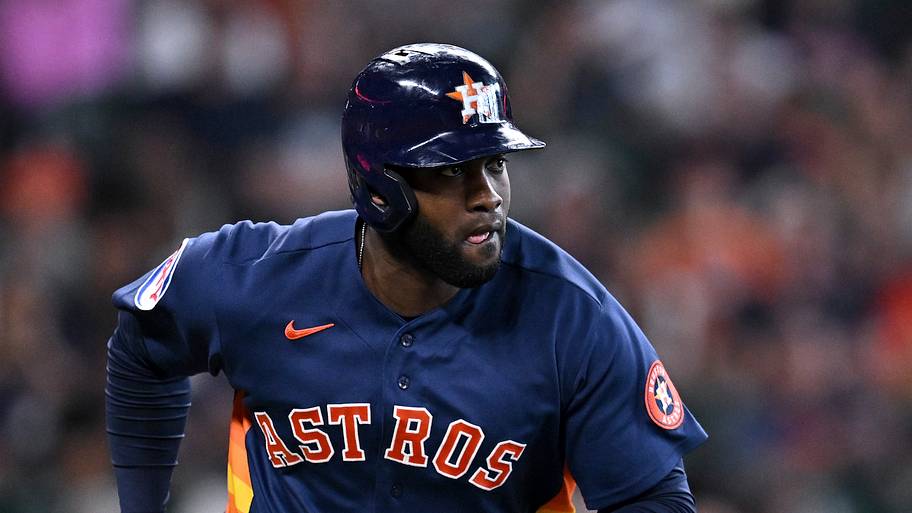
Yordan Alvarez remains the most significant variable in Houston’s restructuring portfolio. Despite the surrounding collapse, Alvarez has maintained an elite .319/.423/.638 slash line with a 1.061 OPS. His statistical profile—12 home runs and a disciplined walk-to-strikeout ratio—positions him as a surplus value asset for a team whose competitive timeline no longer aligns with his peak production.
With 2.5 years of team control remaining on a financially efficient contract, Alvarez’s trade value is at its zenith. For franchises with high-tier prospect capital, he represents a unique opportunity to acquire a generational offensive force through strategic arbitrage.
Boston’s Pursuit of Offensive Dominance
The Boston Red Sox are positioned to capitalize on Houston’s instability. Seeking to accelerate their transition from mediocrity to contention, Boston views Alvarez as the catalyst for an offensive transformation. The Red Sox possess the specific combination of immediate MLB-ready talent and high-ceiling prospects required to facilitate a deal of this magnitude.
For Boston, this move transcends the 2026 season; it is a long-term investment in a middle-of-the-order anchor. The synergy between Houston’s need for a systemic reset and Boston’s requirement for offensive ‘rocket fuel’ creates the optimal conditions for a blockbuster transaction.
Market Implications and Competitive Rebalancing
A trade involving Alvarez would reset the market for elite offensive talent and signal Houston’s formal retreat from the championship tier. This pivot would likely trigger a broader liquidation of remaining veteran assets. Conversely, Boston’s acquisition would force AL East rivals to reevaluate their defensive configurations against a significantly more potent Red Sox lineup.
The financial transfer of Alvarez’s contract would grant Houston the payroll flexibility to address chronic pitching deficiencies in future cycles. For Boston, the move represents a calculated risk that Alvarez’s production will justify the substantial capital outlay and the surrender of top-tier prospects.
Conclusion: Structural Transformation
The documented erosion of the Astros’ roster and the Red Sox’s strategic offensive void point toward an unavoidable structural shift. For Houston, transitioning from a contender to a seller is a painful but necessary step toward institutional recovery. For Boston, acquiring a player of Alvarez’s stature is a rare opportunity to secure a competitive advantage in an increasingly dense American League landscape. The 2026 trade deadline may well be defined by this fundamental realignment of institutional identities.