Strategic Bullpen Reconfiguration and Roster Volatility
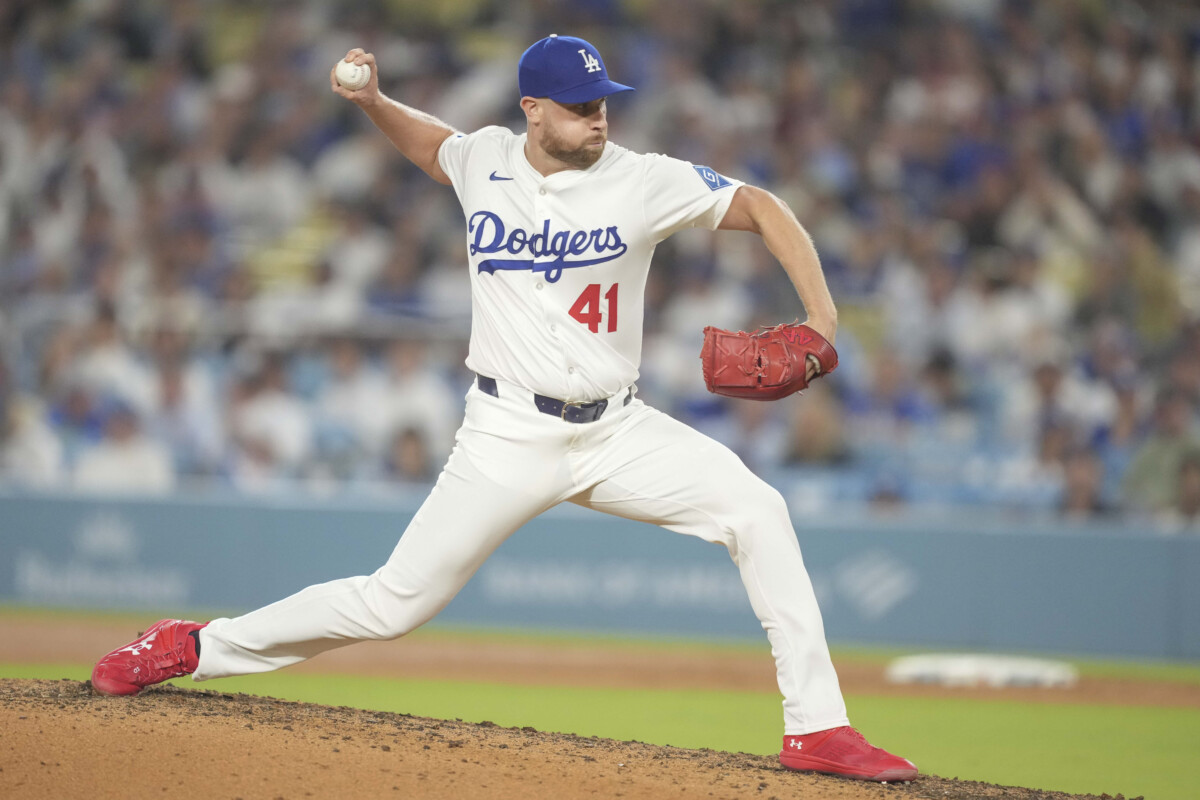
The Los Angeles Dodgers have officially activated right-handed reliever Brock Stewart from the injured list, marking a critical operational pivot for a pitching staff that has managed ten concurrent injuries. To accommodate Stewart’s return ahead of the series finale against the Houston Astros at Daikin Park, the organization optioned Jake Eder to Triple-A Oklahoma City. This move prioritizes immediate veteran stability and high-leverage reliability over developmental exposure in a highly competitive divisional race.
Rehab Metrics: Elite K-Rates vs. Velocity Regression
Stewart’s eight-game rehabilitation assignment across Class-A Ontario and Triple-A Oklahoma City produced elite peripheral data. He recorded a 48.1% strikeout rate, fanning 13 of 27 batters faced while surrendering zero earned runs over 6 1/3 innings. A granular look at his 112-pitch sample reveals 23 swinging strikes, indicating that his primary arsenal remains effective at inducing whiffs despite a marginal decline in raw velocity.
Data from the Oklahoma City Comets stint shows Stewart’s four-seam fastball averaged 95.5 mph and his sinker sat at 94.8 mph. This represents a slight regression from his 2024 average of 96.2 mph. Internal analysts will likely monitor whether this dip is a byproduct of a controlled ramp-up or a long-term adjustment following his September shoulder debridement surgery. However, his ability to generate 15 swinging strikes in just 4 2/3 Triple-A innings suggests his “effective velocity” and deception remain intact.
Medical Integrity and Operational Thresholds
The three-week buildup in the minor leagues served as a stress test for Stewart’s right shoulder. Following the debridement procedure and subsequent inflammation issues, the Dodgers bypassed a traditional spring training in favor of a monitored environment with precise pitch counts. The final clearance for activation followed Stewart’s ability to pitch on back-to-back days—a non-negotiable metric for high-leverage relievers. Given his history of inflammation, the training staff is expected to manage his workload with a focus on appearance quality over raw volume to preserve his utility for the postseason.
Tactical Integration and Matchup Optimization
Stewart’s integration provides manager Dave Roberts with a specialized weapon against right-handed hitters. His vertical and horizontal movement profiles—defined by the high-velocity four-seamer and heavy sinker—allow for aggressive matchup optimization. By slotting Stewart into the late-inning hierarchy, the Dodgers reduce the cumulative stress on their primary healthy arms, potentially allowing for more creative deployment of the middle-relief core. His immediate test against a disciplined Houston lineup will serve as a definitive litmus test for his current 95-mph baseline.
Organizational Context: Roster Evolution
Stewart’s return highlights the Dodgers’ philosophy of institutional continuity; originally drafted by the club in 2014, his 2025 return via trade underscores the front office’s preference for familiar talent profiles. While the optioning of Jake Eder is a necessary transaction for roster compliance, it underscores the current priority of veteran floor over prospect ceiling. As the first of ten injured players to return, Stewart represents the beginning of a broader stabilization phase intended to solidify the Dodgers’ defensive efficiency heading into the mid-season stretch.