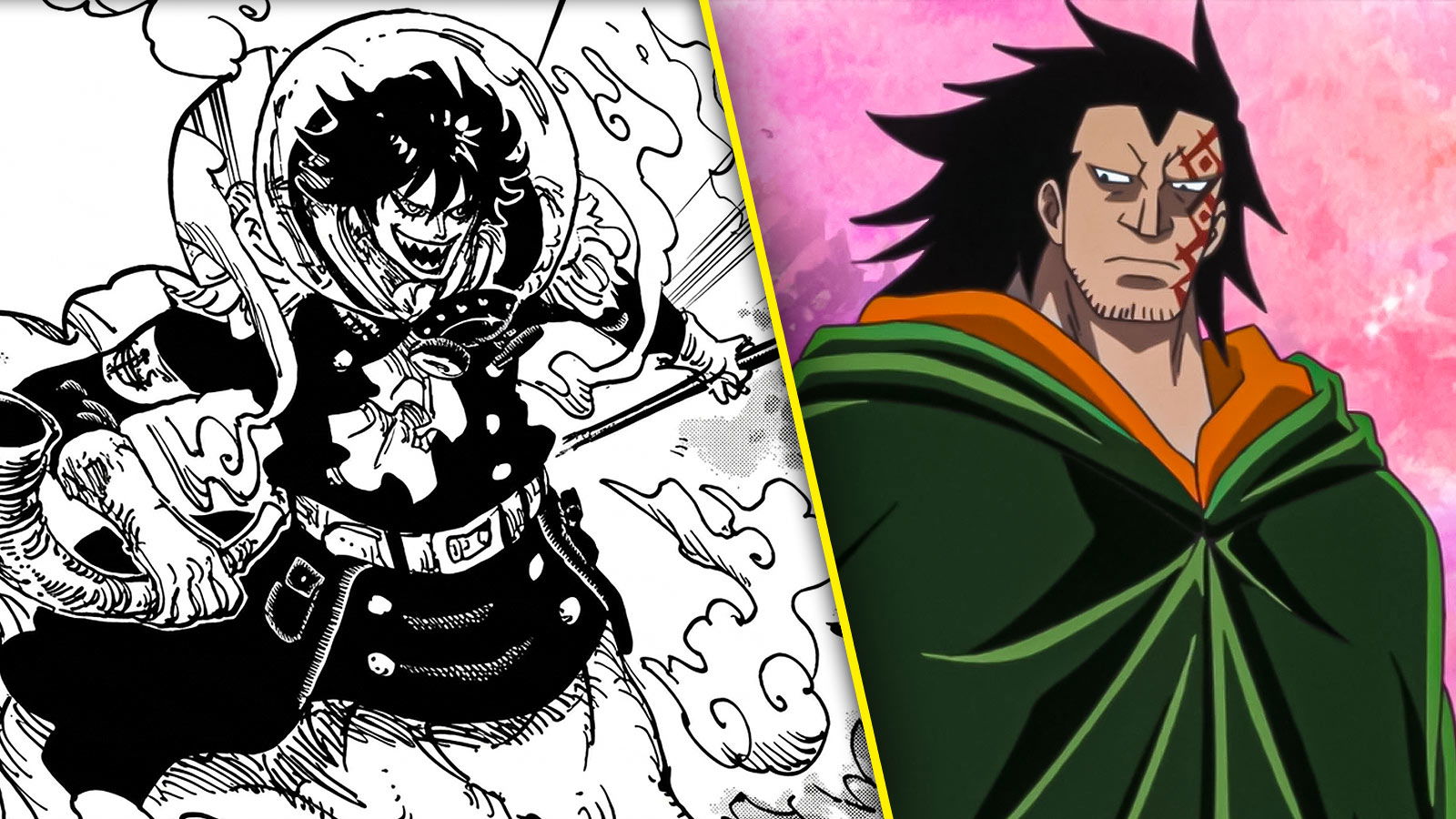
The Elbaph Catalyst: Transitioning from Lore to Existential Conflict
One Piece Chapter 1182 marks a pivotal acceleration in narrative velocity, signaling the end of the 28-year world-building phase in Shueisha’s Weekly Shonen Jump. The Elbaph Arc has transitioned from a lore-heavy transitionary period into the primary engine of the Final Saga’s geopolitical destabilization. This chapter emphasizes the deployment of ‘top-tier combat assets’—entities and abilities withheld for decades to preserve the series’ power ceiling, now unleashed to force a resolution to the global status quo.
Mythological Erosion: Prince Loki and the Nidhoggr Variable
The earlier introduction of Prince Loki’s Ryu Ryu no Mi, Model: Nidhoggr, serves as a narrative disruptor. Associated with the erosion of the world tree, this Mythical Zoan introduces a destructive capacity specifically targeted at the world’s structural foundations—the Red Line. This represents a shift from localized combat to apocalyptic-scale threats. Loki’s confrontation with Nerona Imu highlights the friction between Elbaph’s ancient sovereignty and the World Government’s clandestine authority, rendering traditional containment strategies obsolete.
Absolute Authority vs. Systemic Exposure: The Nerona Imu Profile
The disclosure of Nerona Imu’s combat profile indicates a state of emergency within the Holy Land of Mary Geoise. For eight centuries, the World Government relied on psychological dominance through secrecy; however, the transition to direct environmental manipulation and combat involvement suggests that institutional safeguards are failing. Imu’s ability functions as a conceptual countermeasure to the ‘liberation’ archetypes, forcing a recalibration of offensive strategies by the Yonko and the Revolutionary Army.
The Zaza Phenomenon: Psychological Warfare and Nightmare Manifestation
Chapter 1182 introduces a radical operational mechanic via Killingham’s ‘Rain Goddess Zaza.’ As a four-armed, water-based manifestation of subconscious fear, Zaza bypasses traditional Devil Fruit logic. This entity targets the psychological vulnerabilities of the World Government’s defensive doctrine. Given her aquatic composition in a world where the sea is the ultimate hazard for power users, Zaza represents a strategic wildcard capable of neutralizing conventional military assets like the Seraphim.
The Dragon Synthesis: Storm Sovereignty and the Final Tactical Reserve
The emergence of the Rain Goddess provides the strongest contextual link to Monkey D. Dragon’s ‘Storm Sovereignty.’ Since Loguetown, Dragon has been associated with localized atmospheric disturbances. The thematic alignment between Zaza and Dragon’s historical performance suggests a shared mythological source. By withholding Dragon’s full capabilities until after the reveals of Loki and Imu, the narrative positions him as the final piece of the tactical puzzle—a natural force capable of disrupting global naval logistics and communications.
Conclusion: The Irreversible Momentum of Global Revolution
The sequence of reveals—from the Nidhoggr to the Rain Goddess—creates an irreversible narrative momentum toward total war. The Elbaph Arc has successfully narrowed the story’s scope from a journey of discovery to a focused campaign for systemic change. As the World Government’s myth of invincibility crumbles, the focus shifts to the Revolutionary Army’s final move. The era of shadows has concluded; the era of manifest nightmares and planetary gods has begun.