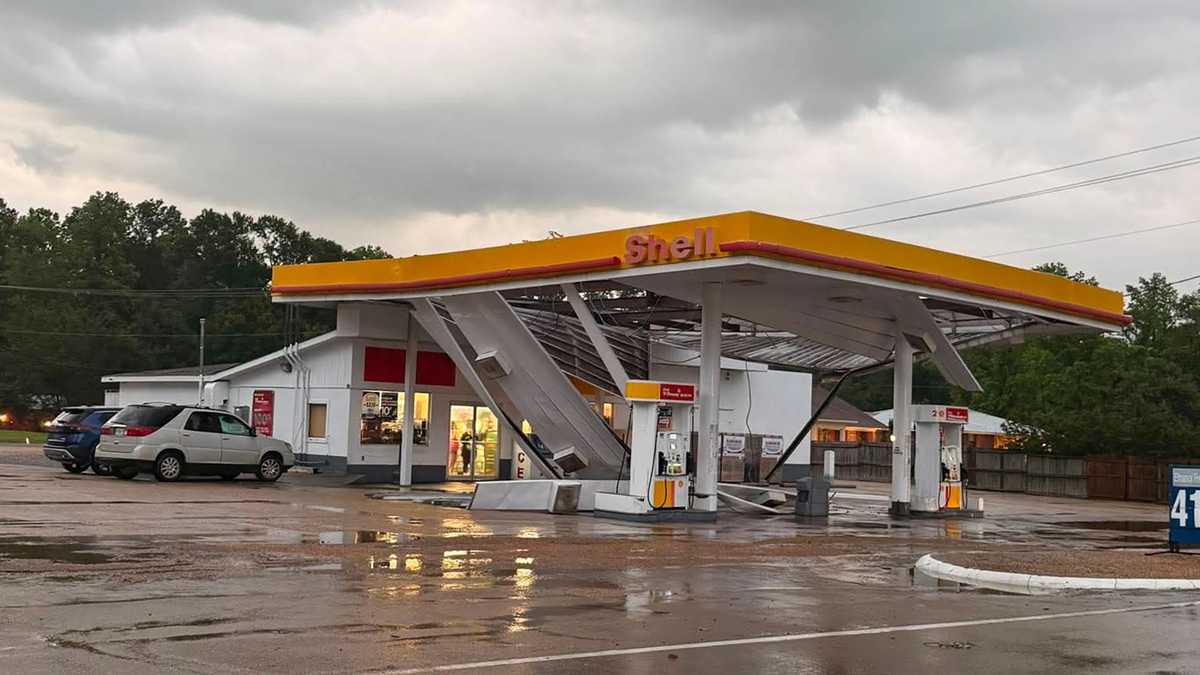
The recent tornado outbreak across Mississippi’s Pine Belt and western counties has revealed significant systemic thresholds in regional emergency management and infrastructure durability. As severe weather systems traversed Franklin, Wilkinson, and Jefferson Davis counties, the transition from meteorological forecasting to tactical intervention exposed critical operational bottlenecks. These events highlight the inherent tension between personnel safety protocols and immediate life-saving search-and-rescue mandates during active atmospheric threats.
Tactical Operational Suspension: The ‘Hunker-Down’ Protocol
In Franklin County, the directive for law enforcement and emergency responders to seek shelter during the storm’s peak illustrates a standard yet controversial disaster management protocol: tactical operational suspension. This calculated withdrawal occurs when environmental hazards render standard emergency assets ineffective or pose an existential risk to personnel. While prioritizing officer safety, this suspension creates a temporary public safety vacuum, effectively outsourcing the burden of immediate survival to individual residents and localized shelter systems.
The resulting entrapment of residents near Garden City during this response gap underscores the hazards of this doctrine. A delay in the ‘golden hour’ of rescue operations—driven by the inability to deploy assets safely—significantly increases casualty risks. This service delivery gap is a primary focus for post-event audits, municipal liability assessments, and the strategic refinement of rapid-response units within high-risk meteorological corridors.
Infrastructure Fragility and the Last-Mile Accessibility Gap
In Wilkinson County, reports of widespread debris blocking primary access points near Oak Grove Church demonstrate the fragility of rural transportation networks. Infrastructure failure in these contexts is not merely structural but functional; when trees obstruct arteries like Browns Ridge, Elks, and Patrick Road, they transform residential pockets into inaccessible islands. This ‘last-mile’ gap prevents heavy equipment and medical personnel from reaching vulnerable populations, as seen in the entrapment of individuals attempting late-stage evacuations in Garden City and Perrytown.
The reliance on decentralized recovery models, such as district supervisors utilizing local equipment to clear paths, highlights a lack of redundant, centralized heavy-response capacity. While this localized approach allows for immediate action, its efficacy is contingent upon the survival of local equipment and the personal mobilization of individual officials under duress. This reliance suggests a need for state-funded hardening of rural corridors and pre-positioned, storm-resistant clearing machinery.
Systemic Utility Failure and Agricultural Capital Erosion
The disruption of power to over 1,000 customers in Jefferson Davis County represents a systemic failure of the electrical grid to withstand high-velocity wind events. In a disaster environment, power loss degrades situational awareness by severing communication channels between households and emergency services. This utility fragility remains a persistent vulnerability for the Pine Belt’s regional stability, necessitating a shift toward grid decentralization and hardened telemetry.
Furthermore, the destruction of agricultural infrastructure in Forrest County’s Dixie area—specifically barns and outbuildings—constitutes a significant loss of regional capital. These structures are often the most exposed assets in rural Mississippi; their failure triggers economic cascades, impacting insurance premiums and the long-term viability of small-scale producers. The speed of public works departments in restoring access to these agricultural zones is a critical metric for assessing the efficiency of the Forrest County Board of Supervisors.
Institutional Coordination and the Forecasting-to-Trigger Pipeline
The activation of state-level oversight by Governor Tate Reeves and the Mississippi Emergency Management Agency (MEMA) serves to bridge the gap between overwhelmed local capabilities and the scale of the destruction. This executive hierarchy ensures that localized intelligence—such as the NWS Jackson tornado warning for Jefferson Davis County at 8:04 p.m.—is synthesized into a broader resource allocation strategy. However, the efficacy of state intervention remains tethered to the same logistical constraints facing local deputies: the physical reality of blocked roads and active storm cells.
Strategic triggers, such as WDAM 7’s ‘First Alert Day’ designation and the subsequent 2:30 p.m. tornado watch, provide the necessary lead time for institutional readiness. While these forecasts have become increasingly precise, their ability to mitigate loss of life is ultimately capped by the structural integrity of available housing. The integration of crowdsourced visual data from viewers further enhances real-time situational awareness, yet the events in unincorporated areas like Garden City confirm that without structural and infrastructural resilience, forecasting alone cannot eliminate the risks of geographic and administrative isolation.