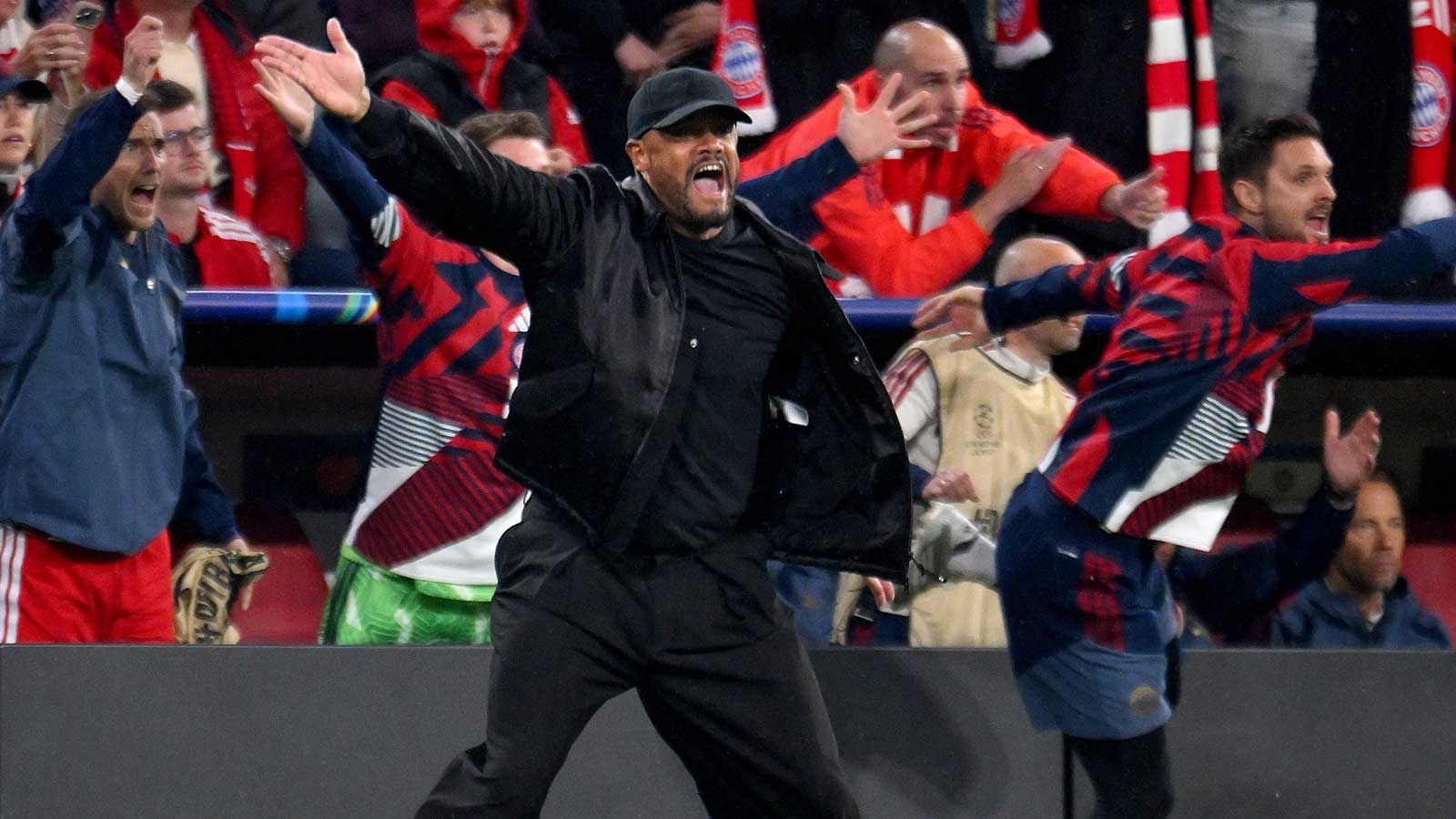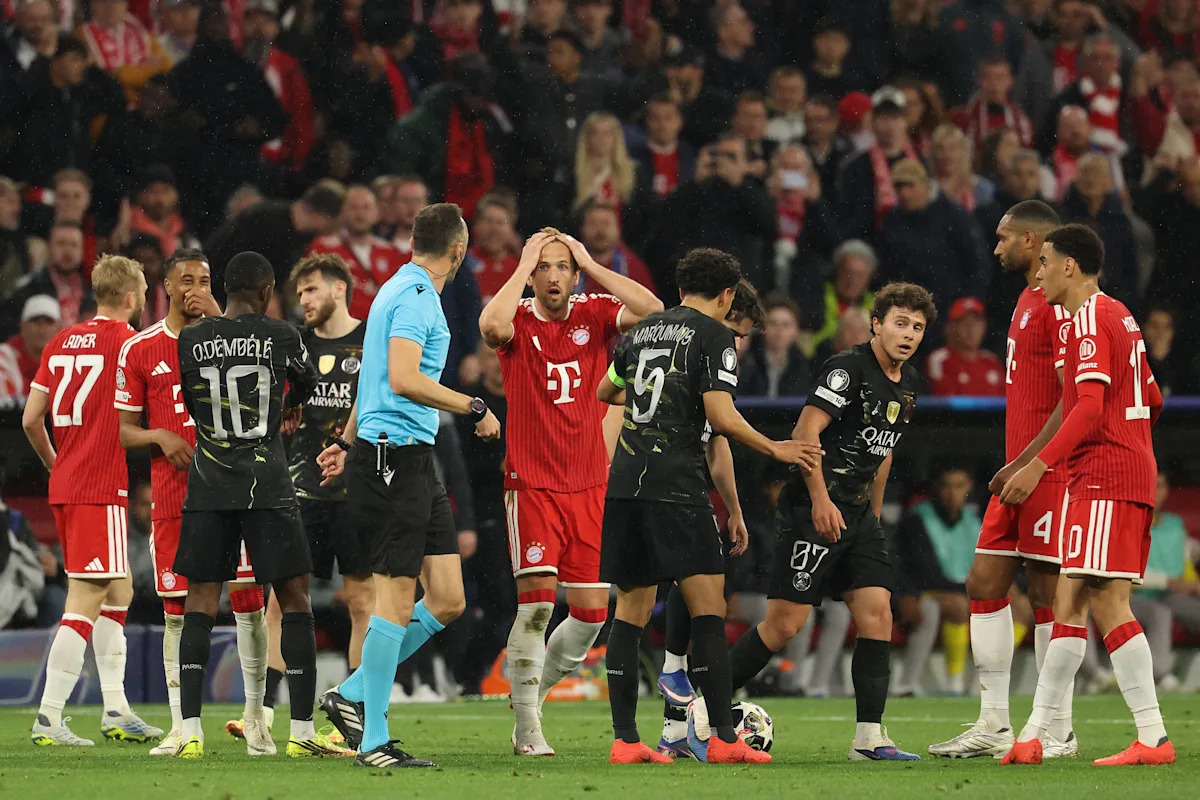
The second leg of the Champions League semi-final between FC Bayern Munich and Paris Saint-Germain became a focal point for critical examination of officiating in high-stakes European club football. Referee Joao Pinheiro, officiating his 15th Champions League fixture, presided over a match marked by contentious decisions that significantly influenced its competitive dynamic. The intense atmosphere of the Allianz Arena amplified the friction between human judgment and the rigid protocols of the Video Assistant Referee (VAR) system, exposing systemic challenges in modern refereeing.
Procedural Missteps and the “Delay the Whistle” Protocol
A pivotal moment occurred when a potential goal-scoring opportunity for Harry Kane was nullified by an early whistle from Pinheiro for a perceived offside. Standard UEFA and IFAB directives mandate that officials allow play to conclude before intervening in potential offside scenarios, particularly when a clear goal-scoring opportunity exists, to enable VAR review. Pinheiro’s premature whistle bypassed the VAR’s jurisdiction, preventing any technological re-evaluation of the play once action had been stopped.
This procedural breakdown underscores a critical deficiency in contemporary officiating frameworks designed to mitigate human error in decisive moments. Former Bayern captain Michael Ballack publicly decried the incident, highlighting the institutional expectation for elite referees to rigorously adhere to the “delay the whistle” principle to safeguard match integrity. Strategically, Bayern lost a high-probability scoring chance that could have shifted aggregate momentum, a loss exacerbated by the decision’s unsuitability for VAR review.
The decision-making process suggests a deviation from the risk-averse strategies typically observed from experienced officials in Champions League knockout stages. By intervening prematurely, the officiating team opted for immediate certainty over the safety net provided by VAR. This places attacking teams at a distinct disadvantage, as the VAR overturn threshold is high, while a whistle irrevocably ends a sequence of play.
Prioritizing Infractions: The Laimer vs. Mendes Handball Sequence
In the 29th minute, a complex sequence involving two potential handballs necessitated rapid prioritization, drawing sharp criticism from Bayern’s coaching staff. Nuno Mendes, already on a yellow card, appeared to commit a handball near the halfway line to halt a Bayern counter-attack, an action that typically warrants a second yellow card and dismissal. However, Pinheiro ruled that Konrad Laimer had committed a handball milliseconds prior, awarding the free kick to PSG and effectively negating Mendes’ subsequent infraction.
This incident exemplifies the immense pressure on officials to identify the primary foul in a rapid succession of events. Strategically, penalizing Laimer first provided PSG with critical structural relief, preventing a potential ten-man disadvantage for the remainder of the match. The infinitesimal time frame between the infractions, noted as occurring within milliseconds, rendered the determination of the ‘first’ foul a matter of extreme subjective interpretation.
The institutional ramifications of such a call are substantial, affecting the perceived consistency of disciplinary application in the Champions League. Analyst Sami Khedira’s observation that the referee “interfered” reflects a broader sentiment that officiating should facilitate play rather than dictate tactical outcomes. When a potential red card is avoided through the identification of a preceding, less severe infraction, it raises pertinent questions regarding intervention thresholds and their impact on competitive equilibrium.
Technical Interpretations of the Handball Law
A penalty appeal following a clearance by Vitinha that struck teammate Joao Neves’ hand in the penalty area highlighted ongoing ambiguity in handball interpretations. Current IFAB guidance often deems handballs resulting from a direct deflection off a teammate’s body, provided the arm position is not unnaturally enlarged, as non-punishable. The VAR’s inaction suggests the video officials classified the contact as a natural consequence of the clearance, rather than a deliberate or punishable offense.
However, the absence of an on-field review, especially in such a contentious situation, often intensifies perceptions of bias or incompetence among the aggrieved stakeholders. For Bayern, the denial of a potential penalty in a match where they were seeking an aggregate deficit represented a significant strategic obstacle. The decision to proceed without a monitor review indicated high confidence from the VAR booth, yet it starkly contrasted with the visual evidence prompting protests from the Bavarian side.
This incident also illustrates the psychological influence of stadium crowds on officiating. Despite vocal home-crowd appeals, the officiating team maintained strict adherence to the technicalities of the rulebook. This highlights the inherent tension between the “spirit of the game” and the “letter of the law” in high-leverage scenarios where a single penalty award can significantly impact a club’s season and financial trajectory.
Institutional Scrutiny of Referee Appointments
Joao Pinheiro’s appointment to a semi-final of this magnitude, given his relatively limited experience of 15 Champions League matches, places UEFA’s referee selection committee under scrutiny. High-stakes knockout fixtures are typically assigned to the most seasoned officials in the Elite category, whose expertise in managing the psychological and tactical complexities of such games is honed over years of exposure. The controversies in this match suggest that the developmental pathway for elite European football officiating remains challenging and carries systemic risks.
The strategic impact of an official’s experience level is profound, influencing player dissent management, game tempo, and critical decision-making. In this fixture, perceived inconsistencies in decision-making contributed to a narrative of disadvantage for Bayern Munich, impacting their post-match analysis. For UEFA, balancing the development of emerging talent with the imperative for flawless execution in matches representing substantial commercial value presents a significant challenge.
Furthermore, public criticism from former players like Ballack and Khedira creates a feedback loop pressuring the officiating body to justify its selections and methodologies. When prominent stakeholders assert that a referee is “changing the balance” of a match, it poses a reputational risk to the competition. Downstream effects often manifest as revisions to VAR protocols or more conservative refereeing appointments in subsequent rounds, as governing bodies strive to restore confidence in objectivity and fairness.
Competitive Consequences and Strategic Ramifications
The immediate competitive consequence of these officiating decisions was the preservation of PSG’s aggregate lead and the frustration of Bayern’s tactical efforts to mount a comeback. In a match characterized by fine margins, the cumulative effect of a denied scoring opportunity, a missed red card, and a dismissed penalty claim was transformative. Bayern’s strategy of high-intensity pressing and rapid transitions was repeatedly disrupted, forcing the team to contend not only with their opponent but also with the officiating environment.
For PSG, the officiating outcomes provided a degree of structural protection, enabling them to maintain tactical discipline without the handicap of a numerical disadvantage. Navigating these critical moments without conceding a penalty or losing a key player like Mendes proved instrumental in their defensive stability. This underscores how officiating variance can become a significant tactical variable, compelling managers to adjust risk profiles based on a referee’s perceived threshold for fouls.
Ultimately, the Bayern-PSG semi-final serves as a compelling case study on the limitations of modern officiating. The ongoing friction between the game’s velocity and the demands for procedural accuracy remains an unresolved challenge for football’s governing bodies. As clubs invest heavily in tactical development, the official continues to represent a significant variable, introducing an element of unpredictability that can impact institutional and sporting success.