
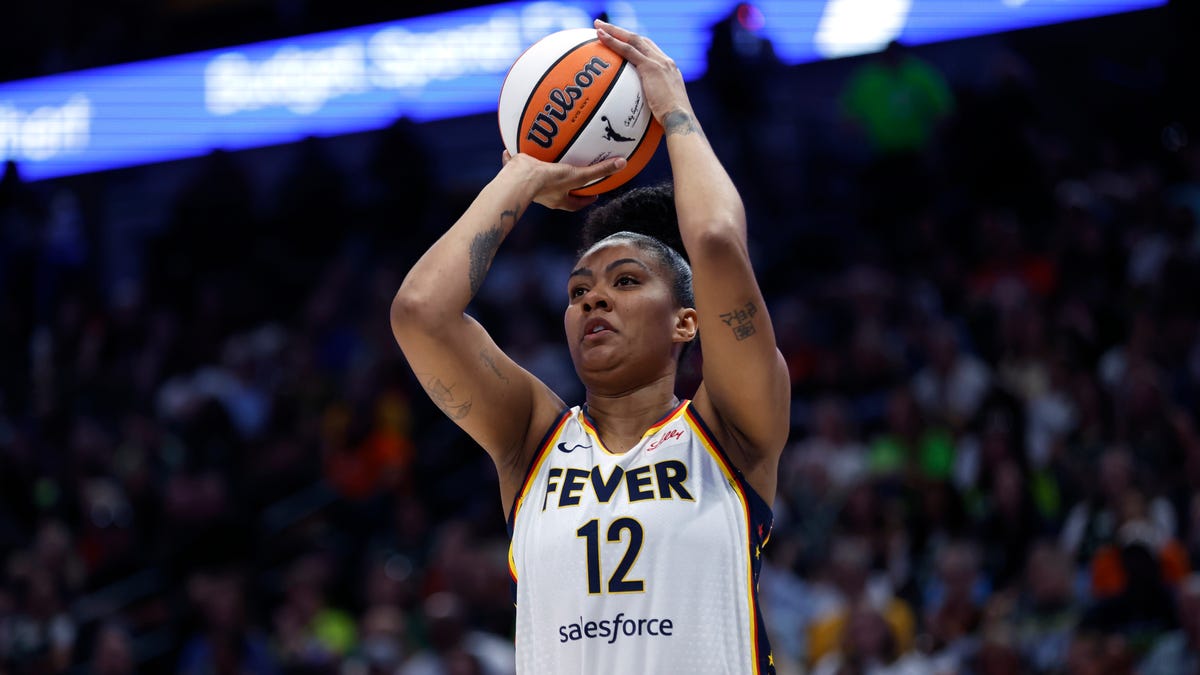
The operational efficiency of WNBA franchises is increasingly dictated by the ability to integrate international talent within highly compressed administrative windows. For the Indiana Fever, the re-integration of veteran forward Damiris Dantas illustrates the inherent friction between league-mandated timelines and global immigration protocols. A two-week visa delay, while statistically brief, represents a critical loss of ‘tactical installation time’ in the WNBA’s abbreviated training camp, forcing coaching staffs to manage performance readiness through a lens of logistical contingency.
The Opportunity Cost of Administrative Latency
Administrative delays in securing P-1 work visas create a cascading effect on roster synchronization. When a primary rotation player like Dantas misses the initial phase of training camp, the opportunity cost is measured in lost cognitive repetitions within Stephanie White’s defensive rotations and offensive flow. This friction necessitates a bifurcated development strategy: the coaching staff must progress the available roster while maintaining a secondary, accelerated onboarding track for late arrivals, effectively doubling the workload of the tactical staff.
While domestic-centric rosters avoid these logistical hurdles, the competitive leverage of international experience remains a vital strategic hedge. Dantas’ return provides the Fever with a player seasoned in the Turkish and Chinese leagues, alongside the Brazilian national team. This global pedigree offers a level of professional maturity that mitigates the volatility inherent in younger rosters, provided the player can bridge the gap created by missed preseason synchronization.
Roster Synthesis and the Compressed Calendar
Head Coach Stephanie White faces the challenge of accelerating roster synthesis in a calendar that offers no margin for error. The WNBA’s condensed free agency and preseason periods place a premium on ‘basketball IQ’—the ability to internalize complex systems via film and mental walkthroughs rather than physical reps. The Fever’s development is no longer just about individual skill acquisition; it is about the rapid synthesis of veteran leadership and emerging talent under high-pressure, low-time-availability conditions.
The decision to re-sign Dantas on April 12 highlights a commitment to frontcourt stability. However, her absence from the early camp forced the coaching staff to rely on developmental players, potentially skewing the evaluation process for final roster spots. This dynamic demonstrates how external immigration variables can inadvertently shift internal personnel decisions and alter the team’s chemistry trajectory before the first tip-off.
International Experience as a Performance Variable
Dantas’ offseason cycles in Turkey and China suggest a high state of physical readiness, yet the year-round competitive cycle is a double-edged sword. While it ensures peak conditioning, it increases the risk of cognitive fatigue and administrative complications. For the Fever, Dantas acts as a tactical bridge, offering floor-spacing and physical interior presence—versatility that is essential for modern, positionless WNBA frontcourts.
The strategic value of a veteran who has navigated diverse international systems is a primary competitive advantage. Dantas’ ability to adjust to mid-game tactical shifts provides White with late-game flexibility. The operational challenge lies in converting this theoretical value into on-court production following a period of forced inactivity due to the visa holding pattern.
Medical Oversight and Post-Concussion Integration
Beyond logistics, the Fever must manage the physical reintegration of a player who missed the 2023 postseason due to a concussion. While her international performance suggests full recovery, the transition to the WNBA’s high-intensity environment requires granular medical monitoring. The performance staff must ensure that the urgency of her return does not compromise long-term health, particularly given the physical attrition expected in her role.
Managing a veteran’s workload after significant travel and administrative waiting is a delicate balance. This institutional focus on player health is a critical component of maintaining roster depth throughout a grueling schedule where availability is often the primary predictor of playoff positioning. The Fever’s ability to navigate this medical and logistical intersection serves as a litmus test for their organizational resilience.
Conclusion: Operational Resilience in a Global League
The challenges faced by Dantas and the Indiana Fever are symptomatic of the WNBA’s broader structural evolution. As the league scales, the pressure to optimize administrative pipelines for international talent becomes paramount. For the Fever, successfully integrating Dantas under these constraints provides a blueprint for future global acquisitions. Ultimately, the season’s success hinges on the team’s ability to synthesize disparate elements—veteran IQ, international experience, and coaching adaptability—into a cohesive unit capable of competing at the highest level.

Photo by 12019 on Pixabay.