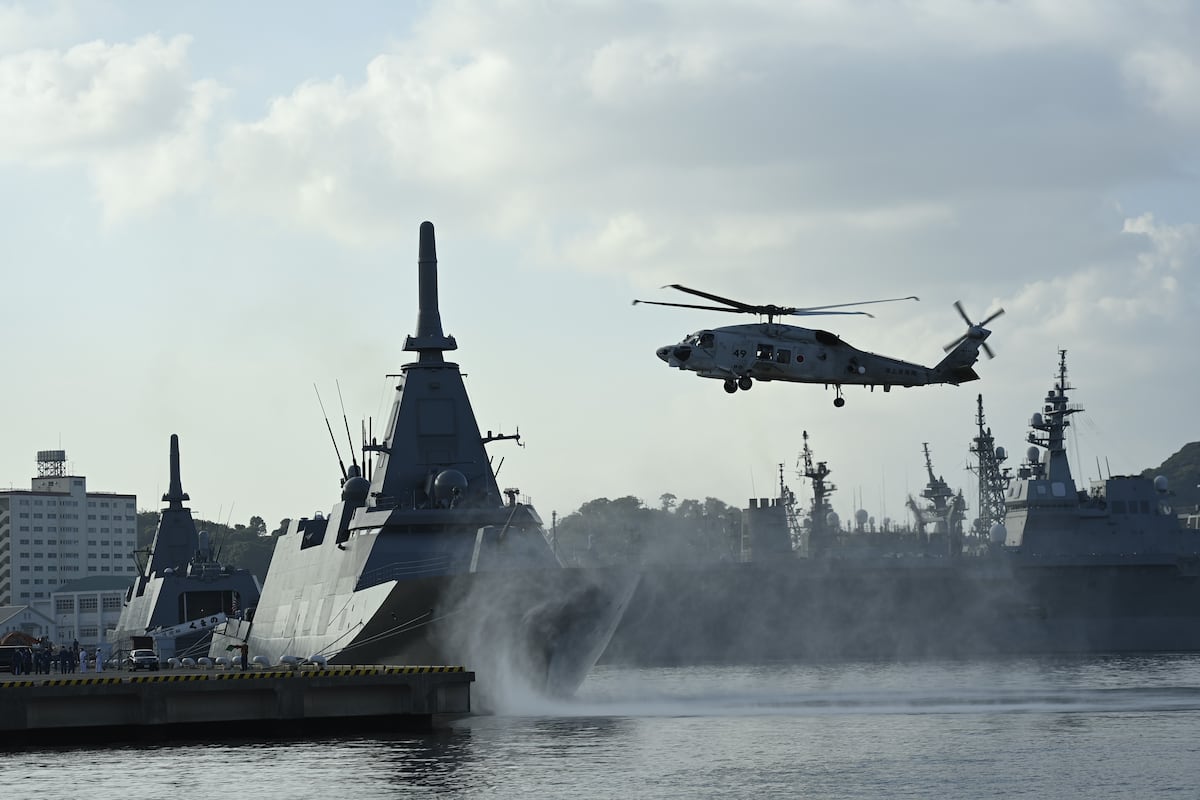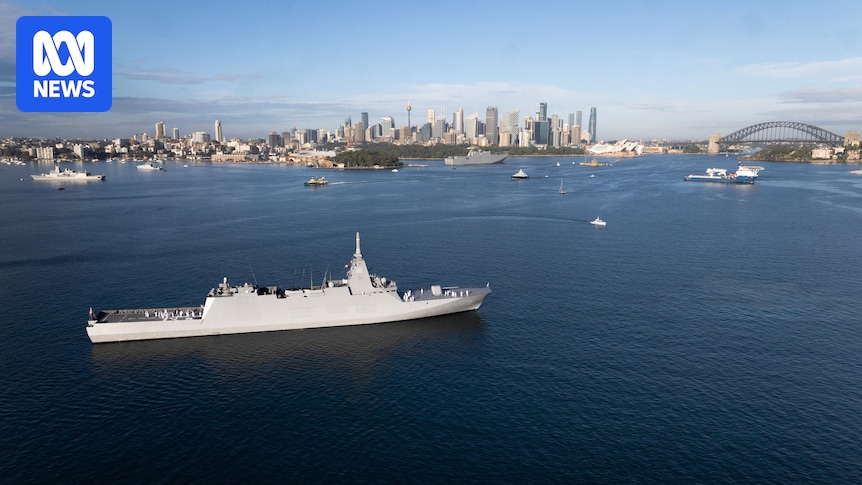
Project Sea 3000 represents a fundamental overhaul of the Royal Australian Navy’s (RAN) force structure, pivoting from protracted, domestic-only development to an accelerated acquisition model. By selecting the Japanese Mogami-class frigate (FFM), Canberra is addressing a critical capability gap in its aging Anzac-class fleet, opting for a 4,800-ton platform that prioritizes high-enduration and modular mission flexibility.
The ‘Split-Build’ Strategy and Industrial Sovereignty
The A$20 billion agreement leverages a hybrid manufacturing approach designed to reconcile speed with sovereign industrial goals. Mitsubishi Heavy Industries (MHI) will construct the initial three vessels in Japanese shipyards to ensure the first delivery by 2029—a timeline nearly impossible under previous Australian procurement frameworks. The subsequent eight frigates will be built at the Henderson Maritime Precinct in Western Australia, facilitating a massive technology transfer that integrates Japanese manufacturing precision into the Australian defense ecosystem.
This phased approach reduces the technical risks associated with domestic startups while ensuring that long-term maintenance and lifecycle management remain under sovereign control. The fiscal commitment reflects an acceptance of premium costs in exchange for bypassing the bureaucratic delays that have historically hindered RAN modernization.
Japan’s Strategic Departure from Defense Isolationism
For Tokyo, this deal is a geopolitical proof-of-concept. It stands as Japan’s largest-ever defense export, validating the 2014 and 2023 revisions to its Three Principles on Defense Equipment and Technology Transfer. By exporting the Mogami-class, Japan is transitioning from a passive security actor to a proactive regional provider, signaling a willingness to compete with established Western defense contractors.
The Mogami design is uniquely suited for the RAN’s current constraints, specifically its chronic manpower shortages. Through extensive automation, the vessel requires a crew of approximately 90—significantly fewer than the 150+ required for comparable legacy frigates—allowing for a more sustainable operational tempo in a strained recruitment environment.
Operational Integration and Multi-Polar Alliances
Technologically, the RAN’s Mogami variants will feature specific sensor suites and combat systems tailored for anti-submarine warfare (ASW) and maritime interdiction in the Indo-Pacific. This procurement fosters ‘horizontal integration’ among US allies, creating a security architecture where regional powers provide high-end hardware to one another, rather than relying exclusively on American industrial capacity.
Ultimately, the Australia-Japan frigate deal is a deterrent measure. By enhancing the RAN’s numerical and qualitative strength, the partnership seeks to stabilize maritime corridors and uphold a rules-based order. The success of Project Sea 3000 will be a bellwether for future defense collaborations between middle powers in an increasingly contested maritime domain.