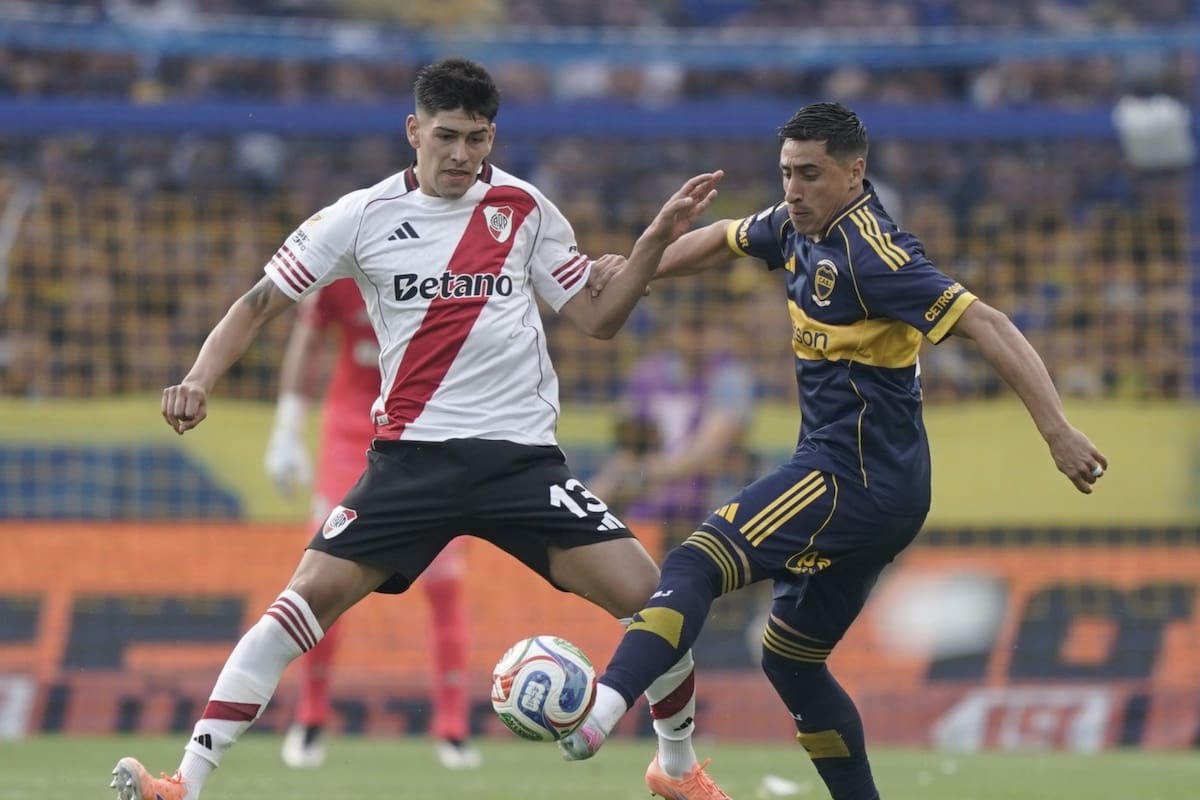
Strategic Inflection: Institutional Stability vs. Tactical Evolution
The 266th edition of the Superclásico serves as a definitive audit of the sporting projects currently dominating the Argentine landscape. Occurring at the fifteenth fixture of the Torneo Apertura 2026, this encounter transcends traditional rivalry, functioning as a high-stakes stress test for the Estadio Mâs Monumental’s tactical and financial infrastructure. For both institutions, the match represents a critical juncture for validating mid-season investments prior to the high-variance playoff phase.
River Plate enters this cycle under the technical direction of Eduardo Coudet, whose appointment signaled a shift toward high-intensity offensive metrics. With six victories in their last seven fixtures, River has ascended to second place in Zone B with 26 points. A victory would not only consolidate Coudet’s authority but also secure the mathematical leverage necessary for a favorable playoff seeding. Conversely, Boca Juniors, under Claudio Ubeda, leverages a twelve-match unbeaten streak rooted in structural resilience. This contrast between River’s aggressive transition play and Boca’s defensive invincibility establishes the primary competitive tension of the match.
Tactical Composition: Midfield Transitions and Personnel Assets
River Plate’s confirmed starting eleven underscores a reliance on players with elite continental and European pedigree. The defensive spine—anchored by Santiago Beltrán, Gonzalo Montiel, and Marcos Acuña—is engineered to facilitate Coudet’s expansive system, allowing full-backs to operate as secondary playmakers. This structure aims to dominate the half-spaces, a move intended to destabilize the low-block defensive units typically favored by Ubeda’s Boca Juniors.
The integration of Kendry Páez alongside Aníbal Moreno and Juan Cruz Meza highlights River’s strategy of disrupting defensive blocks through creative mobility. By positioning Tomás Galván to link play with the forward pairing of Sebastián Driussi and Facundo Colidio, Coudet seeks to exploit vertical gaps. Boca’s tactical response relies on the clinical efficiency of Merentiel and Zeballos, who were instrumental in their previous 2-0 victory during the Clausura 2025. The match hinges on whether Boca’s defensive integrity can withstand River’s high-press intensity at the Monumental.
Commercial Ecosystem and Global Media Distribution
The Superclásico remains the primary liquidity driver for the Liga de Fútbol Profesional’s broadcasting rights. The 2026 distribution model utilizes dual-signal carriage via ESPN Premium and TNT Sports domestically, supplemented by Disney+ for regional streaming across South America. This multi-platform approach optimizes market penetration, ensuring the valuation of key assets like Páez and Driussi remains visible to global scouting networks and investors.
Operational choices, such as the 17:00 local kickoff, are designed to capture the European market, specifically targeting a 22:00 prime-time slot in Spain. This synchronization of broadcast windows reflects a sophisticated understanding of the global sports economy, where cultural impact is translated into measurable advertising revenue. Furthermore, the integration of predictive analytics—including AI-generated forecasts suggesting a 2-1 River victory—adds a layer of digital engagement that influences both betting markets and fan sentiment.
Operational Consequences for the Playoff Phase
As the Apertura reaches its final stages, the mathematical implications of this fixture are paramount. For River Plate, a positive result secures institutional capital and allows for strategic squad rotation in the remaining rounds. For Boca Juniors, maintaining their unbeaten streak under the pressure of the Monumental would provide the psychological momentum required for a deep playoff run. The outcome will inevitably dictate the narrative of technical continuity for both Coudet and Ubeda, as the Superclásico remains the ultimate barometer of competitive viability in the Argentine top flight.