CONMEBOL Sudamericana: A Microcosm of South American Football’s Geoeconomic Disparity
The CONMEBOL Sudamericana group stage encounter between Deportivo Cuenca and Santos FC serves as a compelling case study of the geoeconomic disparities inherent in South American club football. The match pits Deportivo Cuenca, an Ecuadorian club operating on a significantly constrained budget, against Santos, a Brazilian giant with substantial historical pedigree and robust financial resources. The strategic imperatives for both sides are fundamentally divergent, reflecting their positions within the regional football ecosystem.
For Deportivo Cuenca, participation in the group stage is a crucial operational and financial achievement. The revenue generated from advancing—including prize money, broadcast rights, and increased ticket sales—is disproportionately significant for a club that must maximize resource efficiency. The match against Santos, scheduled for April 8th at the Estadio Alejandro Serrano Aguilar, is therefore not merely a sporting fixture but a high-leverage opportunity to secure vital points that influence the club’s financial projections and progression probabilities toward the lucrative knockout rounds.
Strategic Imperatives: Leveraging Non-Financial Assets
Santos FC approaches the competition as a historical favorite with the objective of reasserting continental dominance. For the Brazilian club, success in the Sudamericana reinforces brand value, provides a platform for player development, and serves to maintain its stature in international competition. The club’s strategy is built on superior resource allocation and squad depth, allowing it to navigate a demanding schedule and compete for multiple objectives simultaneously.
Deportivo Cuenca’s strategy, by necessity, relies on maximizing non-financial advantages to compensate for the resource gap. The primary strategic asset highlighted is home advantage, particularly playing at altitude. This tactical leverage is critical for smaller clubs in CONMEBOL competitions, where a victory or draw against a resource-rich opponent significantly alters group standings. Cuenca’s objective to start strong at home, as noted in the source, reflects the strategic importance of this initial match in building momentum and confidence in Group D.
Fan Engagement as Strategic Capital
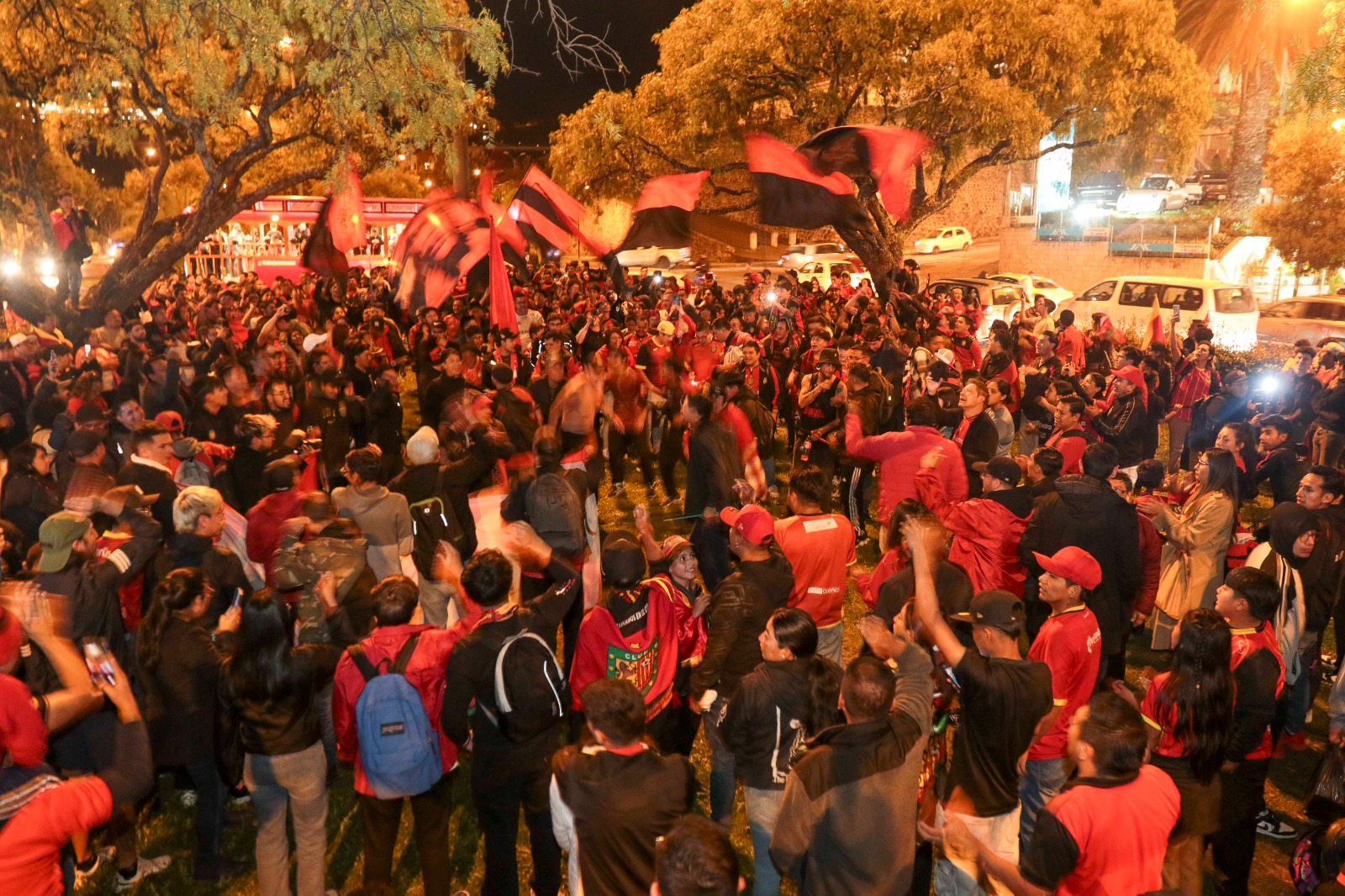
The pre-match mobilization of fans in Cuenca, exemplified by the organized “banderazo” involving hundreds of supporters on April 7th, highlights the vital role of fan culture as a strategic asset. While seemingly emotional, this type of community engagement provides tangible operational benefits. High levels of fan enthusiasm directly translate to increased ticket sales, merchandise revenue, and local sponsorship interest. The source notes the acknowledgment of this support by players, reinforcing a symbiotic relationship between team performance and community backing. In a resource-constrained environment, this institutional loyalty provides a psychological edge that can influence performance in high-stakes matches and enhance player retention and recruitment efforts.
Market Exposure and Institutional Impact
The broadcast details provided in the source—live coverage on international platforms like Disney+—illustrate the commercialization of CONMEBOL tournaments and the importance of media rights revenue for smaller participants. For Deportivo Cuenca, participation in a tournament broadcast by major international platforms significantly increases its visibility to potential sponsors and international markets. This exposure is crucial for player valuation and for attracting future investment, further solidifying the club’s financial stability. The match against Santos provides Cuenca with a high-profile platform to showcase its institutional brand and player talent to a broader audience, potentially opening doors for future commercial partnerships.
Long-Term Institutional Trajectory and Group Dynamics
Beyond the immediate outcome, the match against Santos holds long-term institutional significance for Deportivo Cuenca. The group stage format places significant emphasis on securing early points at home, making a positive result against a favored opponent essential for building momentum in Group D. Conversely, Santos seeks to secure three points away from home to consolidate its position as group leader and minimize pressure in later matches. The strategic decisions of both coaching staffs—Jorge Célico for Cuenca and the Santos management—will be heavily influenced by the competitive dynamics of the group and the need to balance domestic league commitments with international ambitions.
The encounter serves as a benchmark for Cuenca’s progress against established regional powers. While Santos seeks to maintain its status as a continental protagonist, Cuenca aims to establish itself as a consistent competitor capable of disrupting expectations. The strategic importance of this match extends beyond the final score, influencing future sponsorship negotiations, player recruitment, and the club’s overall trajectory within the CONMEBOL landscape.