Texas Conducts Statewide Emergency Alert System Test
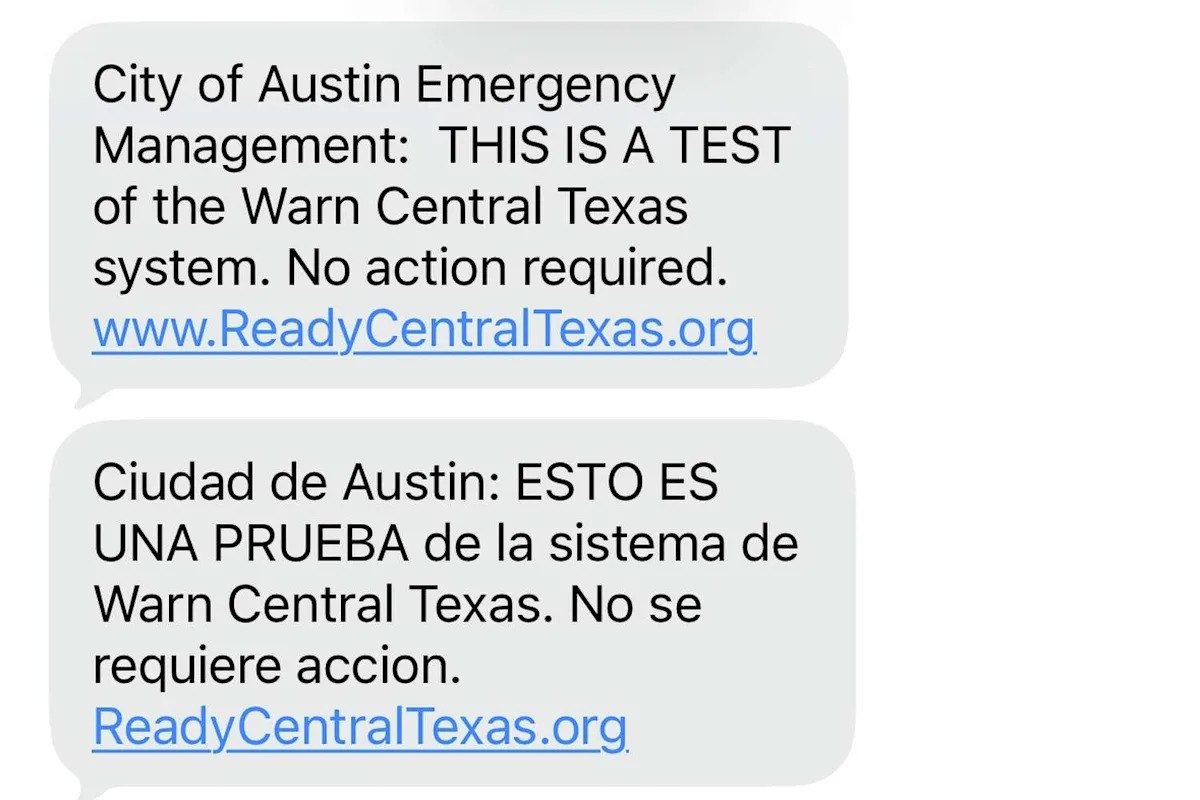
The Texas Division of Emergency Management (TDEM) conducted a statewide test of its public warning systems on Thursday, a crucial drill to ensure readiness for potential severe weather events. The exercise, spanning from 10 a.m. to 12:30 p.m., evaluated the functionality of critical alert mechanisms, including Wireless Emergency Alerts (WEA), text messages, local broadcast notifications, and outdoor warning sirens.
This multi-faceted testing is vital for validating the state’s disaster communication infrastructure. TDEM Chief Nim Kidd highlighted the importance of regular drills in building robust disaster preparedness, confirming technological efficacy, and identifying operational gaps before actual emergencies occur.
Operational Readiness and System Integration
The test protocol involved activating local emergency alert systems statewide, with a specific focus on the Integrated Public Alert and Warning System (IPAWS) and various regional notification platforms. This layered approach ensures critical information can be disseminated across diverse technological channels and geographic areas.
In the Austin metropolitan area, a staggered regional schedule was implemented to prevent alert overlap between neighboring jurisdictions. This coordination, managed by the Capital Area Council of Governments, involved specific activation times for Travis, Williamson, and Hays Counties, and the City of Austin, underscoring the complex inter-agency collaboration necessary for effective public warning.
Stakeholder Incentives and Risk Mitigation
For state and local emergency management agencies, the primary incentive is enhancing public safety through reliable communication. Successful system tests directly improve response capabilities during crises, thereby mitigating potential loss of life and property, and bolstering public trust in preparedness efforts.
Residents are encouraged to use these drills as a prompt to develop or update personal and family disaster plans. This proactive engagement emphasizes that while technological systems are crucial, individual and household resilience is a cornerstone of overall community safety.
Technological Infrastructure and IPAWS Functionality
IPAWS, a central component of the national public warning framework, was a key focus. This system enables authorized federal, state, and local authorities to send geographically targeted alerts to mobile devices, demonstrating a commitment to leveraging advanced technology for mass notification.
The coordinated nature of the test, involving cities, counties, school districts, colleges, and tribal nations, highlights the intricate network of entities that must function cohesively. This broad engagement ensures primary and backup alert systems are tested under a unified operational umbrella, revealing potential integration challenges.
Strategic Importance Amidst Environmental Threats
The timing of this statewide drill, coinciding with severe weather predictions, amplifies its strategic importance. It provides a real-world, simulated test environment to assess communication system resilience under conditions that could potentially stress them during an actual weather event.
This proactive strategy directly addresses the inherent risks of natural disasters. By identifying and rectifying system vulnerabilities prior to a crisis, Texas aims to minimize communication gaps that can exacerbate the impact of severe weather, such as tornadoes, hurricanes, or flash floods.
Public Perception and Confidence Building
Alerts were explicitly labeled as tests to prevent public alarm and unnecessary calls to emergency services. This transparency is vital for maintaining public confidence in the warning system and ensuring that genuine alerts are taken seriously.
The drill serves a dual purpose: validating the technical performance of alert systems and educating the public on their existence and function. An informed populace is better equipped to respond appropriately when real emergencies arise.
Inter-Agency Coordination and Operational Efficiency
The extensive coordination required for a statewide test underscores the complex administrative and operational challenges of modern emergency management. The involvement of numerous governmental and tribal entities demonstrates a commitment to a unified command and control structure for public warnings.
This collaborative framework ensures a consistent and accurate flow of information, minimizing the risk of conflicting or delayed alerts. Such uniformity is paramount in crisis situations where clear and rapid communication can be life-saving.
Resource Allocation and Technological Investment
The ongoing investment in and testing of public warning systems like IPAWS reflect a strategic allocation of resources towards homeland security and disaster resilience. These systems represent significant technological infrastructure requiring continuous maintenance, updates, and rigorous testing.
TDEM’s commitment to regular drills signals a recognition that technological tools are only as effective as their operational readiness. This continuous cycle of testing and refinement is standard practice in high-stakes operational environments.
Downstream Implications for Public Safety Policy
Findings from this statewide test will inform future policy decisions regarding public warning systems, potentially leading to targeted investments in technology upgrades, enhanced training protocols, or revised inter-agency communication strategies.
Ultimately, the success of such drills contributes to a broader public safety ecosystem where technological capabilities are complemented by well-rehearsed procedures and an informed citizenry, building resilient communities capable of withstanding and recovering from disasters.