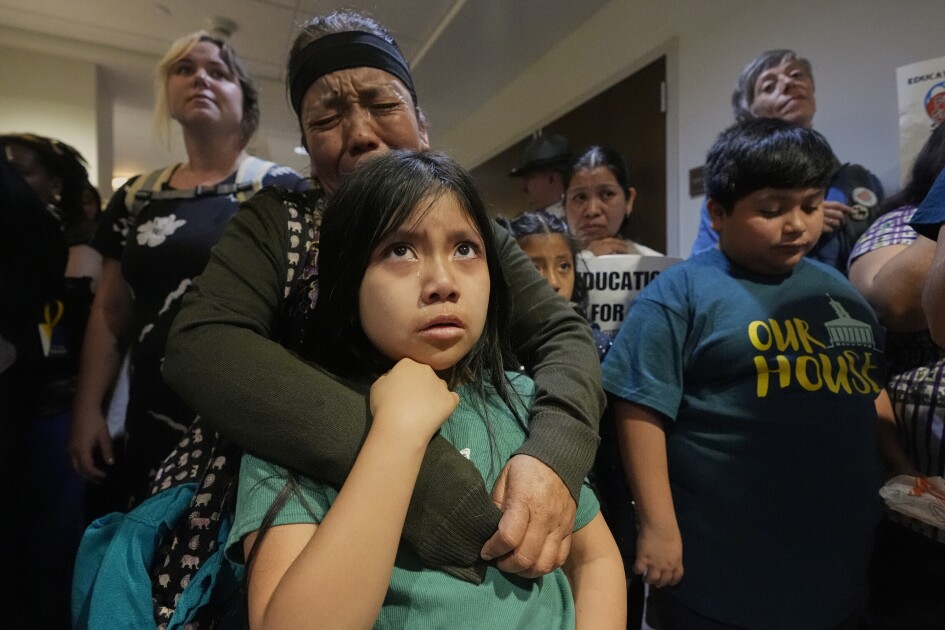
Supreme Court Precedent Under Scrutiny
The 1982 Supreme Court decision in Plyler v. Doe, which affirmed the constitutional right of undocumented students to free K-12 public education, faces significant renewed challenges. This 5-4 ruling has been foundational for educational access, but recent legislative actions and policy discussions signal a concerted effort to undermine its standing.
State-level attempts to circumvent Plyler v. Doe are not new, with notable instances in California (1994) and Alabama (2011). These prior challenges failed to overturn the ruling, underscoring the legal and constitutional barriers. The persistence of these efforts, however, highlights an ongoing tension between federal judicial precedent and state-level policy objectives concerning immigration and education.
Legislative and Policy Escalation
Recent legislative proposals in states like Tennessee represent an aggressive approach to questioning the Plyler v. Doe precedent. Lawmakers are considering mandates for collecting students’ immigration status, a practice not standard nationwide. This is widely viewed as a precursor to denying educational access based on immigration status, directly confronting established constitutional protections.
The consequences of such data collection are significant, potentially deterring undocumented students from enrolling and leading to constitutional challenges under the Fourteenth Amendment’s Equal Protection Clause. Public school systems are navigating a complex intersection of operational data collection, fundamental legal rights, and potential federal litigation.
Political Architectures and Strategic Agendas
White House advisor Stephen Miller has reportedly urged Texas Republicans to advocate for excluding undocumented children from public schools. This alleged push signifies an escalation in Miller’s long-standing efforts, as a key architect of former President Donald Trump’s immigration policies, to restrict public education access based on citizenship status. His involvement suggests a coordinated strategy aligned with broader anti-immigration agendas advanced by conservative policy organizations.
Miller’s alleged advocacy is consistent with efforts documented during the Trump administration. The current push is framed within a multi-pronged anti-immigration campaign, indicating a strategic intent to leverage political momentum and policy frameworks, such as those in The Heritage Foundation’s Project 2025 playbook, to achieve these objectives.
Institutional Backing and Policy Frameworks
The Heritage Foundation, a conservative think tank, has published materials advocating for increased state-level challenges to the Plyler v. Doe decision. This institutional backing provides policy frameworks and intellectual justification for legislative efforts to restrict educational access for undocumented students. The organization’s involvement suggests strategic alignment between policy advocacy, political action, and potential legal challenges.
The Project 2025 initiative, spearheaded by The Heritage Foundation, aims to shape the agenda of a potential future Republican administration. By targeting the Plyler v. Doe ruling, these efforts are strategically positioned to influence educational policy and immigration enforcement, potentially creating a ripple effect across state education systems and federal legal interpretations.
Distributional Impacts and Stakeholder Exposure
The primary beneficiaries of these proposed policy shifts would be proponents of stricter immigration enforcement and more restrictive definitions of public service access. Conversely, undocumented students and their families face heightened barriers to education, potential fear of deportation, and disruption to their societal integration. Educational institutions are exposed to significant legal risks, administrative burdens, and potential funding implications.
School districts in states actively pursuing these challenges, such as Tennessee, are at the forefront. The financial implications for these districts could include substantial increases in legal defense costs and potential loss of federal funding if found in violation of federal law or constitutional principles, creating a complex web of incentives and risks.
Legal Precedent and Constitutional Interpretation
The legal foundation of Plyler v. Doe rests on the Equal Protection Clause of the Fourteenth Amendment, prohibiting states from denying any person within their jurisdiction the equal protection of the laws. The Supreme Court’s 1982 ruling interpreted this to include undocumented children, arguing that denying them education would create a permanent underclass and harm society.
Any successful challenge to Plyler v. Doe would likely require a new Supreme Court ruling or a significant legislative act that withstands constitutional scrutiny. The current political climate and judicial composition are critical factors proponents are likely considering.
Market and Societal Ramifications
Restricting educational access for undocumented youth has broader societal and economic ramifications beyond immediate impact. It can lead to a less educated workforce, increased long-term reliance on social services, and perpetuation of socioeconomic disparities. The argument for educational access is often linked to fostering civic engagement and economic productivity.
The debate intersects with the broader discourse on immigration policy and national identity, seeking to redefine recipients of public resources. These efforts have significant implications for social cohesion and the future demographic landscape of the United States.
Regional and State-Level Dynamics
The focus on states like Tennessee highlights regional divergences in immigration and education policy approaches. While some states actively explore challenges to Plyler v. Doe, others uphold existing frameworks, creating a patchwork of educational access and enforcement nationwide.
Differing legislative actions since 2024, compared to states where similar efforts failed, indicate a dynamic political landscape. The success of such challenges likely depends heavily on specific state political and legal environments, as well as the national climate.
Historical Context and Strategic Leverage
Repeated attempts to challenge Plyler v. Doe since 1982 demonstrate persistent ideological opposition. Each wave of challenges often coincides with shifts in national political discourse and immigration policy priorities, suggesting a strategic use of political cycles.
Current efforts are amplified by the broader anti-immigration campaign associated with the Trump administration’s platform, aligning with a vocal constituency and potentially increasing political capital for legislative and judicial pursuit.
Media and Public Discourse Framing
The framing of these issues in public discourse and media coverage critically shapes public opinion and political will. Reports highlight behind-the-scenes discussions and long-term strategic planning involved in challenging established legal precedents.
The narrative surrounding these challenges often centers on themes of national sovereignty, resource allocation, and the rule of law. Analyzing how these narratives are constructed is crucial to understanding the broader impact on societal attitudes and institutional responses.
Future Trajectories and Potential Outcomes
Ongoing legislative actions and policy advocacy suggest legal and political battles over educational access for undocumented students are far from over. Success will likely depend on a complex interplay of judicial interpretation, legislative action, and public opinion.
Should challenges to Plyler v. Doe gain traction, implications for the U.S. education system and social policy would be profound, necessitating re-evaluation of constitutional rights in the context of immigration and potentially leading to significant shifts in educational access and social integration.
The Role of Advocacy Groups and Think Tanks
The involvement of organizations like The Heritage Foundation underscores the strategic importance of policy research and advocacy. These institutions provide intellectual scaffolding and policy blueprints influencing legislative agendas and judicial considerations.
Their efforts to mobilize support for challenging Plyler v. Doe demonstrate a sophisticated approach to influencing public policy, aiming to create a favorable environment for legal and legislative changes. This institutional backing is critical to altering the landscape of educational access for undocumented students.
Operational Challenges for Educational Institutions
If states mandate the collection of immigration status, public schools will face significant operational hurdles. This includes developing secure data collection systems, training staff on sensitive data handling, and establishing clear protocols for responding to inquiries or enforcement actions.
The potential for chilling effects on enrollment and attendance poses a direct threat to school districts’ financial stability and educational mission. Institutions must balance legal compliance with their commitment to providing education to all students, a task complicated by evolving legal and political pressures.
The Fourteenth Amendment’s Enduring Relevance
The debate over Plyler v. Doe serves as a critical test for the enduring relevance and interpretation of the Fourteenth Amendment’s Equal Protection Clause. It highlights how fundamental constitutional principles are applied amidst evolving societal and demographic changes.
Future legal arguments will likely hinge on nuanced interpretations of constitutional text, historical intent, and the societal implications of educational access. The Supreme Court’s stance will have lasting consequences for civil rights and the definition of citizenship in the U.S.
Capital Movement and Resource Allocation
Any successful challenge to Plyler v. Doe could trigger significant shifts in capital allocation within the education sector. States might redirect funds from supporting undocumented students to other priorities, and federal funding streams could also be impacted by changes in eligibility or enforcement.
Conversely, legal challenges to such policies could necessitate increased investment in legal defense and advocacy by civil rights organizations. The financial implications extend to potential costs for social services if educational attainment declines among a segment of the population.
Performance Leverage and Strategic Positioning
Successfully challenging Plyler v. Doe offers significant performance leverage for political actors and advocacy groups, demonstrating an ability to enact policy changes aligned with a core constituency and potentially bolstering electoral prospects.
Educational institutions and policymakers committed to existing legal frameworks must strategically position themselves to defend the precedent by building coalitions, engaging in public education, and preparing for legal battles, leveraging existing capital to maintain the status quo.
Competitive Implications in Policy Arenas
The push to challenge Plyler v. Doe creates competitive dynamics in policy arenas, particularly between those advocating for stricter immigration controls and those defending broader civil liberties. This competition unfolds in legislative chambers, judicial proceedings, and public opinion campaigns.
Think tanks and advocacy groups compete to shape the intellectual and political landscape, producing research and framing arguments. The outcome will significantly influence the future direction of immigration and education policy in the United States.
Downstream Effects on Social Integration
The ability of undocumented youth to access education is intrinsically linked to their long-term social integration and economic mobility. Denying or restricting this access can create lasting barriers, potentially leading to increased social stratification and reduced civic participation.
Societies that limit educational opportunities for youth may face challenges fostering a cohesive and inclusive social fabric, with downstream effects on community relations, public health, and overall social capital.
Exposure to Reputational and Legal Risk
States and institutions actively pursuing policies challenging Plyler v. Doe expose themselves to significant reputational and legal risks. They may face condemnation from civil rights organizations, international bodies, and segments of the public, alongside protracted and costly litigation.
Conversely, institutions upholding the precedent may face political pressure. Navigating these pressures requires careful consideration of legal obligations, ethical responsibilities, and the long-term consequences of policy decisions.
Incentives for Policy Innovation and Resistance
The current climate incentivizes policy innovation from both proponents and defenders of Plyler v. Doe. Proponents are motivated to develop new legal arguments and legislative strategies, while defenders focus on reinforcing existing protections and advocating for their continued application.
This dynamic fosters intense policy debate and potential legal innovation as stakeholders leverage resources to shape outcomes. The ultimate trajectory depends on the effectiveness of these competing efforts and the broader political and judicial environment.