
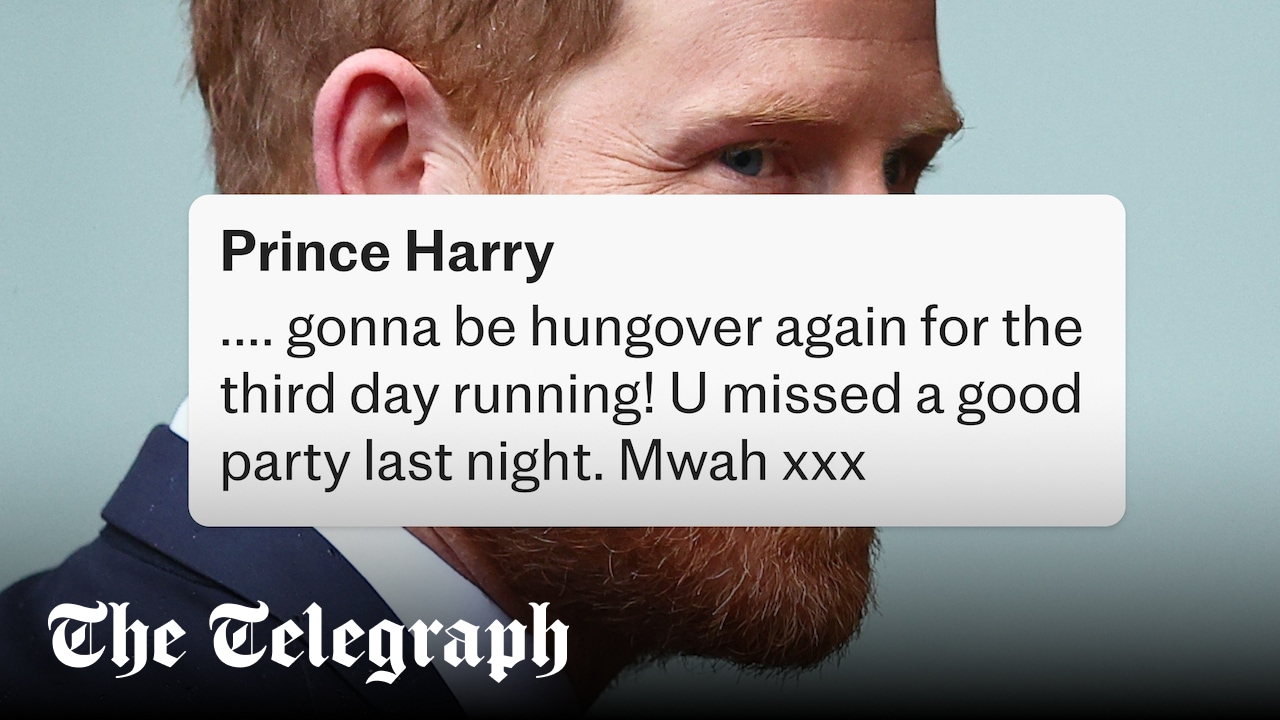
The conclusion of the Duke of Sussex’s privacy trial against Associated Newspapers Limited (ANL) has transitioned from a general debate over systemic surveillance to a surgical examination of witness credibility. The introduction of personal Facebook messages and texts between Prince Harry and journalist Charlotte Griffiths serves as a strategic pivot for the defense, designed to dismantle the claimant’s central narrative of total press isolation. By documenting historical informal interactions, the publisher seeks to establish a precedent of voluntary disclosure that complicates allegations of unlawful information gathering (UIG).
Digital Discovery and Character Impeachment
In high-stakes civil litigation, digital footprints often serve as the primary mechanism for character impeachment. Messages exchanged between December 2011 and January 2012 provide a documented timeline that contrasts with the Duke’s testimony regarding his limited media contact. This discrepancy is a calculated legal maneuver intended to weaken the reliability of the claimant’s broader evidentiary claims by suggesting a pattern of selective memory or narrative inconsistency.
The tactical release of these communications on the trial’s final day was designed to leave a lasting impression on the court’s assessment of the Duke’s reliability. By framing the relationship as one of mutual familiarity, ANL incentivizes a judicial interpretation wherein stories could have originated from social proximity rather than technical intercepts. This strategy effectively shifts the burden of proof, requiring the claimant to distinguish between information obtained through rapport and that acquired through alleged illicit methods.
The Voluntary Disclosure Defense and Operational Safeguards
Associated Newspapers Limited leverages the concept of ‘voluntary disclosure’ to insulate the institution from claims of systemic illegality. If a journalist can demonstrate a direct, informal line of communication, the defense against ‘blagging’ or phone hacking becomes significantly more robust. The presence of social monikers and informal planning in the evidence provides a tangible counter-narrative to the Duke’s claim of a predatory and exclusively intrusive press culture.
This approach also serves to protect the financial and operational integrity of the media organization. A judicial finding of systemic UIG would carry substantial punitive damages and trigger regulatory oversight that could fundamentally alter the landscape of British journalism. By compartmentalizing the allegations into individual social interactions, ANL attempts to reframe the dispute as a product of standard, albeit informal, networking practices rather than criminal conspiracy.
Institutional Friction and the Privacy Paradox
The trial highlights the institutional friction between the British monarchy and the tabloid press, a relationship historically defined by a complex exchange of access and privacy. The Duke’s assertion that his inner circle was impenetrable is challenged by his own direct communications, suggesting a more fluid boundary between the Palace and the media. Mr. Justice Nicklin’s ruling will likely hinge on whether historical social interactions preclude the possibility of contemporary investigative overreach.
Ultimately, this case underscores the ‘privacy paradox’ inherent in high-profile litigation: the pursuit of legal protection necessitates the opening of private archives, often resulting in the further public erosion of the very privacy the claimant seeks to defend. For the Duke of Sussex, the operational risk of litigation has resulted in a new, permanent public record of personal data, illustrating the volatility of information in the digital discovery process.
Photo by carlosftw on Pixabay.