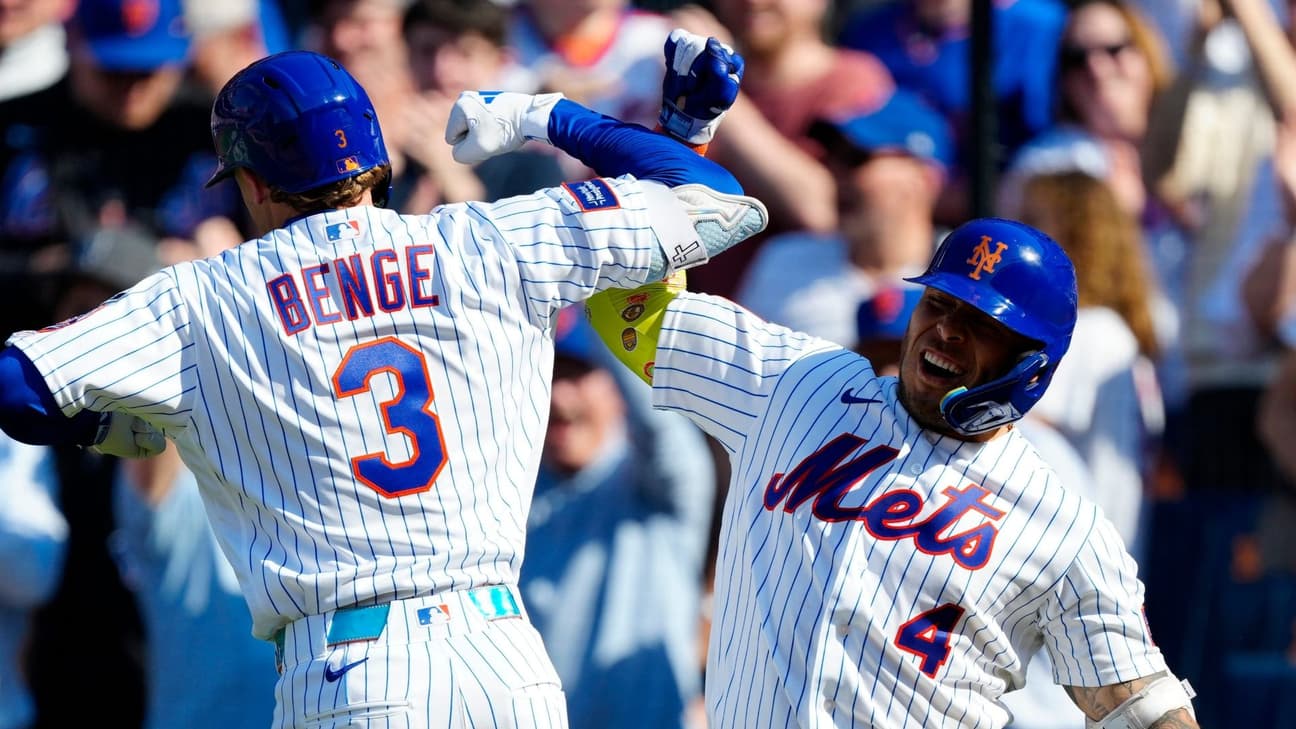
The New York Mets enter the second contest of the 2026 campaign holding a distinct tactical leverage established during their 11-7 Opening Day victory. By extracting nine walks and forcing an early exit for Pirates ace Paul Skenes, New York’s offense demonstrated a high-OBP (on-base percentage) philosophy that transcends traditional run production. This disciplined approach created a cascading fatigue effect within the Pittsburgh bullpen, a structural vulnerability that David Peterson aims to exploit in his season debut.
Tactical Continuity and Lineup Optimization
Manager Carlos Mendoza’s decision to field an identical lineup for Saturday’s matchup prioritizes operational momentum. In the high-variance environment of early-season baseball, maintaining stability for a unit that generated four multi-hit performances serves to reinforce hitting mechanics. This continuity is particularly advantageous at a chilly Citi Field, where consistent timing against Mitch Keller’s arsenal is paramount for hitters still acclimating to competitive velocity.
The strategic emphasis on plate discipline remains the Mets’ primary offensive catalyst. By inflating opponent pitch counts, the Mets effectively shorten the game, reducing the defensive burden on their own pitching staff. This methodology places immense pressure on Keller, who must navigate a lineup that has already demonstrated a sophisticated understanding of the strike zone. Furthermore, the immediate impact of rookie Carson Benge—whose debut home run provided high-impact, pre-arbitration value—adds significant depth to the lower third of the order, forcing pitchers to maintain high-stress execution throughout the entire rotation.
Pitching Dynamics and Rotational Leverage
David Peterson’s start represents a critical test of the Mets’ rotational depth. Following a high-scoring opener, Peterson’s objective shifts toward inning consumption to preserve a relief corps that saw significant action on Thursday. His left-handed profile offers a necessary tactical pivot from the power-righty approach seen previously, potentially disrupting the timing of a Pirates lineup that, despite the loss, managed seven runs of their own.
Conversely, Mitch Keller is tasked with stabilizing a Pirates pitching staff currently reeling from early-season attrition. The premature removal of Skenes in Game 1 forced Pittsburgh to deploy high-leverage arms earlier than seasonally optimal. Keller’s performance is thus a matter of structural integrity; he must limit free passes to prevent the Mets from re-engaging the secondary layers of a taxed bullpen. The matchup will likely be decided by first-pitch strike efficiency and the ability to neutralize New York’s patient approach in hitter-friendly counts.
Institutional Implications and Market Context
The broadcast on SNY highlights the regional sports network’s role in capitalizing on early-season engagement. For the Mets, securing a series victory in the opening week provides a crucial psychological buffer within the competitive National League East. The Friday off-day served as a deliberate institutional reset, allowing the Mets to refine their scouting reports on Keller while providing the Pirates a mandatory reprieve for their relief staff.
Ultimately, the 2026 Mets appear to be constructed on a foundation of sustainability—combining veteran plate discipline with emerging cost-controlled talent. As Game 2 unfolds, the focus remains on whether New York can maintain this high-efficiency offensive output or if Pittsburgh’s rotation can find the adjustments necessary to stall the Mets’ early-season momentum.