Strategic Recalibration Following Opening Day Variance
The second installment of the 2026 season-opening series between the Washington Nationals and Chicago Cubs serves as a high-stakes recalibration for both clubs. Despite Washington’s decisive 10-4 victory on Thursday, institutional betting markets, led by DraftKings Sportsbook, have installed Chicago as a -232 favorite. This valuation discounts the opening blowout as high-variance noise, instead prioritizing the Cubs’ 2025 home dominance (50-31) and superior 92-70 overall record over the Nationals’ historical road struggles.
The Mikolas Factor: Scouting Asymmetry in the NL Central
Miles Mikolas makes his Washington debut, bringing a veteran profile characterized by extensive NL Central experience from his tenure with the Cardinals. This familiarity creates a tactical paradox: Mikolas possesses refined data on Chicago’s core hitters, yet the Cubs’ scouting department holds an exhaustive repository of his pitch sequencing and mechanical tendencies. Success for Mikolas hinges on neutralizing a Cubs offense that led the division in home run production last season, particularly in the volatile wind conditions of an early-spring Wrigley Field.
Infield Volatility and Prospect Integration
Washington faces immediate structural tests following the absence of CJ Abrams (bereavement). The resulting infield realignment—Nasim Nunez shifting to shortstop and Jorbit Vivas making his MLB debut at second base—introduces significant defensive uncertainty. Manager Blake Butera’s decision to elevate Drew Millas to the second spot in the batting order reflects a modern analytical preference for maximizing on-base percentage ahead of the power core, though it places immense pressure on a young battery to produce against elite pitching.
Model Simulations and Market Logic
The SportsLine projection model, spanning 10,000 simulations, aligns with market skepticism regarding Washington’s sustainability. An over/under of 8.5 runs suggests a regression to the mean in defensive efficiency after Thursday’s 14-run total. Key variables include the catching rotation, where Miguel Amaya’s pitch-framing metrics are expected to offer the Cubs a marginal defensive edge over the Nationals’ more offensive-leaning catching strategy.
Institutional Pressure and Historical Benchmarks
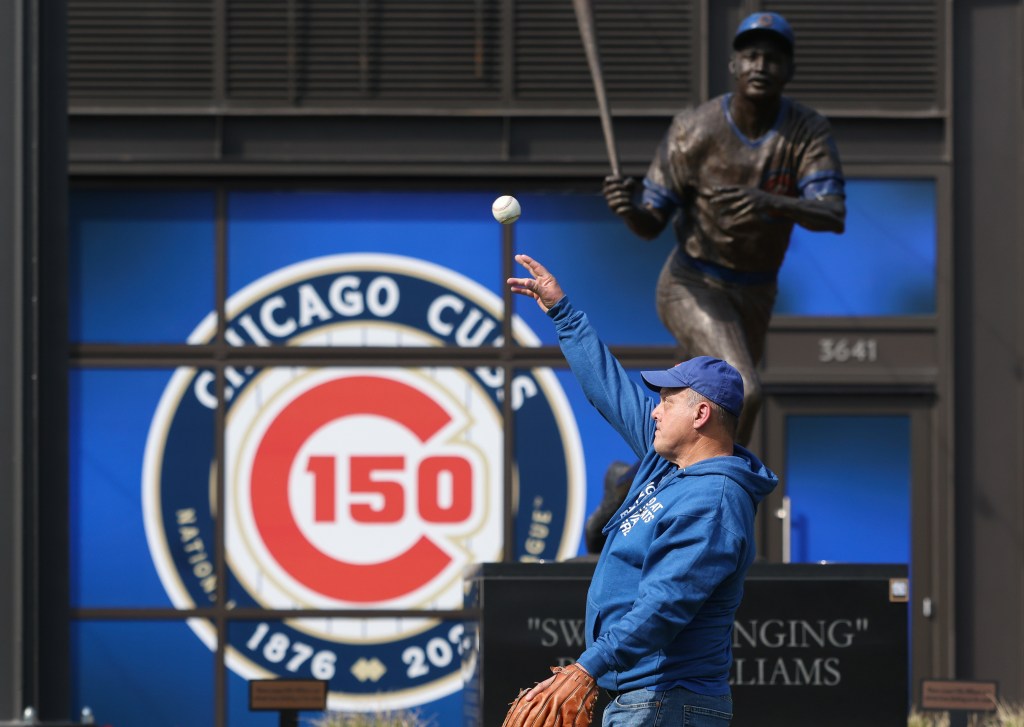
Marking the 150th anniversary of the franchise’s National League debut, the 2026 Cubs operate under immense organizational scrutiny. Jed Hoyer’s front office is tasked with validating a second-place 2025 finish against a rebuilding Nationals squad. For Chicago, avoiding an 0-2 start is not merely a statistical necessity but an institutional mandate to maintain divisional pace and satisfy a fan base conditioned by a century and a half of competitive expectations.