Elite Eight Field Narrows as Purdue and Illinois Advance
The 2026 men’s NCAA tournament’s Elite Eight is taking shape, with Arizona, Illinois, Purdue, and Iowa solidifying their places. These four teams navigated the high-pressure Sweet 16, demonstrating strategic execution and resilience.
Purdue’s Buzzer-Beater Decides Thriller
The Purdue Boilermakers secured a 79-77 victory over the Texas Longhorns, highlighting March Madness’s razor-thin margins. A late defensive adjustment by Texas, intended to counter a potential three-pointer, inadvertently left Trey Kaufman-Renn open for the game-winning tip-in.
This outcome exemplifies the strategic chess matches of tournament play, where defensive gambits can create unforeseen offensive opportunities. Purdue’s decisive play, achieved despite a 4-for-20 three-point shooting performance, underscores their offensive efficiency and clutch execution under pressure.
The availability of Texas’s key players, Tramon Mark and Jordan Pope, was reportedly compromised, potentially impacting their defensive strategy and overall competitiveness. Purdue’s operational discipline, evidenced by only four turnovers, remains a critical factor for sustained tournament success.
Duke Favored in East Regional Semifinal Against St. John’s
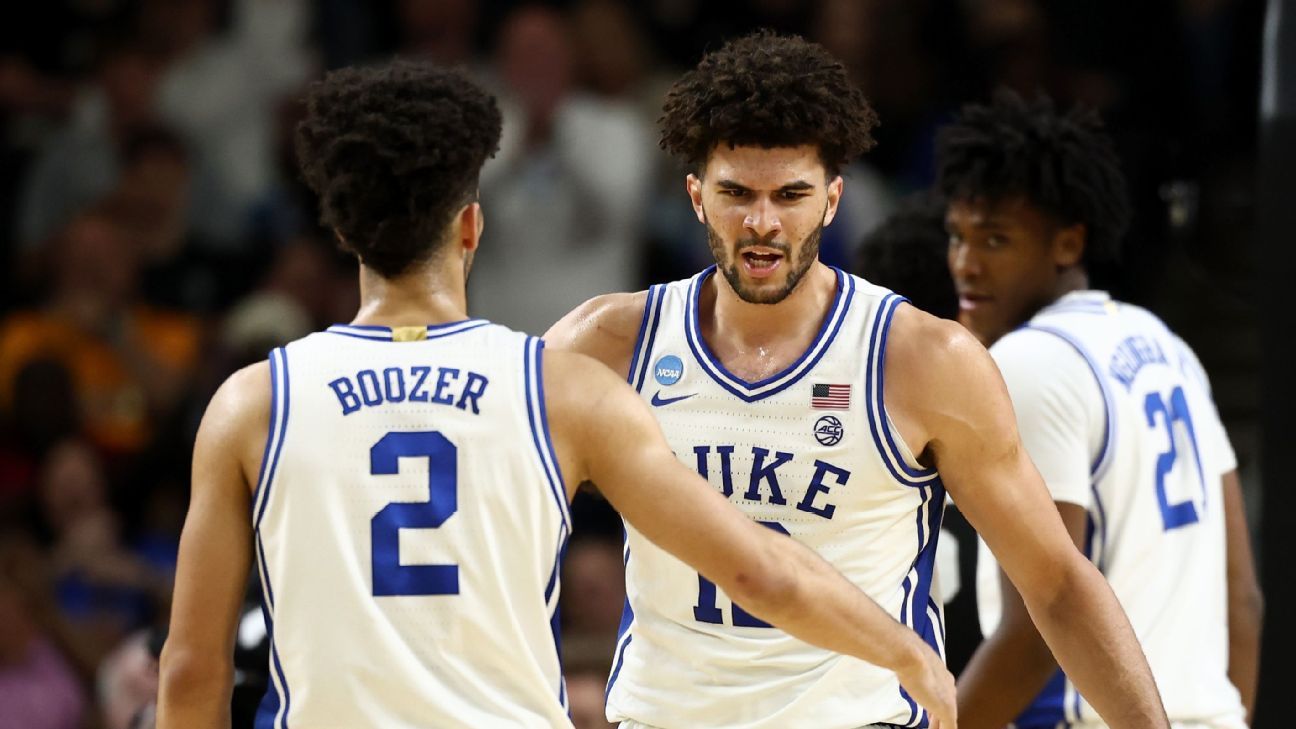
In the East Regional semifinal, No. 1 seed Duke is projected to face No. 5 seed St. John’s. ESPN analysts Jeff Borzello and Myron Medcalf predict a Duke win, with Borzello forecasting a close 73-71 contest and Medcalf projecting a 77-70 outcome.
St. John’s defensive game plan will likely focus on limiting the impact of Duke’s Cameron Boozer, a significant challenge for any defense. The Red Storm possess defensive strengths but may lack the specific length and athleticism that has previously troubled Boozer.
Defensive assignments for Boozer are expected to fall to Zuby Ejiofor and Dillon Mitchell, with Mitchell potentially guarding Isaiah Evans in half-court sets. St. John’s crucial factor for advancement will be their recent surge in three-point shooting, having hit double-digit threes in both tournament games after a prolonged drought.
Coaching Legacies Add Strategic Depth to Duke-St. John’s Matchup
The potential Duke-St. John’s matchup carries historical weight due to the coaching rivalry between Duke and St. John’s coach Rick Pitino. Pitino’s previous NCAA tournament encounters with Duke include a 2013 Elite Eight win with Louisville en route to a national title and the iconic 1992 East Regional Final loss to Christian Laettner’s Duke team.
These historical precedents inject narrative and psychological dimensions into the current contest, influencing team preparation and fan expectations. Strategic decisions by both coaching staffs will be scrutinized through the lens of these past high-stakes confrontations.
The Evolving Landscape of Tournament Favorites
The 2026 NCAA Tournament continues to highlight the challenges to traditional power structures in college basketball. Top seeds like Duke face resilient lower-seeded teams such as St. John’s, emphasizing the paramount importance of consistent execution and adaptive strategies in elimination rounds.
The financial and reputational stakes for programs reaching the latter stages of March Madness are substantial, influencing recruiting, program funding, and sponsorship opportunities. Deep tournament runs enhance a program’s profile, while early exits can intensify pressure on coaching staff and athletic departments.
Competitive Dynamics in the Sweet 16
The Sweet 16 round converges elite “blue bloods,” emerging professional talents, and seasoned coaches, creating intensely competitive matchups. Marginal gains in execution and tactical adjustments often prove decisive.
Purdue’s victory, achieved through grit and timely plays despite shooting inefficiencies, exemplifies the multifaceted nature of tournament success, contrasting with more predictable regular-season outcomes.
Capitalizing on Tournament Momentum
Teams like St. John’s, demonstrating improved performance throughout the tournament, often make deep runs due to strategic adaptation and player development peaking at the opportune moment.
Maintaining this momentum is critical, as each subsequent round presents tougher opponents and increased scrutiny. Operational efficiency and mental fortitude are key indicators of championship potential.
Future Implications for Program Trajectories
Sweet 16 outcomes directly impact future program trajectories. For teams like Duke, a strong tournament performance solidifies their perennial powerhouse status and attracts top recruits.
For teams like St. John’s, a deep run can signal a significant resurgence, altering recruiting landscapes and enhancing national perception. Coaches like Rick Pitino’s consistent success underscores their long-term strategic vision and player development capabilities.
The Economic and Media Ecosystem of March Madness
The NCAA Men’s Tournament functions as a significant economic engine through media rights, sponsorships, and ticket sales. The Sweet 16 and subsequent rounds are peak viewership periods, amplifying the media’s role in narrative shaping and influencing public perception.
Analytical predictions from reporters like Borzello and Medcalf are integral to this ecosystem, providing context and framing for the unfolding drama. Their insights contribute to broader understanding and engagement with the tournament.
Strategic Adaptations in Competitive Play
The NCAA tournament demands constant strategic adaptation. Teams that adjust defensive schemes to counter star players or find offensive solutions when primary weapons are contained are more likely to succeed.
Purdue’s win, despite shooting struggles, highlights the importance of complementary scoring and timely contributions from role players, showcasing strategic flexibility beyond a single offensive catalyst.
Performance Leverage in High-Stakes Environments
The ability to perform under extreme pressure is a critical leverage point in the NCAA tournament. Close scorelines in many Sweet 16 games underscore the significance of mental fortitude and clutch execution.
Teams consistently delivering in critical moments gain a significant performance advantage, often reflecting superior coaching, player development, and team culture.
Capital Movement and Program Investment
Tournament success can translate into significant capital movement for athletic departments. Increased revenue, donor engagement, and corporate sponsorships fuel investment in facilities, coaching, and player resources.
Visibility during March Madness is invaluable for fundraising and brand building, impacting a university’s overall athletic program and institutional reputation. Consistent deep runs position programs to attract and retain top talent across all sports.
Stakeholder Implications in Tournament Progression
For stakeholders including coaches, players, athletic directors, and fans, the tournament represents the culmination of a season and a critical juncture for program advancement. Each win carries significant weight for individual legacies and collective achievements.
Strategic decisions by coaching staffs directly influence player success and program advancement, with amplified pressure in this single-elimination format.
Downstream Effects on Recruiting and Future Seasons
NCAA tournament performance profoundly impacts future recruiting cycles. Programs achieving unexpected success or consistently performing at a high level become more attractive destinations for prospective student-athletes.
This can create a virtuous cycle of tournament success fueling better recruiting, leading to more competitive teams. Conversely, consistent underperformance hinders talent attraction, impacting a program’s ability to compete.
The Role of Analytics and Scouting
The strategic decisions and game plans discussed imply a heavy reliance on analytics and scouting. Understanding opponent tendencies, identifying matchups, and developing defensive strategies are informed by data-driven insights.
The effective integration of analytical findings into tactical approaches is critical for success in modern college basketball, influencing preparation and in-game adjustments.
Media Narratives and Public Perception
Media plays a crucial role in shaping NCAA tournament narratives. The informal framing of certain discussions reflects media engagement with the tournament’s emotional highs and lows, including unexpected outcomes.
These narratives influence public perception, fan engagement, and perceived pressure on teams and coaches, impacting the reception of games and the tournament’s unfolding story.
Institutional Pride and Competitive Positioning
Tournament success is a significant source of institutional pride and competitive positioning for universities. A deep run elevates a university’s national profile, attracting attention in athletic, academic, and research spheres.
The competitive advantage gained through strong athletic performance enhances alumni engagement, philanthropic support, and brand recognition, making the tournament a critical platform for showcasing institutional excellence.
The Strategic Value of Coaching Tenure
Coaches with proven NCAA tournament track records, like Rick Pitino, bring significant strategic value. Their experience navigating March Madness pressures, adapting strategies, and motivating players are invaluable assets.
The longevity and success of coaches like Pitino are tied to their ability to consistently build competitive teams and achieve deep tournament runs, reflecting their strategic acumen and understanding of collegiate athletics.
Capitalizing on Emerging Talent
The presence of “future pros” in the Sweet 16 highlights the tournament’s role as a showcase for elite collegiate talent. Teams featuring such players often hold a competitive edge, as individual brilliance can overcome tactical disadvantages.
Coaching strategies often maximize the impact of these stars while developing supporting players, balancing individual talent with team cohesion, a hallmark of successful tournament programs.
The Enduring Appeal of March Madness
The combination of elite competition, unpredictable outcomes, and compelling narratives ensures the enduring appeal of March Madness. The transition from regular season to the high-stakes NCAA tournament creates a unique, captivating dynamic.
The tournament’s strategic depth, operational execution, and emotional resonance solidify its position as a premier global sports event, driving significant engagement.