Quantifying Early Dominance: Penn State’s Point Velocity
The initial sessions of the 2026 NCAA Division I Men’s Wrestling Championships in Cleveland immediately established a significant competitive hierarchy. Penn State leads the team race with 40.5 points, holding a decisive 13.5-point advantage over second-place Nebraska (27 points) and Iowa (25.5 points). This lead is directly attributable to an aggressive strategic execution focused on maximizing scoring metrics.
Penn State’s 16-0 record across their eight quarterfinalists translates directly into high-leverage capital accumulation. The breakdown—four falls, seven technical falls, and four major decisions—demonstrates superior efficiency. This 81.25% bonus-point conversion rate (15 out of 18 wins yielding bonuses) critically minimizes exposure to energy-draining wrestle-back scenarios inherent in the compressed three-day schedule.
Seed Integrity vs. Volatility: Upset Impact Analysis
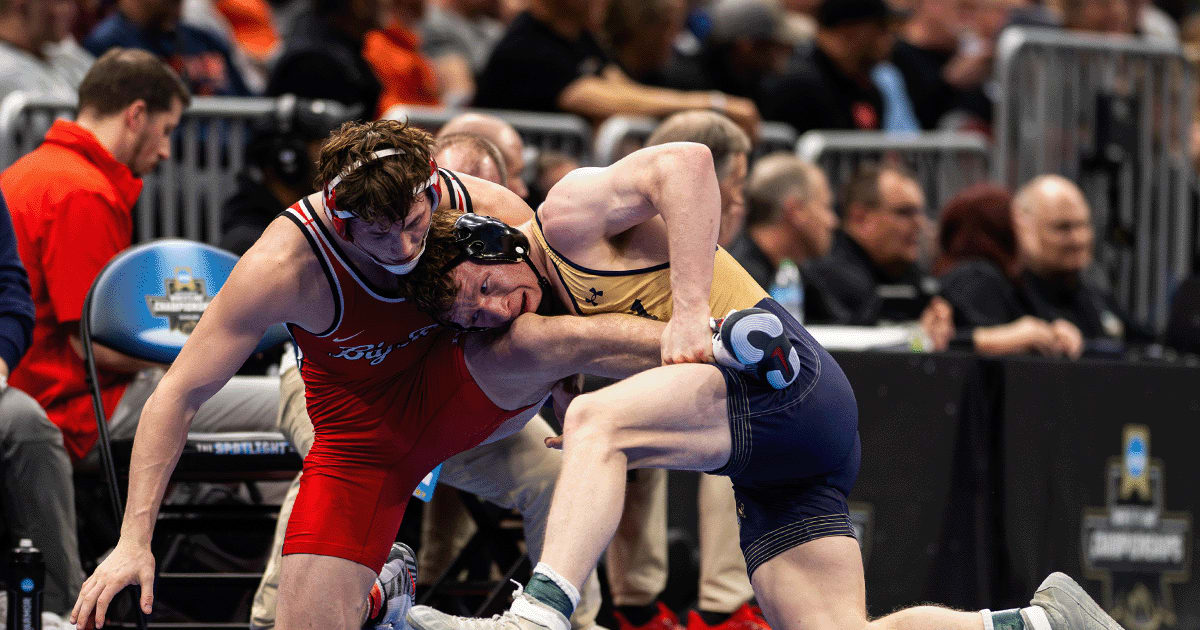
The early field, established by the March 10th announcement of 42 at-large qualifiers, is currently being stress-tested. While the top seeds generally validated their placement—19 out of 20 matches won by the ten No. 1 seeds yielded bonus points—a significant disruption occurred: Navy’s Danny Wask upsetting Cornell’s No. 2 seed at 174 pounds.
Such upsets introduce immediate volatility into the bracket architecture, forcing coaching staffs to conduct rapid re-evaluations of projected pathway progression and physical capital conservation. Conversely, Penn State’s ability to convert seeding advantages into decisive wins validates their pre-tournament ranking assessment.
Pipeline Integration: The Impact of High-Pedigree Freshmen
A key differentiator for the leading program is the immediate point contribution from true freshmen PJ Duke and Marcus Blaze. Leveraging documented international success (U20 World Champions), these athletes bypassed traditional developmental curves.
Duke’s rapid first-period falls and Blaze’s technical superiority highlight a successful pipeline integration strategy. These freshmen are not marginal contributors; their immediate high-yield performance alters the expected freshman contribution baseline, providing an immediate competitive uplift that rivals must counteract through equivalent recruiting or enhanced in-house development.
Structural Implications and Scheduling Leverage
The schedule structure, culminating in Saturday evening’s finals, rewards sustained high-intensity output. Penn State’s early bonus-point buffer provides critical insulation, allowing for superior management of physical recovery during the high-stakes Friday sessions where both main bracket progression and consolation rounds occur concurrently.
Trailing contenders like Nebraska and Iowa must now operate at a higher operational tempo, shifting their focus from tactical wins to achieving decisive margins simply to close the established point gap. The historical context of Oklahoma State’s 34 titles reinforces that long-term success requires systemic depth across weight classes, a metric currently favoring Penn State’s eight deep quarterfinalists.
Narrative Control and Recruitment Feedback Loop
High-visibility metrics on NCAA.com translate early momentum into narrative control, influencing future recruiting cycles. Penn State’s current narrative—dominance, bonus-point efficiency, and immediate freshman impact—creates a positive feedback loop for institutional appeal.
The operational metric of zero losses for the remaining eight Nittany Lions is paramount; it represents preserved competitive capital. The challenge for teams operating within the wrestle-backs is the necessary expenditure of energy to remain in contention, potentially compromising peak performance for the final sessions.