Tactical Synchronization: The Lipsey-Toure Defensive Pivot
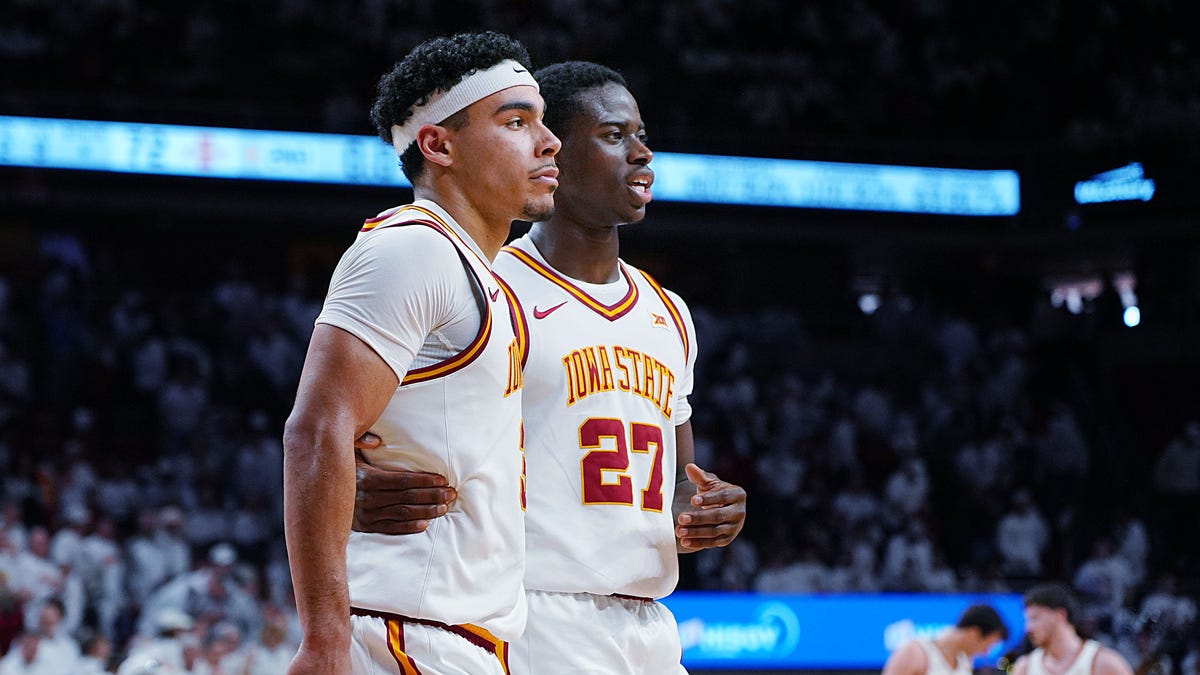
The No. 2 seed Iowa State Cyclones enter the NCAA Tournament First Round at the Enterprise Center backed by a defensive infrastructure that transcends traditional scouting reports. Central to this system is the symbiotic backcourt pairing of Tamin Lipsey and Killyan Toure. Their partnership has evolved into an asymmetric defensive force, correlating directly with the program’s 11th-ranked national scoring defense. This is not merely a pairing of convenience but a calculated integration of contrasting archetypes.
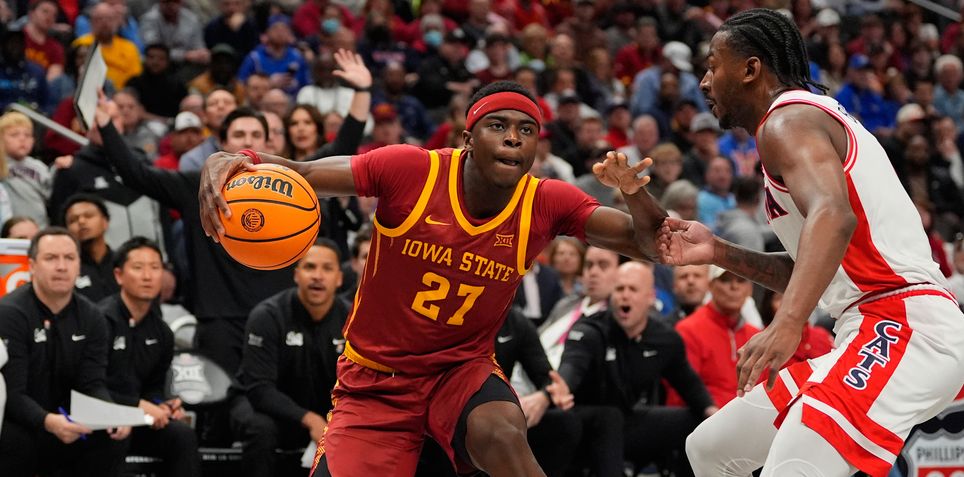
Killyan Toure, a freshman from France, provides a disruptive volatility that has redefined the Cyclones’ perimeter pressure. His defensive intensity is augmented by psychological tactics—often delivered in French—creating a linguistic barrier that complicates opponent communication. This ‘verbal fog’ serves as a unique competitive advantage, forcing ball-handlers into unforced errors. Complementing this is Tamin Lipsey, a senior whose procedural discipline and stoic leadership provide the structural floor necessary to mitigate risk while maximizing Toure’s high-variance energy.
Statistical Sustainability and the 27-7 Campaign
Iowa State’s 27-7 record is underpinned by an elite defensive efficiency that restricts opponents to a mere 65.1 points per game. This statistical foundation grants the Cyclones a significant margin for error in high-stakes tournament play, where offensive volatility is common. A +16.7 scoring differential underscores a dual-threat capability: suppressing opponent output while maintaining a top-60 offensive production of 81.8 points per game. This balance is further optimized by a high-volume perimeter game, averaging 9.0 three-point conversions per contest—a 1.5-shot advantage over their seasonal averages.
Entering the postseason with seven wins in their last ten outings, Iowa State possesses the momentum required to neutralize transition-heavy opponents. The tactical challenge against Tennessee State will be the containment of vertical speed without compromising the aggressive, rotation-heavy defense that has become the Cyclones’ hallmark under the current regime.
Matchup Analysis: Countering Tennessee State’s Transition
Tennessee State (23-9) arrives at the Enterprise Center following its first NCAA appearance in decades. However, the Tigers face a daunting historical and statistical hurdle; 2-seeds win these matchups at a rate exceeding 90%. Their offensive strategy, which relies heavily on transition opportunities, directly intersects with Iowa State’s disciplined half-court containment. While the Tigers maintain a +7.2 scoring differential, this margin is less than half of Iowa State’s, suggesting a deficit in scoring depth and physical interior presence.
Defensively, Tennessee State concedes 73.3 points per game, indicating vulnerability against high-efficiency perimeter teams. If the Cyclones establish their outside shooting early, the Tigers may be forced into a static half-court offensive struggle—a scenario where they are statistically ill-equipped to compete against Power Five athleticism.
Market Calibration and Probability Metrics
Betting markets have quantified this mismatch by installing Iowa State as a substantial 25.5-point favorite. The moneyline, currently at -10000, reflects a near-certainty in systemic dominance, pushing analytical focus toward the total (147.5–149.5 range) and the -14.5 first-half spread. Historically, Iowa State’s defensive profile favors the ‘Under,’ as their ability to suppress scoring often outpaces their offensive bursts. The first-half line suggests market confidence in the Lipsey-Toure tandem to establish immediate control, neutralizing the emotional momentum inherent in early-round underdog narratives.
Program Trajectory and Venue Dynamics
St. Louis’s Enterprise Center offers a regional advantage for Iowa State, likely creating a pseudo-home-court environment. This proximity is critical for maintaining the high-energy defensive rotations required by their system. For Iowa State, this tournament is an opportunity to cement a brand of defensive basketball that blends domestic experience with international talent. For Tennessee State, the game represents a vital institutional platform, regardless of the -2440 underdog probability. The outcome will hinge on whether Iowa State’s defensive architecture can withstand the inherent volatility of March or if Tennessee State can force a high-possession game that breaks the Cyclones’ procedural rhythm.