
Atmospheric Entry Dynamics and Regional Stress Test
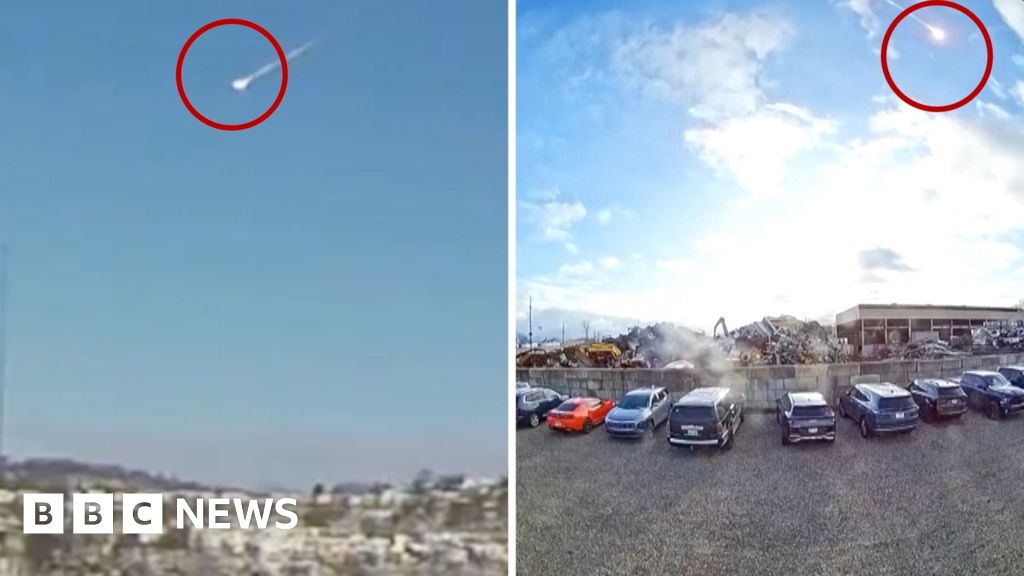
The confirmed fireball event traversing Ohio and Pennsylvania involved a substantial kinetic energy transfer, estimated by NASA experts to equate to 250 tons of TNT. This energy release manifested as a significant pressure wave, empirically validated by widespread reports of rattling structures, particularly near the hypothesized breakup altitude over Valley City.
This event serves as a critical real-world stress test for atmospheric modeling, validating energy calculations for objects of this estimated mass (~7 tons, 6 ft diameter). Operationally, the focus immediately shifted to debris recovery logistics. The primary search grid is hypothesized to cover southern Medina County, demanding coordinated response protocols across local law enforcement and scientific bodies (e.g., ODNR).
The acoustic shockwave effectively calibrated the energy dissipation profile high in the atmosphere, illustrating a key distinction: while the boom was widespread, terrestrial recovery success remains statistically improbable due to ablation or wide dispersal.
The Scarcity Imperative: Ohio’s Historical Recovery Context
The statistical framework for this event is defined by Ohio’s sparse historical documentation: only 14 confirmed meteorites have been cataloged statewide over more than a century. This scarcity creates a significant divergence between widespread atmospheric observation and successful terrestrial retrieval.
This low historical frequency elevates the scientific leverage of any confirmed find from this event. A successful recovery would markedly skew the state’s long-term collection statistics, increasing institutional incentive structures for subsequent, targeted searches. The challenge lies in matching the rapid public reporting of the event with the inherently slow, rigorous chain of custody required for scientific validation against terrestrial contaminants.
Institutional Protocols: Custody, Classification, and Competition
Immediate post-event protocols center on public safety (advising against touching fragments to preserve terrestrial context and chemical integrity) and establishing jurisdictional control. The competitive landscape involves academic institutions, private collectors, and state agencies, all vying for scientifically pristine samples.
Confirmation by bodies like the ODNR requires meeting contemporary analytical criteria, distinguishing extraterrestrial material from common iron-nickel deposits or slag. This administrative bottleneck contrasts sharply with the velocity of public discovery, potentially creating tension between scientific rigor and public expectation for immediate results.
Infrastructure Resilience and Data Fusion
The documented structural vibrations caused by the high-altitude shockwave offer empirical data on infrastructure resilience against non-seismic kinetic loading. This necessitates civil engineering review to differentiate these atmospheric loads from ground-based seismic threats.
Furthermore, the simultaneous detection by remote sensing (NASA/NWS satellites) and localized acoustic confirmation underscores the need for enhanced data fusion capabilities. A gap exists between initial trajectory prediction and precise ground impact triangulation, suggesting strategic investment in denser ground-based acoustic sensor networks to narrow future search parameters following similar airbursts.
Logistical Focus: Geographic Specificity and Search Strategy
The event’s epicenter (breakup over Valley City) dictates the initial deployment of search resources within southern Medina County. Successful search strategy relies on observer density within this defined zone and accurate identification protocols, distinguishing potential meteorites from common terrestrial material scattered by the airburst.
The precedent set by historical finds (e.g., the stony-iron specimen from Anderson County) provides a baseline for expected composition, though the current event’s high-energy fragmentation implies a wider, potentially smaller debris field. Any new discovery will significantly enhance the global reference inventory for high-energy atmospheric entry events.

Photo by Hans on Pixabay.