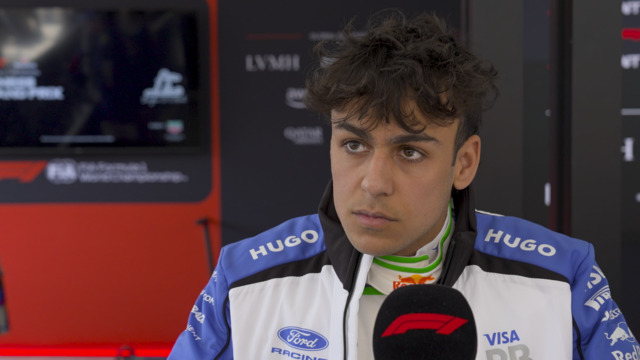
Arvid Lindblad’s F1 Debut: Regulatory Reset and Talent Dynamics
Arvid Lindblad’s points finish at the Australian Grand Prix, securing P8 in a new regulatory era, immediately recalibrates expectations for rookie drivers entering Formula 1. The 18-year-old Racing Bulls driver, the sole rookie on the 2026 grid, achieved a result that places him among the youngest points scorers in F1 history, alongside figures like Max Verstappen and Kimi Antonelli. This performance, occurring during a period of significant rule changes, carries strategic implications beyond a single race result. It challenges the traditional assumption that a regulatory overhaul favors experienced drivers capable of quickly adapting to new car characteristics. Instead, Lindblad’s immediate success suggests that the new regulations may have created a more level playing field where adaptability and raw talent can quickly overcome the experience gap.
Strategic Implications for Red Bull’s Talent Pipeline
Lindblad’s debut performance provides immediate strategic validation and competitive leverage for Racing Bulls, the junior team within the Red Bull structure. The source highlights the historical precedent set by Max Verstappen, who also achieved early success with the junior team, reinforcing Red Bull’s long-standing strategy of fast-tracking exceptional young talent. Lindblad’s P8 finish, achieved by overcoming established champions like Lewis Hamilton and Lando Norris during a dramatic start, demonstrates a high degree of confidence and racecraft under pressure. This immediate success validates Red Bull’s investment in Lindblad and puts pressure on other drivers within the Red Bull ecosystem. By setting a demanding benchmark, Lindblad’s performance accelerates internal competition for future seats in the senior Red Bull team and reinforces the junior team’s role as a direct competitive asset rather than just a development platform.
Market Perception, Resilience, and Long-Term Value
The media’s immediate reaction to Lindblad’s debut underscores the strategic value of early performance in shaping a driver’s narrative and market value. Auto Motor und Sport’s rating of Lindblad at 9 out of 10, matching race winner George Russell and Charles Leclerc, immediately positions him as a high-value asset. This positive media narrative, amplified by his status as the only rookie on the grid, enhances his brand identity and commercial appeal. The source also notes Lindblad overcoming celiac disease during his adolescence, a detail that adds a crucial dimension of personal resilience to his professional profile. This narrative of overcoming adversity demonstrates psychological fortitude, a critical attribute for success in F1’s high-pressure environment, which further solidifies his market perception and long-term stakeholder value.
The New Benchmark for F1 Rookies
Arvid Lindblad’s debut establishes a new benchmark for F1 rookies, particularly in the context of significant regulatory change. The combination of his immediate points finish, high media ratings, and strategic positioning within the Red Bull talent pipeline creates a compelling narrative of competitive leverage. His success validates Red Bull’s talent strategy and challenges rival teams to accelerate their own junior driver programs. The performance in Melbourne suggests that the 2026 regulatory changes may have inadvertently created an environment where young talent can thrive immediately, potentially reshaping the competitive landscape for years to come by prioritizing adaptability over experience in-car experience.