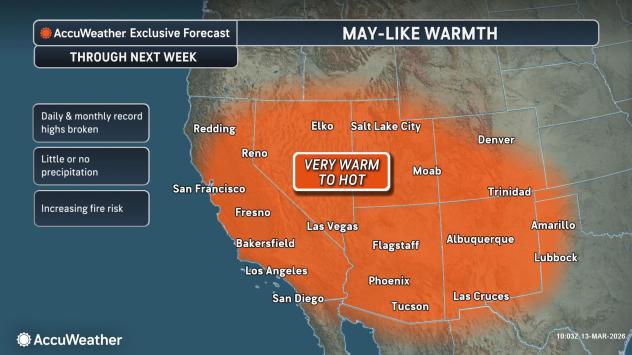
The emergence of a persistent high-pressure ridge over the Western United States in March 2026 signifies an aggressive acceleration of seasonal thermal cycles. This atmospheric block, characterized by significant geopotential height anomalies, forces a strategic recalibration of regional risk profiles. While surface temperatures reaching 20 to 30 degrees Fahrenheit above historical baselines are visually striking, the primary concern lies in the compounding structural disruptions to hydrological cycles and energy infrastructure.
Atmospheric Mechanics and Adiabatic Compression
The current meteorological event is sustained by a stationary anticyclonic system that has effectively sequestered thermal energy across a broad geographic corridor. This configuration inhibits maritime air ingress, facilitating a feedback loop of adiabatic heating as sinking air compresses within the lower atmosphere. The persistence of this pressure block suggests a fundamental breakdown in traditional vernal transition patterns, precipitating a shift toward summer-type conditions for which regional systems are not yet operationally optimized.
Analysis reveals a bifurcated thermal progression: an initial coastal surge followed by a more potent interior pulse targeting the Intermountain West. This sequence limits nocturnal cooling—a critical period for ecosystem recovery—thereby intensifying physiological stress on biological systems and increasing the cooling degree-day (CDD) load on municipal utilities well ahead of historical peaks.
Hydrological Destabilization and Snowpack Sublimation
The most acute long-term risk involves the rapid depletion of the regional snowpack. Following a record-warm winter, the remaining cryospheric reserves are vulnerable to accelerated melting and sublimation. This premature runoff disrupts the synchronization of water delivery to reservoirs, creating a supply-demand mismatch for the agricultural sector during the late-season growth phases.
Water managers now face a zero-sum decision environment regarding reservoir retention and conservation mandates. Early snowpack loss exacerbates deep-seated drought conditions, reducing soil moisture and priming the landscape for an extended wildfire season. The transition from a warm winter directly into a record-breaking spring heatwave bypasses the gradual melt phase essential for maintaining ecological groundwater levels.
Infrastructure Resilience and Energy Demand Volatility
The thermal spike has induced an unseasonal surge in cooling demand, challenging a regional grid where critical assets are often offline for scheduled spring maintenance. Utility providers must navigate the conflict between essential infrastructure upgrades and the necessity of maintaining load capacity during high-stress periods. This volatility is compounded for the 26.4 million people under moderate heat risk, where grid reliability is the primary determinant of public health outcomes.
Urban heat islands in Los Angeles and Phoenix further amplify these effects. While coastal areas may experience intermittent relief, interior valleys remain trapped in high-intensity thermal cycles. This geographic disparity requires emergency services to manage a complex matrix of microclimatic risks and diverse socioeconomic vulnerabilities simultaneously.
Socio-Economic Impacts and Actuarial Recalibration
The heatwave intersects with high-density economic activities, including large-scale outdoor events and the 98th Academy Awards. Logistical operations must now incorporate sophisticated climate-control measures and hydration protocols months ahead of schedule. In the agricultural sector, the anomaly risks triggering ‘false springs’—premature budding that leaves crops susceptible to subsequent frost or sustained thermal exhaustion.
This geographic expansion of the heat dome into Utah, Colorado, and Wyoming also truncates the operational window for the winter tourism industry, impacting seasonal revenue models. These disruptions indicate that the heat dome is not a localized weather event but a systemic regional challenge affecting multiple state economies and necessitating a revision of actuarial models for crop failure and wildfire damage.
Conclusion: Institutional Risk and Adaptation
The National Weather Service’s Level 2 heat risk designation in March carries greater strategic weight than the same tier in mid-summer due to the lack of physiological and mechanical acclimatization. This event serves as a definitive marker of a shifting climate regime where historical seasonal boundaries are increasingly fluid. Stakeholders must transition from reactive emergency management to a model of proactive resilience, acknowledging that extreme thermal anomalies are no longer confined to traditional summer months.