Escalating Maritime Incidents Threaten Global Energy Transit and Stability
Recent maritime incidents in the Persian Gulf and the strategic Strait of Hormuz mark a significant escalation in regional tensions, directly imperiling the stability of global energy security. Reports detail multiple attacks on foreign oil tankers, leading to vessels being set ablaze and dramatic crew rescues, underscoring the immediate operational risks and the profound impact on commercial shipping along this vital maritime corridor.
The head of Iraq’s ports company confirmed the rescue of 38 crew members from two foreign oil tankers that caught fire in Iraqi territorial waters, following an alleged Iranian attack. This incident not only highlights the direct operational hazards faced by maritime personnel but also the critical need for robust emergency response protocols and international cooperation in managing safety within a highly volatile shipping lane.
Further exacerbating the situation, a video geolocated by CNN reportedly depicted an Iranian drone striking a fuel tank in an Omani port. If confirmed, such an event would signify a strategic expansion of targeting, moving beyond immediate shipping lanes to critical onshore energy infrastructure. This broadening scope raises serious concerns about regional port facility security and the potential for a wider, more destructive conflict.
The UK’s maritime agency also documented three vessels being hit by projectiles near the Strait of Hormuz, a critical choke point responsible for facilitating approximately one-fifth of global crude oil shipments. These repeated acts of aggression introduce significant uncertainty into maritime insurance markets, invariably driving up premiums, increasing operational costs for all commercial vessels, and exacerbating global supply chain vulnerabilities.
Collectively, these actions exert substantial upward pressure on global crude oil benchmarks, as markets swiftly price in the heightened risk of supply disruptions. The strategic importance of the Strait of Hormuz means any sustained threat to its navigability can trigger cascading economic effects globally, influencing everything from freight rates and commodity prices to consumer energy costs and broader inflationary pressures.
Strategic Shifts: US Intelligence Assessments and Proactive Military Responses
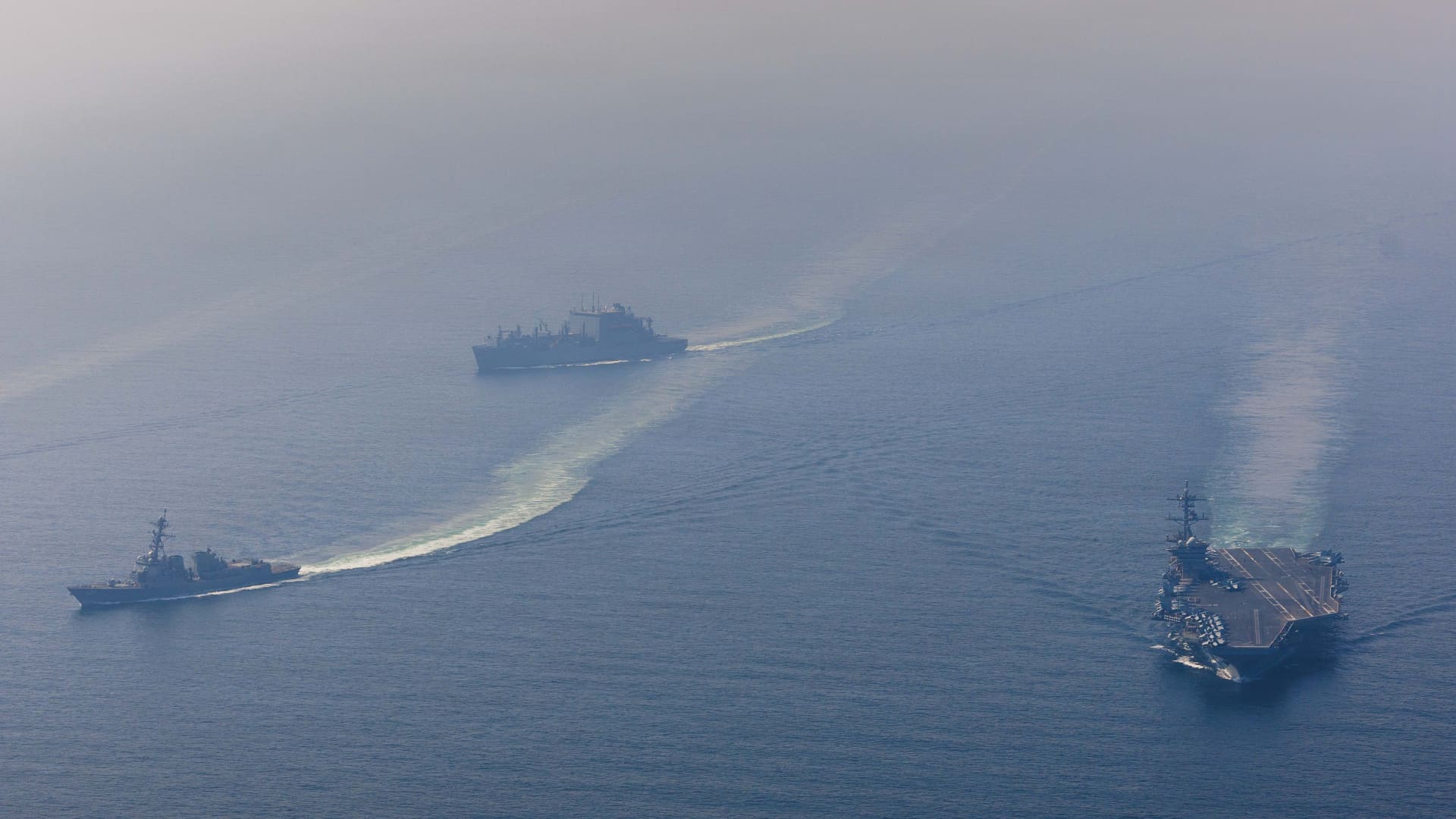
US intelligence reporting indicates a crucial strategic shift: direct attacks by Iran now pose a greater and more immediate threat to oil tankers in the Strait of Hormuz than the traditional deployment of mines. This assessment fundamentally alters defensive planning, compelling naval forces to prepare for dynamic, kinetic engagements rather than static, detectable threats.
The intelligence community’s prioritization of direct threats, such as “a swarm of one-way attack drones or a series of shore-to-ship ballistic missiles,” reflects the evolving nature of naval warfare in contested littoral environments. These asymmetric capabilities offer Iran significant leverage, as even a single successful, low-cost strike could decimate or sink a tanker, creating disproportionate economic and strategic impact with minimal direct confrontation costs for the aggressor.
In response to these perceived threats, the Trump administration, citing concerns over Iran’s potential preparations to mine the strait, conducted preemptive strikes against 16 mine-laying vessels. This decisive action aimed to degrade Iran’s anti-access/area denial (A2/AD) capabilities, signaling a clear willingness to neutralize threats before they could be actively deployed, thereby establishing a deterrence posture.
US Central Command released compelling video evidence showing munitions striking nine vessels, most of which were reportedly moored at the time of the attack. This tactical approach suggests a calculated effort to neutralize potential threats and project power, while simultaneously minimizing direct engagement with active combatants. The strategic message, however, remained one of decisive military intervention and a hardening of US resolve.
A senior administration official characterized these US actions as the “largest attack against Iran in the conflict to date,” underscoring the gravity of the situation and the potential for further military responses. This framing was intended to shape risk calculus for all regional actors, though it also carried inherent risks of accelerating the escalation cycle.
President Donald Trump’s public statements, including a Truth Social post demanding the immediate removal of any mines, reinforced the administration’s firm stance. Such direct and public ultimatums aim to establish clear red lines, yet they also carry the risk of further entrenching adversarial positions and limiting diplomatic off-ramps, making de-escalation more challenging.
Trump’s assertion that “Military consequences to Iran will be at a level never seen before” if mines were not removed, coupled with a later claim of sinking 10 inactive minelaying ships, exemplifies the administration’s strategy of public deterrence. This rhetoric sought to influence Iranian decision-making by emphasizing the potential for overwhelming military retaliation, albeit with a degree of ambiguity regarding the full veracity of claimed outcomes.
Despite the US strikes, a CNN report indicated that Iran had only laid a “few dozen” mines in recent days, while retaining over 80% of its small boats and minelayers. This critical detail suggests that the US strikes, while impactful, represented only a partial degradation of Iran’s minelaying capacity. Iran thus maintains substantial capabilities for future operations, indicating the sustained nature of this particular threat.
The continued retention of significant minelaying capacity by Iran implies a sustained ability to disrupt maritime traffic at will, even after US interdiction efforts. This strategic ambiguity allows Iran to maintain a credible threat to global shipping, effectively influencing regional power dynamics, international naval deployments, and the broader geopolitical landscape without constant overt aggression.
Broader Geopolitical Context: Regional Conflict, Stakeholder Vulnerability, and Miscalculation Risks
The intelligence reporting explicitly states that the Strait of Hormuz has been “effectively shut down by the Islamic Revolutionary Guard since the start of the US-Israeli war against Iran.” This framing provides a critical, albeit contentious, lens, suggesting that the current maritime incidents are not isolated events but rather manifestations of a broader, undeclared conflict. This systemic interpretation profoundly influences how international actors perceive and respond to regional instability and the specific actions of Iran.
The characterization of an ongoing “US-Israeli war against Iran” implies a sustained, multifaceted confrontation extending beyond conventional military engagements. This expansive conflict framework encompasses economic sanctions, cyber operations, proxy engagements, and information warfare, all contributing to a persistently elevated risk environment in the Persian Gulf, challenging traditional diplomatic and security paradigms.
This volatile geopolitical backdrop significantly elevates the exposure of various global stakeholders. Global oil consumers face potential price volatility, inflationary pressures, and supply chain disruptions, while shipping companies grapple with exponentially increased operational costs and severe security risks. Nations heavily reliant on energy imports through the Strait of Hormuz are particularly vulnerable, facing economic instability and strategic supply concerns.
The strategic release of stockpiled oil reserves, touted by President Trump, represents a tactical mechanism to mitigate the immediate economic impact of severe supply disruptions. Such international agreements underscore the profound global interconnectedness of energy markets and the imperative for collective action to stabilize them during periods of acute geopolitical tension.
However, the reliance on strategic reserves also highlights the underlying vulnerability of the global energy system to disruptions in key transit points. While offering a necessary short-term buffer, it fundamentally fails to address the root security challenges posed by sustained threats to maritime navigation and energy infrastructure.
The accidental US military strike on an Iranian elementary school on February 28, attributed to outdated information about a nearby naval base, introduces another critical layer of complexity. Such incidents carry significant reputational and diplomatic costs, fueling anti-US sentiment, complicating de-escalation efforts, and potentially alienating local populations whose trust is crucial for regional stability.
Operational errors, particularly those resulting in civilian casualties, can severely undermine the legitimacy of military actions and provide adversaries with potent propaganda opportunities. This incident unequivocally underscores the inherent risks of military operations in densely populated areas and the critical importance of accurate, real-time intelligence for effective and ethical engagement.
The cumulative effect of these events—maritime attacks, military responses, and accidental strikes—creates an exceptionally volatile environment where miscalculation remains a pervasive and significant risk. Each incident contributes to a self-reinforcing cycle of action and reaction, making it exceedingly challenging to predict the trajectory of the broader conflict and its ultimate impact on regional stability and global commerce.
The ongoing tensions in the Strait of Hormuz thus represent a critical test for international diplomacy, maritime security frameworks, and global energy governance. The intricate interplay of military deterrence, economic leverage, and strategic communication will ultimately determine whether the situation de-escalates, or spirals into a more widespread confrontation with profound and lasting global consequences.