
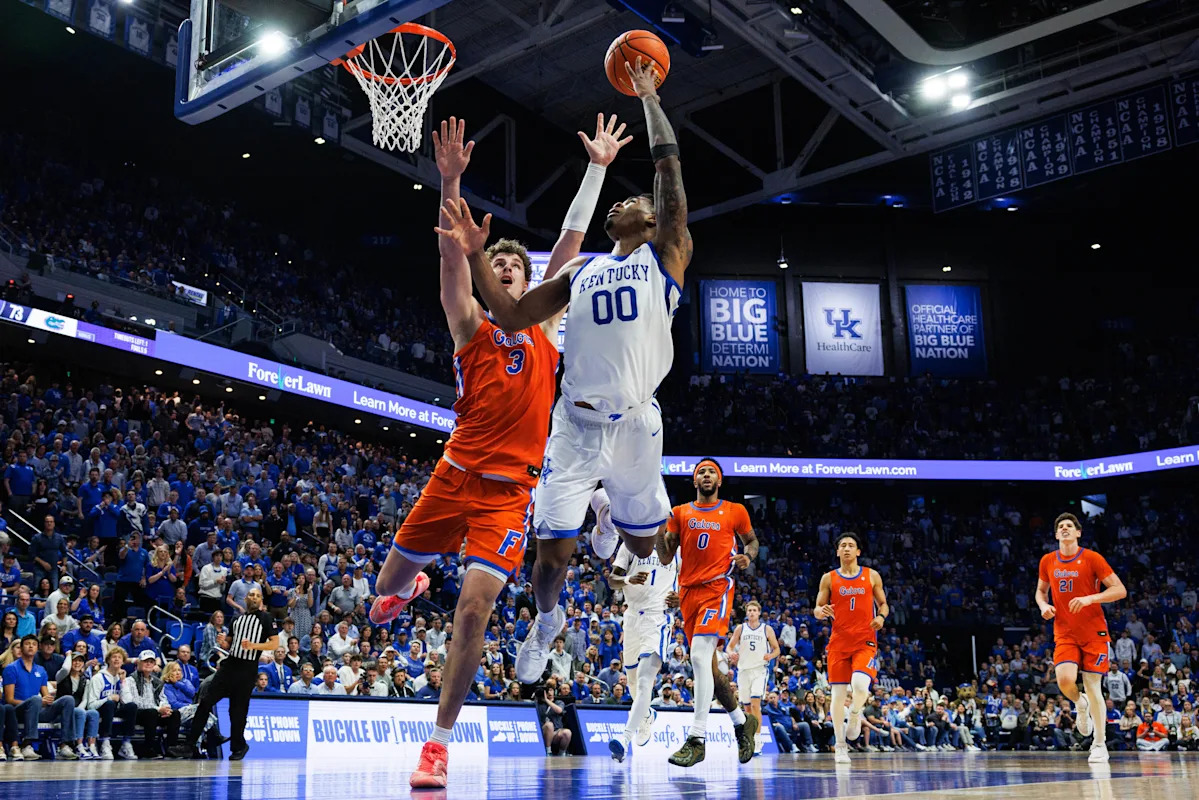
The opening contest of the 2026 SEC Basketball Tournament pits the 16-seed LSU Tigers (15-16) against the higher-seeded Kentucky Wildcats (19-12). This matchup immediately establishes a pronounced structural imbalance within the tournament bracket, forcing an early collision that historically deviates from established patterns.
Structural Positioning and Seeding Anomaly
LSU occupies the absolute bottom seed, mandating an immediate high-leverage fixture. Kentucky, while seeded higher, faces the unusual context of meeting LSU in the first round—a scenario previously avoided, as these programs typically converged in quarterfinals or later since the 1979 tournament renewal.
This early confrontation compels Kentucky to expend critical tactical and personnel resources immediately, potentially compromising strategic positioning against subsequent, potentially higher-ranked opponents who benefit from an opening-round bye or less strenuous debut.
Performance Benchmarks and Early Game Efficiency
Early statistical snapshots reveal Kentucky’s superior efficiency, evidenced by a 50% field goal percentage against LSU’s 37%. Kentucky’s perfect 4-for-4 free-throw execution contrasts with LSU’s lower efficiency in high-leverage possessions.
Although LSU registered more turnovers (3 vs. 1), signaling successful disruption attempts, Kentucky’s early 6-point lead differential (compared to LSU’s peak 4-point advantage) indicates insufficient sustained control by either side to dictate championship-caliber pace.
Institutional Imperatives and Postseason Narrative
For Kentucky, the paramount institutional goal is overcoming recent postseason underperformance, specifically securing their first SEC Tournament weekend appearance since 2019. The ‘probable’ status upgrade for forward Kam Williams (out 5 weeks with a broken foot) introduces a significant roster variable, serving as both a psychological boost and a tactical adjustment demand for opponents.
Conversely, LSU’s objective as the 16 seed centers on competitive validation. A victory here transcends simple upset status; it immediately forces a re-evaluation of Kentucky’s ceiling and potentially impacts future seeding projections by exposing perceived institutional fragility.
Stakeholder Anxiety and Competitive Leverage
The polarization of the Kentucky fanbase (‘BBN’) reflects underlying anxiety regarding the team’s current trajectory versus historical conference dominance. A first-round exit exacerbates concerns regarding coaching efficacy and roster management ahead of the offseason.
For LSU, a win validates the season metrics against a hierarchical power, providing significant leverage in transfer portal recruitment and program momentum momentum building toward the next academic cycle.
Strategic Trade-offs in Single-Elimination Play
Coaching decisions, such as Brandon Garrison immediately replacing a foul-troubled Mouhamed Dioubate, underscore the high-stakes resource management required in elimination formats. Kentucky’s pre-game Win % projection of 81.5% demonstrates the market’s immediate confidence, yet small in-game events (like officiating calls impacting foul trouble) rapidly alter this leverage.
Capitalizing on Efficiency Gaps
Rebounding parity (12 to 11) suggests LSU can battle physically despite Kentucky’s shooting advantage. However, sustaining this parity while facing a superior field goal conversion rate is difficult over 40 minutes. LSU’s early reliance on interior production from Tamba and Nwoko will be tested if Kentucky adjusts to clog the paint.
The zero production from LSU’s PJ Carter highlights systemic risk when offensive contribution relies on a narrow core; any primary scorer regression immediately exposes offensive depth deficits.
Downstream Implications for Program Trajectory
The game’s outcome dictates immediate competitive landscape adjustments. For Kentucky, failure to advance past the 16 seed signals severe underperformance relative to administrative benchmarks, potentially triggering strategic reviews.
The designated 11:30 a.m. CT start time places immediate scrutiny on both teams, setting an amplified tone for the entire SEC event before higher seeds take the floor. This early exposure magnifies the reputational consequences for both athletic departments.
Operationally, the structure demands immediate readiness. For Kentucky, this is a mandatory hurdle; for LSU, it is a high-leverage disruption opportunity. Any success by LSU fundamentally alters the path for the top-seeded teams, creating a cascade effect across the bracket logistics.

Photo by SarahRichterArt on Pixabay.