Champions League Clash: A Strategic Microcosm of European Football’s Dynamics
The impending Champions League round-of-16 first leg between Barcelona and Newcastle United at St. James’ Park is more than a sporting fixture; it’s a profound reflection of the evolving strategic and financial landscape within elite European football. Statements from both club managers, Hansi Flick and Eddie Howe, sharply delineate the fundamental tensions between sheer financial power and established institutional identity, set against an increasingly capital-intensive global sport.
The Premier League’s Financial Hegemony and Systemic Challenge
Hansi Flick’s characterization of the Premier League as “the best in the world” due to its “robust economic capacity” and “ability to attract top talent” highlights a systemic challenge. This financial dominance, fueled by unparalleled broadcast revenues and global commercial appeal, enables English clubs to invest extensively in squad depth, high-value player acquisitions, and infrastructure. The presence of six English clubs in the Champions League knockout phase underscores this concentration of competitive strength and capital, creating an uneven competitive equilibrium across the continent. For legacy clubs like Barcelona, operating outside this financial orbit, this necessitates innovative strategic responses.
Barcelona’s Identity-Driven Strategy: Quality, Style, and Sustainable Competitiveness
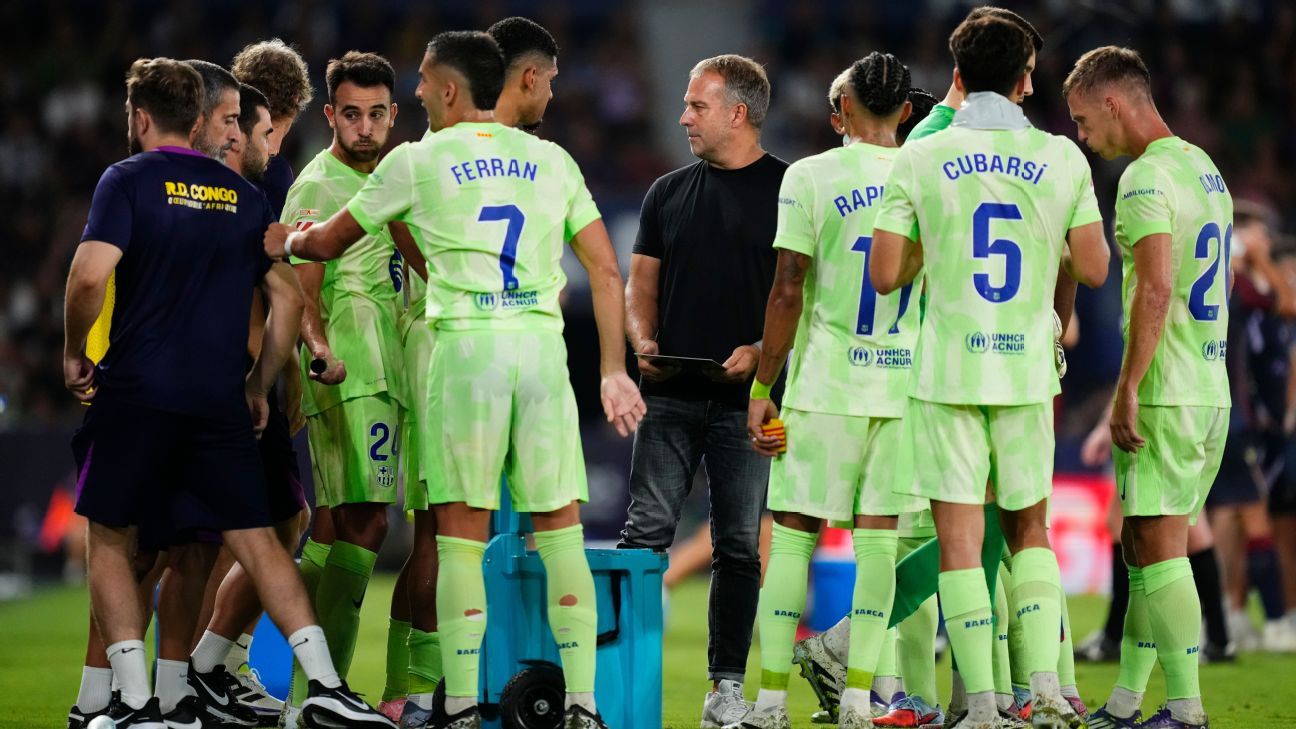
In response to this disparity, Barcelona’s strategic imperative, as articulated by Flick, is to leverage its “huge quality” and distinctive “style.” This approach frames its established footballing philosophy, rooted in youth academy development and tactical cohesion, as a core competitive differentiator and a brand asset. ‘Playing like Barça’ becomes more than a style; it’s a pathway to sustainable success, aiming to maximize performance leverage from existing assets and attract elite talent prioritizing sporting legacy and playing methodology over solely financial offers. Progressing in the Champions League under these conditions is crucial for maintaining global brand equity and alleviating financial pressures through increased prize money and market visibility.
Newcastle’s Transformational Ambition: A Benchmark for European Ascent
Conversely, Eddie Howe’s declaration that the match against Barcelona represents the “biggest game in this club’s history” offers a distinct perspective on institutional ambition. For Newcastle, making only its second appearance in the Champions League last 16 since 2002-03, this encounter serves as a critical benchmark in its post-takeover re-establishment as a European contender. Howe’s unusual emphasis signals the profound strategic importance of validating recent investments and accelerating the club’s long-term vision. This fixture is a litmus test for Newcastle’s capacity to consistently compete at the highest European level, directly influencing future recruitment, commercial partnerships, and global brand perception, aiming to solidify its place among the continental elite.
Operational Manifestations of Strategic Priorities
The operational decisions leading up to the fixture further illustrate these strategic priorities. Barcelona’s choice to field a “heavily rotated side” in a preceding league match, securing a 1-0 victory, demonstrates a meticulous prioritization of player freshness and recovery for the high-stakes Champions League tie. This tactical resource allocation, coupled with immediate travel for “decompression,” showcases a sophisticated understanding of elite athlete management aimed at mitigating fatigue and optimizing peak performance. In contrast, Howe’s focus on “psyching his players up” reflects a motivational strategy tailored to a club in Newcastle’s transformational phase, aiming to maximize mental readiness for a monumental occasion.
Broader Implications for European Football’s Competitive Landscape
Beyond the immediate outcome, this Champions League tie reflects broader structural shifts in European football. The Premier League’s dominant representation impacts talent flow, broadcast revenues, and overall competitive balance. For UEFA, this concentration presents both commercial opportunities and regulatory challenges, influencing competition formats and revenue distribution. The ability of clubs like Barcelona to effectively challenge financially superior opponents is vital for sustaining competitive meritocracy and preventing an overly homogenized elite tier. Stakeholders across the football ecosystem closely monitor these trends, as the interplay between financial strength, strategic innovation, and on-field performance continues to reshape the hierarchy of European club football.
Conclusion: A Clash of Strategic Paradigms
Ultimately, the Barcelona vs. Newcastle encounter epitomizes a clash of strategic paradigms: the established sporting heritage and identity-driven resilience of a European giant against the accelerated financial power and ambitious ascent of a transforming club. The outcome will not only determine passage to the next round but will also carry significant long-term strategic implications, validating chosen paths and influencing market positioning for both clubs and the broader direction of elite club football.