
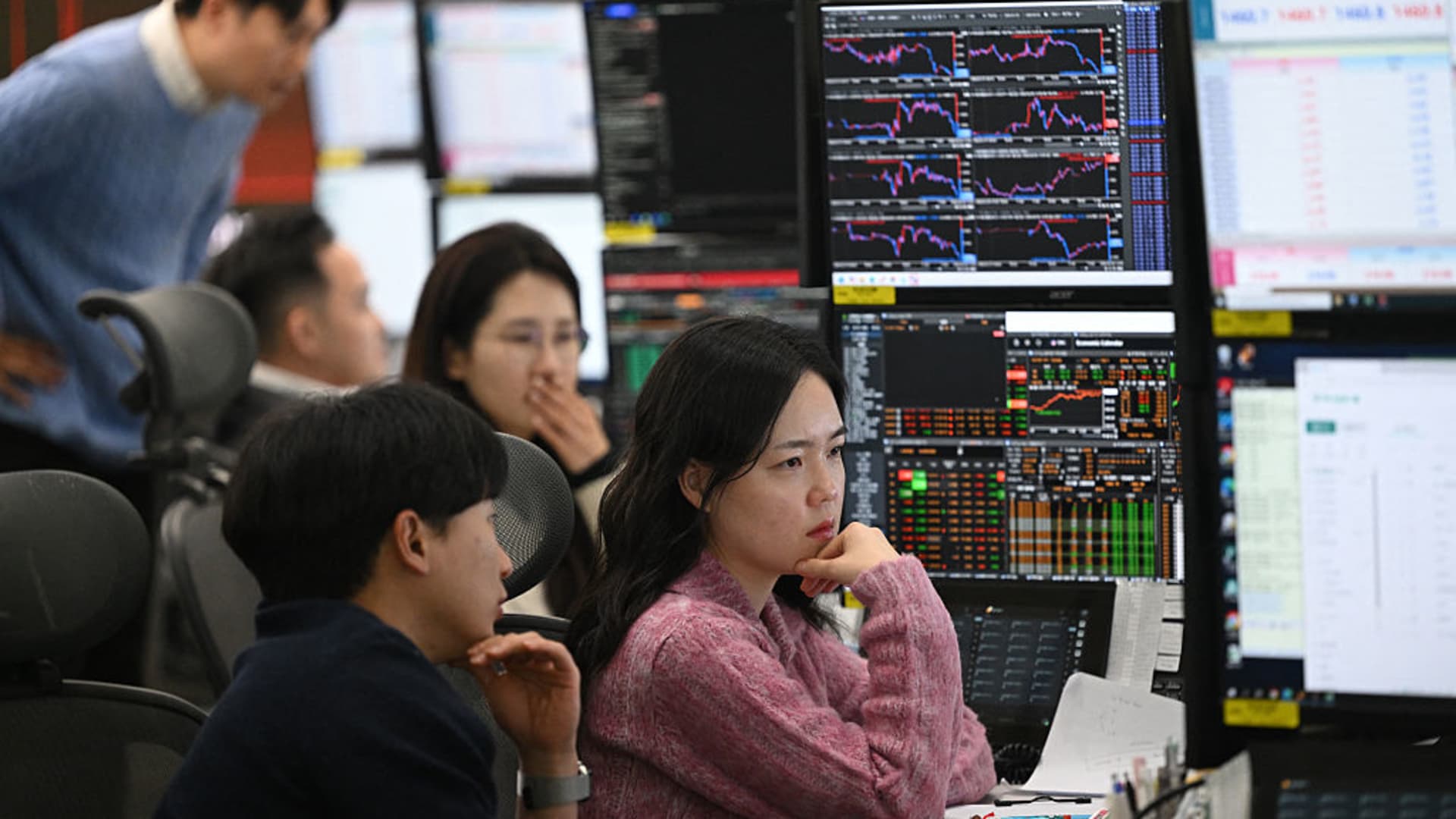
South Korea’s Kospi: Unprecedented Volatility Driven by Geopolitics and Structural Concentration
South Korea’s benchmark Kospi index, lauded as the world’s best-performing equities market in 2025, now grapples with extreme, unprecedented volatility. This dramatic paradox—a record single-day decline of 12% followed by a nearly 10% rebound, its strongest since 2008—signifies a fundamental recalibration of risk by global investors. The market’s heightened sensitivity stems from a critical interplay of escalating geopolitical tensions, surging global oil prices, and inherent structural concentration within its dominant technology sectors.
Geopolitical Tensions and Energy Import Dependency Amplify Market Shocks
The immediate catalyst for the Kospi’s extreme volatility is the escalation of geopolitical tensions in the Middle East, which has driven global oil prices significantly higher. This global risk-off sentiment has resonated deeply in international financial markets, prompting a widespread reassessment of asset allocations.
For South Korea, an export-oriented, manufacturing-heavy economy critically dependent on imported energy and raw materials, this surge in oil prices poses a severe systemic vulnerability. Increased crude costs directly inflate production expenses across its industrial base, encompassing crucial sectors like semiconductors, automotive, petrochemicals, and shipping. This operational burden directly compresses corporate profit margins, curtails investment capacity, and erodes consumer purchasing power, while also disrupting supply chain logistics and exacerbating inflationary pressures and economic uncertainty.
Market Concentration in Semiconductor Giants Exacerbates Volatility
Beyond geopolitical triggers, the Kospi’s structural characteristics inherently amplify its susceptibility to sharp fluctuations. The index exhibits significant concentration in a limited number of large-capitalization technology stocks, specifically two dominant memory chip manufacturers. This creates an “outlier” market structure, as highlighted by Jason Hsu, CEO at Rayliant Global Advisors, where the performance of a few key companies disproportionately dictates overall index movements, leading to magnified swings compared to more diversified global indices.
This heavy weighting means the entire South Korean equity market is operationally and financially interdependent with the global semiconductor cycle. Fluctuations in demand, pricing, or supply chain integrity for these critical components trigger systemic repercussions. Investors are thus exposed not only to market-wide risks but also to idiosyncratic risks associated with these specific tech giants, including their capital expenditure cycles, technological transitions, and competitive pressures. Adverse developments for these dominant players can rapidly erode portfolio value for domestic and international stakeholders alike.
Investor Confidence Recalibrated: Impact on Capital Flows and Risk Management
The Kospi’s recent whipsaw movements necessitate a critical reassessment of capital allocation strategies by international investors. Despite South Korea’s historical appeal for returns, this extreme volatility introduces a significantly higher risk premium, influencing future foreign direct investment (FDI) and portfolio inflows. Global institutional investors, prioritizing stability and predictable regulatory environments, may divert long-term capital commitments towards more diversified and stable markets.
Domestically, retail investors and institutional funds, including national pension schemes, face direct exposure, impacting retirement savings and asset management performance. The rapid erosion and recovery of capital present significant challenges for risk management and asset-liability matching. Internationally, global asset managers and hedge funds holding substantial positions in South Korean equities confront amplified portfolio volatility, with strategic decisions heavily influenced by the perceived persistence of these structural vulnerabilities and geopolitical risks.
Policy Imperatives: Diversification, Resilience, and Risk Management
The Kospi’s extreme volatility intensifies scrutiny on South Korea’s financial regulators and policymakers, demanding proactive responses. This includes considering enhanced market surveillance, refinements to trading mechanisms like circuit breakers, and, critically, initiatives to foster broader market diversification beyond the dominant technology sectors.
Such events compel a re-evaluation of national economic strategies, particularly the historical reliance on industrial champions. Policymakers are challenged to explore incentives for cultivating new growth sectors, strengthening domestic consumption, and significantly enhancing energy independence and supply chain resilience to mitigate future external shocks. For the concentrated technology giants themselves, these market conditions necessitate a heightened focus on robust risk management and strategic agility. Managing supply chain disruptions, fluctuating energy costs, and evolving geopolitical risks becomes paramount. Their strategies must pivot towards greater geographical diversification of manufacturing, securing long-term energy contracts, or investing in renewable sources to insulate operations from these systemic vulnerabilities.
Regional Interconnectedness and Managing International Perception
South Korea’s market volatility provides critical insights into the interconnectedness of global financial systems and regional economies. As a major trading nation and a critical node in global supply chains, Kospi’s movements can generate ripple effects across East Asia, influencing investor sentiment in neighboring economies. Its “outlier” status underscores that while global factors are significant, unique local structural issues create distinct vulnerabilities requiring tailored risk assessments from international financial institutions.
The dramatic swings inevitably shape the international media narrative regarding South Korea’s economic stability and investment attractiveness. Reports of record drops and rebounds can foster an impression of inherent instability, potentially influencing long-term perceptions of its economic resilience. Therefore, maintaining transparency and effectively communicating proactive policy responses will be paramount for the South Korean government and financial authorities to manage this narrative and reassure international markets about the economy’s underlying strength.
Conclusion: Navigating a New Era of Volatility for South Korea
The Kospi’s recent extreme volatility is a multifaceted manifestation of escalating geopolitical tensions, inherent market concentration, and deep-seated energy import dependency. This confluence transforms global risk events into magnified domestic market dislocations, posing a significant challenge to South Korea’s long-term economic stability.
The imperative now is to strategically balance its historically successful export-driven model with an urgent need for broader economic and market diversification. Through proactive policy adjustments, robust corporate risk management, and a renewed commitment to fostering market stability, South Korea can navigate this evolving, more volatile landscape and sustain its trajectory of long-term growth and global competitiveness.

Photo by rmsep4 on Pixabay.