
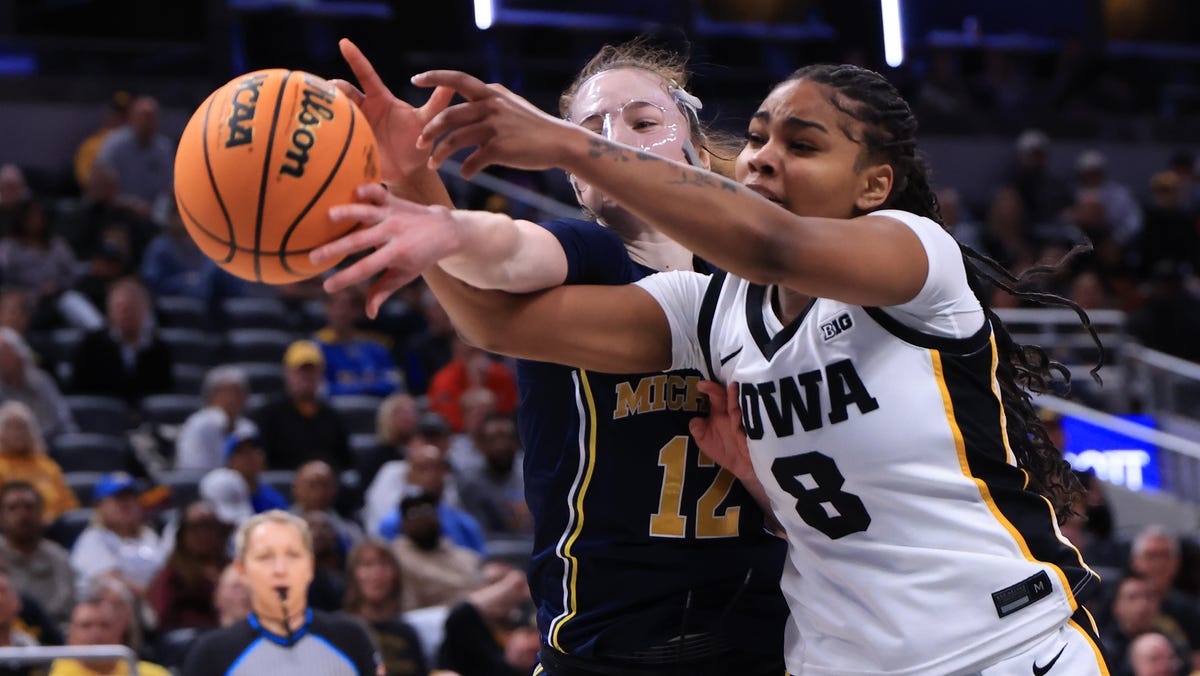
Big Ten Semifinal Analysis: Iowa’s Strategic Execution Neutralizes Michigan Offensive Threat
In the Big Ten women’s tournament semifinals, Iowa secured a 59-42 victory over Michigan, demonstrating a significant disparity in operational execution under high-stakes pressure. The outcome, which propelled Iowa to face UCLA in the final, underscored the tactical advantage held by programs capable of neutralizing key offensive threats during critical tournament phases. Michigan, despite entering the game with a 25-6 record and seeking retribution for a regular-season loss, failed to translate its season-long performance into effective tournament play, particularly in the face of Iowa’s defensive adjustments.
Analysis of Tactical Disparity and Offensive Collapse
A detailed analysis of game statistics highlights a stark operational disparity between the two teams. Michigan’s offensive collapse was characterized by a final field goal percentage of 27% and a near-total cessation of scoring in the final minutes, failing to convert a field goal during the last 4:16 of play. Their struggles were further compounded by a low 19% success rate from beyond the arc. In contrast, Iowa’s offensive efficiency remained strong, converting 44% of its field goals and 46% of its three-point attempts. This difference suggests Iowa’s defensive strategy successfully disrupted Michigan’s offensive rhythm, forcing low-percentage shots and turnovers while mitigating the impact of its own 20 turnovers through superior shot conversion.
Michigan’s strategic failure centered on the inability to adapt to the neutralization of their primary scorers. Key players, including Oliva Olson (averaging 19.5 points) and Mila Holloway (averaging 12.4 points), were limited to just 10 points each. Syla Swords, Michigan’s second-leading scorer, was also held significantly below her season average of 14.7 points. This collective offensive breakdown indicates a lack of strategic depth in Michigan’s playbook when faced with a well-prepared opponent capable of disrupting individual star performance.
Competitive Leverage and Program Resilience
The strategic significance of the match extends beyond the final score, revealing the institutional strength that has propelled Iowa to consistent success. Historical data establishes Iowa as a dominant force in women’s college basketball, having been the first Big Ten program to compete in back-to-back National Championships in 2023 and 2024. This pattern of sustained excellence provides a significant competitive advantage in recruiting and tournament seeding.
Iowa’s program resilience is further demonstrated by its record of nine consecutive 20-win seasons, the second-longest streak in program history. This consistency, coupled with a dominant home record of 141-21 since 2016 and four Big Ten Tournament titles in the last seven years, suggests a deeply embedded culture of performance and operational efficiency. The ability to maintain this level of success over nearly a decade indicates robust program management that mitigates the inherent volatility of collegiate athletics, where player turnover and coaching changes often disrupt performance trajectories.
The program’s proven pathway for professional development is another critical leverage point. With six Hawkeyes drafted into the WNBA since 2019, Iowa demonstrates a track record that enhances recruiting efforts. This success reinforces Iowa’s brand equity, creating a virtuous cycle of performance and recruitment.
Stakeholder Implications and Market Dynamics
The match outcome carries significant implications for both programs and the broader Big Ten conference. For Michigan, the loss exposes critical vulnerabilities in high-pressure situations, forcing a re-evaluation of offensive strategy and player utilization ahead of the NCAA Tournament. The neutralization of key players indicates a failure to execute alternative offensive strategies when primary options were shut down.
For Iowa, the victory solidifies its position as a top-tier contender and maintains momentum heading into the final against UCLA. The high-profile nature of this final validates the competitive strength of the Big Ten conference and increases its value proposition for media rights holders. The commercial leverage of the Iowa program is evident in its consistent high attendance figures, ranking in the national top 10 for six consecutive seasons. This sustained market engagement translates directly into revenue streams and brand visibility, providing a substantial financial advantage over competing programs, lower-profile programs.
Conclusion: Strategic Implications for Future Competition
The Big Ten semifinal result serves as a case study in competitive leverage and strategic execution within collegiate athletics. Iowa’s victory over Michigan was a consequence of sustained program development and strategic planning, rather than merely individual performance. For Michigan, the loss highlights the need for greater strategic depth and resilience under pressure. As both teams prepare for the NCAA Tournament, this semifinal will influence their respective seeding and competitive outlook, reinforcing the significance of tournament performance in defining a program’s strategic trajectory.

Photo by marchinileo0 on Pixabay.