The University of Arizona is currently navigating a period of institutional dissonance, balancing significant reputational volatility in its academic sector against high-performance milestones within the Big 12 Conference. This divergence highlights the challenges of modern university governance, where personal digital footprints and professional athletic metrics simultaneously dictate brand health.
Institutional Risk and the Limits of Digital Neutrality
Jason Gervase, an American Sign Language (ASL) lecturer, has triggered a campaign for termination following a series of polarized social media interactions. Utilizing a TikTok platform of over 100,000 followers, Gervase explicitly excluded specific ideological cohorts—including “MAGA” and “Zionist” identities—from his digital community. This exclusionary rhetoric, punctuated by derogatory statements regarding Israel, has shifted from personal expression to a perceived breach of professional neutrality.
The intervention of StopAntisemitism, led by Executive Director Liora Rez, has transformed this incident into a structural bottleneck for the administration. The organization’s demand for termination centers on the creation of a “hostile environment,” arguing that such public declarations undermine the institution’s commitment to a non-discriminatory educational space. From a risk management perspective, the university must now weigh the constitutional protections of faculty speech against the tangible threat of donor attrition and enrollment decline among tuition-paying demographics.
The controversy is amplified by Gervase’s specialized role within the ASL community. Professional influencers have noted that such polarizing rhetoric may compromise the perceived safety of deaf and hard-of-hearing students, introducing potential liabilities under federal inclusivity guidelines. The university’s response will serve as a definitive case study in how public institutions adjudicate faculty conduct in an era where the “digital campus” lacks clear jurisdictional boundaries.
Athletic Performance as Strategic Brand Stabilization
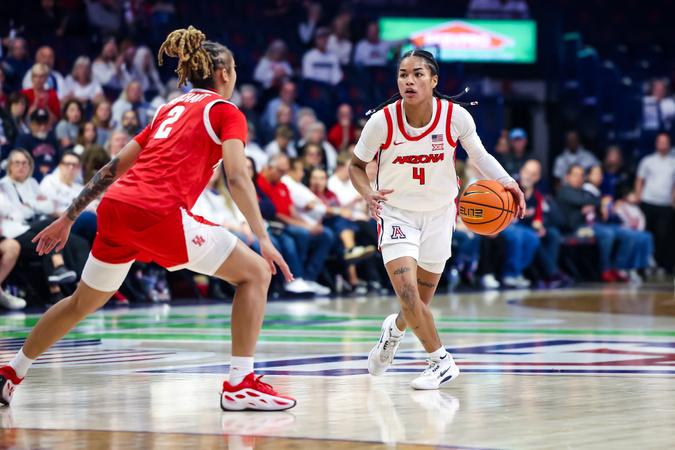
Conversely, the University of Arizona’s women’s basketball program has secured a prestige-laden victory through senior guard Noelani Cornfield’s All-Big 12 Honorable Mention. During the 2025-26 season, Cornfield emerged as the Wildcats’ primary tactical engine, averaging 14.4 points and 6.9 assists per game across 28 starts. This peer-validated recognition—determined by a vote of conference coaches—provides a critical data-driven counterweight to the university’s current administrative friction.
Cornfield’s operational efficiency is underscored by 192 total assists, a metric that ranks her second in the Big 12 and third in the university’s single-season history. Her ability to execute under pressure was most visible in a 25-point peak against Colorado and high-volume playmaking games against BYU and Kansas. Such performance is essential for a program navigating the transition to a new conference, as individual honors translate into recruitment leverage and increased media market value.
Navigating the Postseason Dual-Narrative
The resolution of the Gervase investigation and Cornfield’s postseason performance represent the two primary indicators of the university’s strategic direction in 2026. While the athletic department leverages Cornfield’s 81.9% free-throw efficiency and defensive playmaking (2.6 steals per game) to build brand value, the administration must ensure that faculty-driven controversy does not eclipse these meritocratic achievements.
The upcoming tournament matchup against ASU provides an immediate platform for brand recovery through sport. However, the financial and reputational stakes remain high; the university must demonstrate that its internal disciplinary frameworks are as robust as its athletic scouting. Ultimately, UArizona’s global standing will depend on its capacity to uphold professional standards of conduct while fostering an environment where elite performance—both on the court and in the classroom—is the defining institutional narrative.