
Operational Overview: The Alaskan ADIZ Encounter
The North American Aerospace Defense Command (NORAD) recently executed a multi-layered response to a sophisticated Russian flight profile within the Alaskan Air Defense Identification Zone (ADIZ). This encounter involved a heterogeneous formation consisting of two Tu-95 ‘Bear’ strategic bombers, two Su-35 air superiority fighters, and an A-50 Mainstay airborne early warning and control (AEW&C) platform. While the Russian aircraft remained in international airspace, the inclusion of the A-50 suggests a mission profile prioritized toward Electronic Intelligence (ELINT) and command-and-control assessment rather than a simple long-range aviation patrol.
Tactical Composition and Strategic Signaling
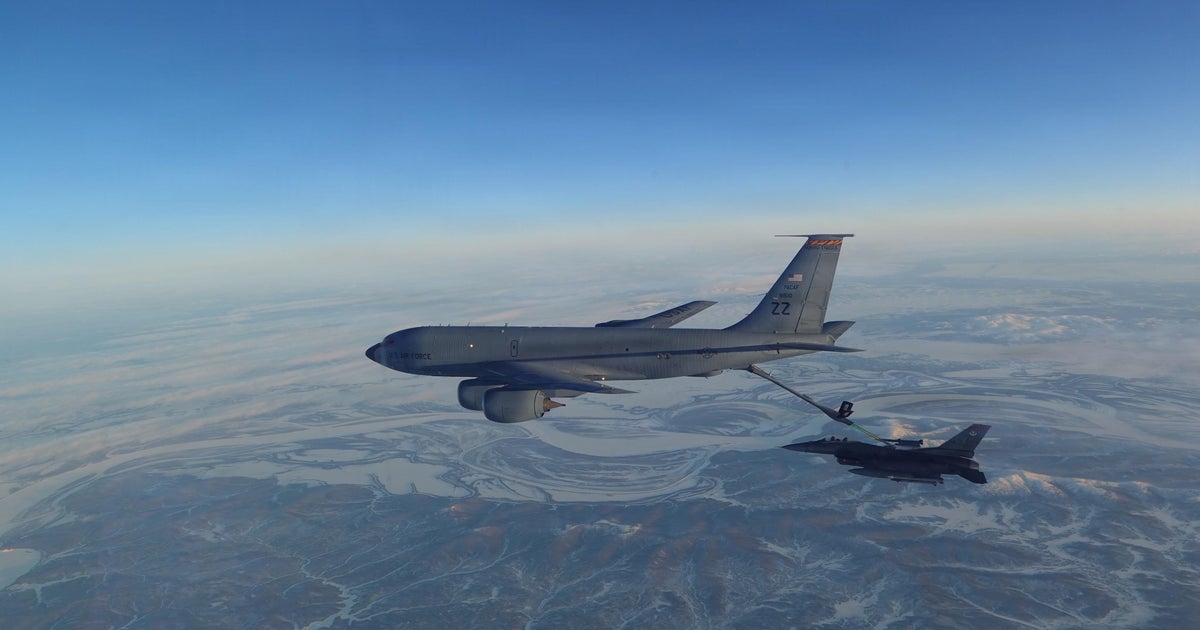
The integration of Su-35 escorts and A-50 surveillance assets represents a shift toward more robust mission packages designed to probe the electronic signatures and reaction times of North American air defenses. NORAD’s counter-response utilized a tiered intercept strategy, deploying fifth-generation F-35 Lightning IIs alongside fourth-generation F-16s. This force mix, supported by four KC-135 Stratotankers, demonstrates the logistical intensity required to maintain a persistent presence over the Bering Strait—a critical maritime and aerial chokepoint.
The Economics of Cost-Imposition
Beyond the immediate tactical engagement, these intercepts function as a form of economic attrition. The high cost-per-flight-hour associated with fifth-generation airframes like the F-35 imposes a sustained fiscal burden on the U.S. defense budget. By frequently activating these high-readiness responses, Russian long-range aviation creates a dynamic of resource competition, testing the sustainability of NORAD’s modernization efforts against routine, low-cost strategic incursions.
Information Operations and Institutional Transparency
NORAD’s rapid dissemination of high-resolution imagery and public statements serves as an ‘info-kinetic’ strategy to de-escalate tensions. By characterizing the intercept as a “regular occurrence” and “not a threat,” defense officials neutralize the political leverage of the Russian maneuver. This transparency asserts operational control over the narrative, framing the encounter as a managed professional interaction rather than a diplomatic crisis, thereby reinforcing the stability of the Arctic theater.
Geopolitical Context and Future Posture
The Alaskan ADIZ serves as the primary interface for strategic competition between Russian and North American air forces. As Russia continues to modernize its Arctic capabilities, the frequency and complexity of these sorties are expected to increase. The ability of NORAD to integrate diverse platforms and sustain long-range sorties through its tanker fleet remains the definitive benchmark for its success in preserving regional sovereignty and maritime security.