The First-Run Paradigm: Su Yiming’s Tactical Supremacy
The men’s snowboard slopestyle final at the Milan Cortina 2026 Games established a new competitive benchmark: the dominance of early-run execution over late-competition escalation. Su Yiming of China secured the gold medal with a definitive 82.41 score on his opening attempt—a technical ceiling that remained unsurpassed through two subsequent rounds. This victory, marking Su’s fourth career Olympic medal and second gold, underscores a shift in freestyle strategy where establishing a psychological and numerical lead early forces the field into high-variance, ‘all-or-nothing’ maneuvers.
By posting an 82.41, Su effectively compressed the tactical options of his rivals. Japan’s Taiga Hasegawa followed a similar trajectory, securing silver with an 82.13 achieved in the first round. The concentration of podium-topping scores in the opening phase suggests that the technical precision of the Asian contingent has reached a level where ‘safety’ runs are now high-difficulty benchmarks. This left veterans like Marcus Kleveland and Dane Menzies chasing a score threshold that ultimately triggered high-consequence errors in the later rounds.
Jake Canter and the Volatility of the Third-Run Pivot
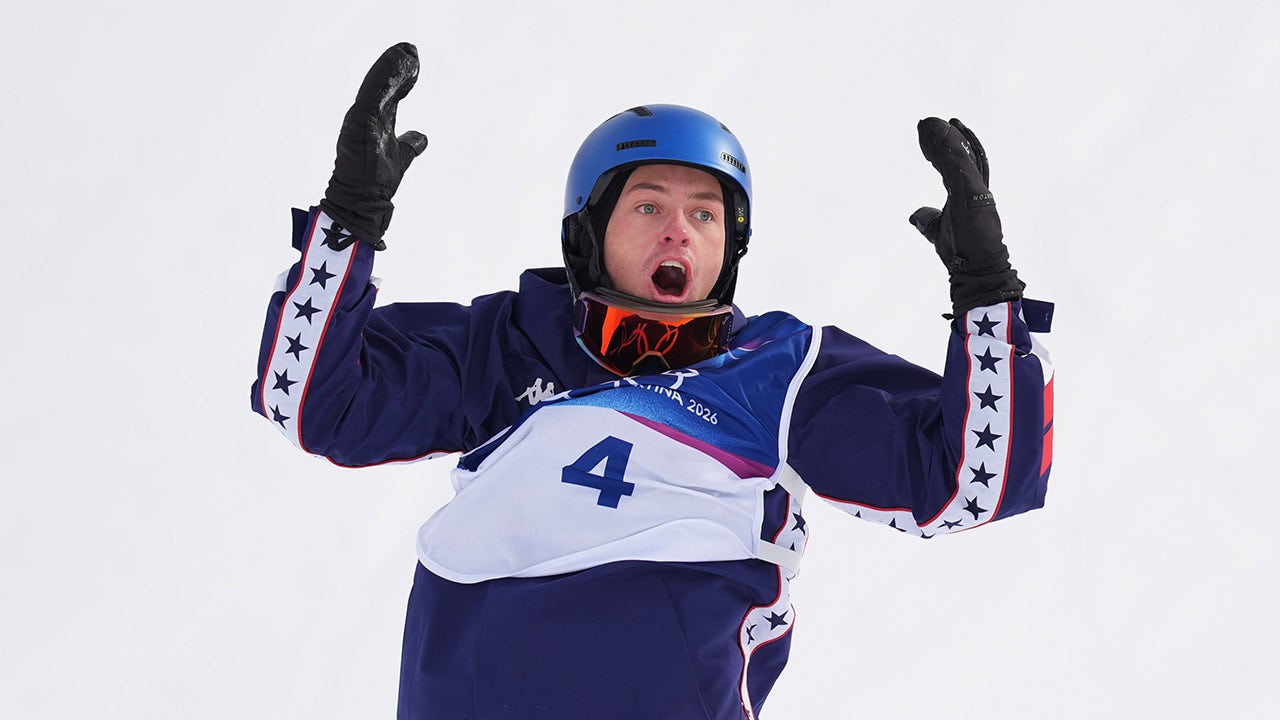
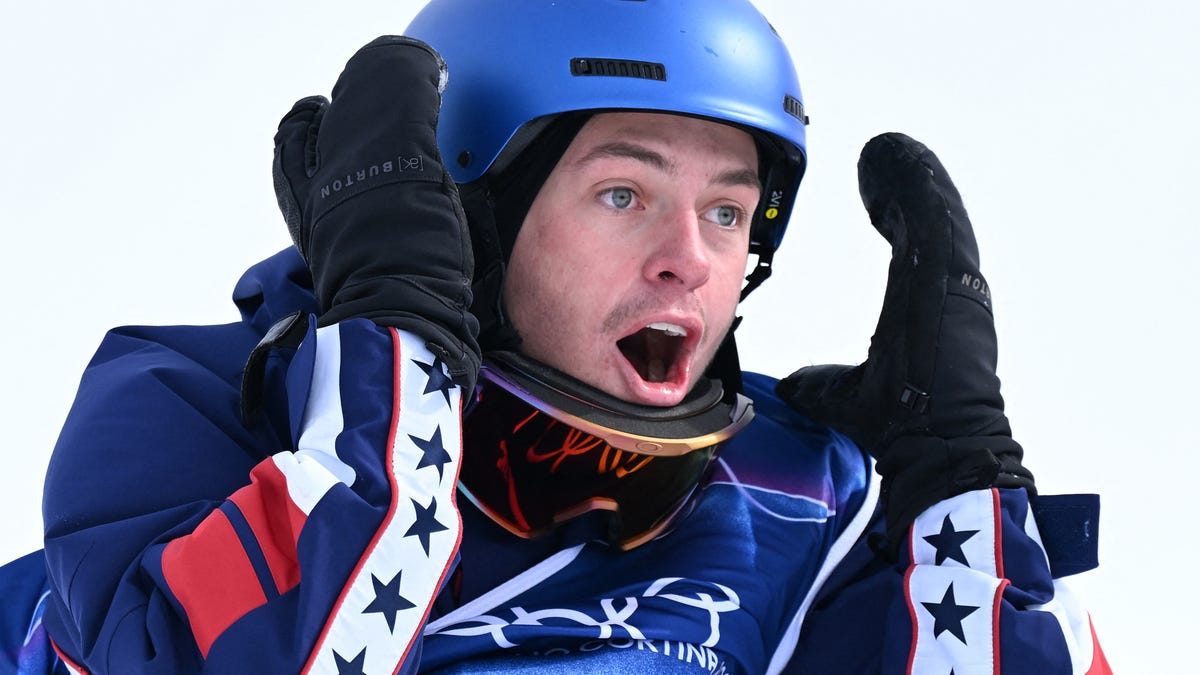
While the top of the podium was settled early, the battle for bronze highlighted the inherent volatility of the ‘Hail Mary’ final run. American rider Jake Canter, entering the third round in 10th place, executed a high-leverage tactical pivot. By integrating an additional rotation off the final rail element, Canter exploited a scoring gap in technical jibbing to leapfrog seven competitors with a 79.36. This performance validates the U.S. Ski & Snowboard selection criteria, which prioritized recent high-stakes World Cup success in Aspen over historical tenure.
Canter’s resilience is statistically significant given the physical constraints of the Livigno course. Competing with total hearing loss in one ear—the result of a previous training accident—Canter demonstrated exceptional spatial awareness on the three-rail, three-jump layout. His ability to deliver under the ‘waiting game’ pressure at the bottom of the course, as established icons like Mark McMorris (8th) struggled with the physical toll of recent injuries, signals a generational transition within the American program.
Institutional Impacts and the Technical Evolution of Slopestyle
For China, Su Yiming’s gold serves as a high-visibility dividend on long-term infrastructure investment. Beyond the narrative of his 22nd birthday victory, the result confirms China’s emergence as a dominant force in technical freestyle disciplines formerly led by North American programs. Meanwhile, the performance of 17-year-old Ollie Martin (9th) suggests that while the U.S. retains a deep talent pipeline, the technical gap in ‘clinical execution’—the hallmark of Su and Hasegawa—remains the primary hurdle for the next quadrennial.
The Livigno event proves that the 80-point threshold is no longer a luxury but an entry requirement for the Olympic podium. As the sport moves toward even higher rotation counts and more complex rail combinations, the strategic emphasis will likely shift toward maximizing first-run reliability to mitigate the physical and psychological fatigue that compromised the field’s final attempts in 2026.