
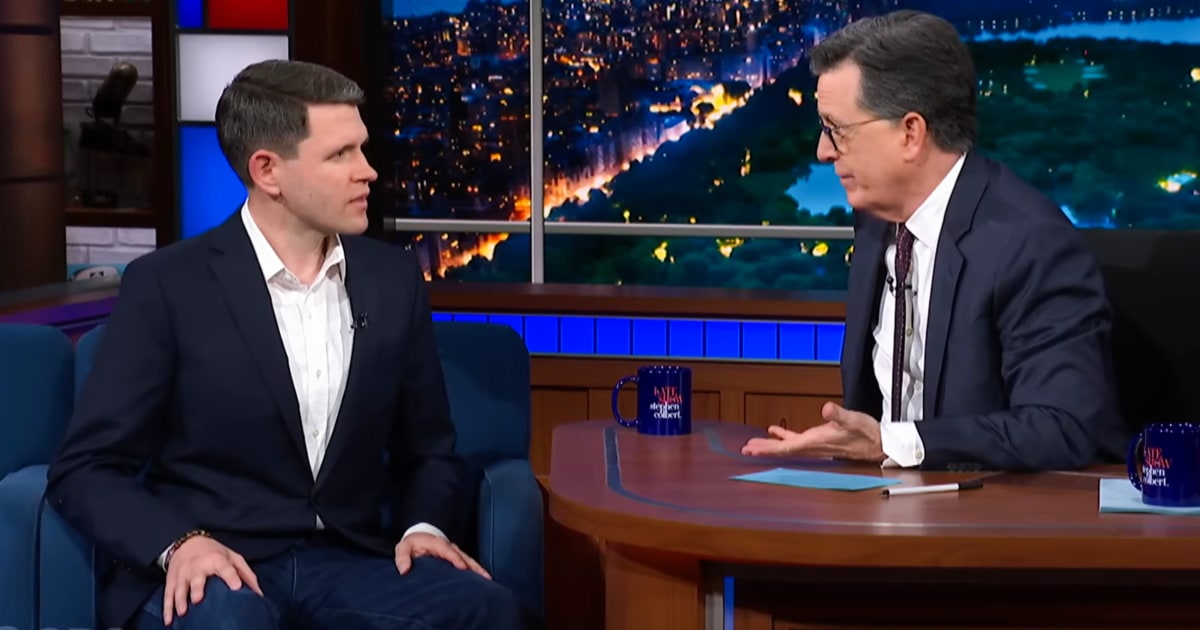
The recent decision by CBS to withhold a scheduled interview with Texas State Representative James Talarico highlights a deepening friction between creative autonomy and corporate risk mitigation. Host Stephen Colbert’s public disclosure of this legal intervention suggests a collapse of the traditional buffer between network compliance and flagship production. By citing a direct directive from network lawyers, Colbert exposed the operational tension that arises when regulatory threats translate into immediate editorial suppression.
Institutional Risk and the FCC’s Chilling Effect
The Federal Communications Commission’s (FCC) investigation into ABC’s “The View” serves as the primary catalyst for CBS’s preemptive measures. This regulatory scrutiny creates a chilling effect across the broadcast landscape, where the risk of license challenges outweighs the engagement value of high-profile political guests. For CBS, pulling the Talarico segment reflects a defensive posture designed to insulate Paramount from administrative liabilities during a period of heightened federal oversight.
The specific nature of the FCC’s interest suggests an examination of the intersection between political candidacy and broadcast fairness standards. While digital platforms operate under distinct rules, broadcast airwaves remain subject to stringent public interest obligations. CBS’s decision to suppress the interview on television while allowing a YouTube release demonstrates a strategic decoupling of content distribution to manage these disparate regulatory regimes.
Breakdown of Corporate Governance and Internal Trust
Colbert’s characterization of the network’s directive as an attempt to silence the fact of the cancellation points to a secondary layer of institutional conflict. The host’s defiance of the “gag order” indicates a significant rift in the power dynamics between talent and the executive suite. This public airing of internal grievances suggests that the perceived threat from the FCC has compromised the internal trust necessary for managing sensitive political discourse.
The accusation that Paramount failed to withstand external pressure shifts the narrative from a legal dispute to a critique of corporate fortitude. By framing network caution as a lack of resilience, Colbert challenges the strategic priorities of a conglomerate balancing shareholder interests against editorial integrity. This puts Paramount leadership in a difficult position, caught between protecting brand equity and maintaining a clean regulatory record.
Strategic Implications of the Digital Bypass
The digital-only release of the Talarico interview represents a tactical bypass of the broadcast restrictions that triggered the conflict. This move fulfills commitments to the guest while remaining outside the FCC’s immediate broadcast jurisdiction. However, it also highlights the diminishing control legacy networks exert over content when talent possesses independent digital reach.
From a financial perspective, the migration of high-value political discourse to digital-only formats signals a long-term shift in linear value. If provocative content is deemed too risky for the airwaves, the broadcast signal may become increasingly sanitized, potentially accelerating viewer migration to unregulated platforms. This incident serves as a case study in how regulatory pressure can inadvertently drive relevant cultural conversations away from traditional media.
Political Exposure in the Texas Electoral Landscape
James Talarico’s role as a U.S. Senate candidate adds a layer of political sensitivity to the decision. The candidate’s assertion that his presence is viewed as a threat to established interests introduces a narrative of external influence over media access. Regardless of whether explicit pressure was applied, the network’s reaction suggests an acute awareness of the high stakes involved in the Texas political landscape.
The audience’s engagement with Talarico’s platform typically would be an asset for late-night programming. The fact that CBS chose to forego this engagement in favor of legal safety indicates that the perceived risks of an FCC probe are currently viewed as existential. This prioritization of compliance over audience metrics marks a definitive moment in the evolution of broadcast media strategy.
Conclusion: The Precedent of Regulatory Contagion
The cancellation of the Talarico interview and the subsequent fallout represent a critical intersection of law, politics, and media strategy. Colbert’s decision to discuss internal suppression on air has forced a public conversation about the limits of broadcast freedom. As the FCC continues its oversight, the balance between creative expression and corporate compliance remains the central challenge for legacy broadcasters.

Photo by Leonhard_Niederwimmer on Pixabay.