England’s Narrow Victory: Strategic Reprieve or Warning Sign?
England secured a narrow five-wicket victory over Scotland, avoiding a potentially humiliating early exit from the T20 World Cup. However, the performance itself, particularly the top-order collapse and reliance on a middle-order recovery, exposed significant strategic vulnerabilities within the squad. While the win provides a temporary reprieve for England, it raises questions about their ability to execute consistently under pressure against higher-ranked opposition in subsequent tournament stages.
The match outcome leaves Scotland on the brink of elimination, despite a spirited performance characterized by disciplined bowling and fielding. For England, the victory shifts the focus from avoiding reputational risk to recalibrating their approach, acknowledging the performance gap between pre-tournament expectations and on-field results in high-stakes environments.
Top-Order Fragility and Middle-Order Resilience
England’s strategic approach faced immediate scrutiny following the loss of key openers Phil Salt and Jos Buttler within the first two overs of the chase. This early collapse forced a critical adjustment, placing pressure on the middle order to stabilize the innings against a disciplined Scottish bowling attack. The reliance on a recovery effort rather than top-order dominance highlights a potential systemic fragility in England’s batting unit, particularly in high-stakes matches.
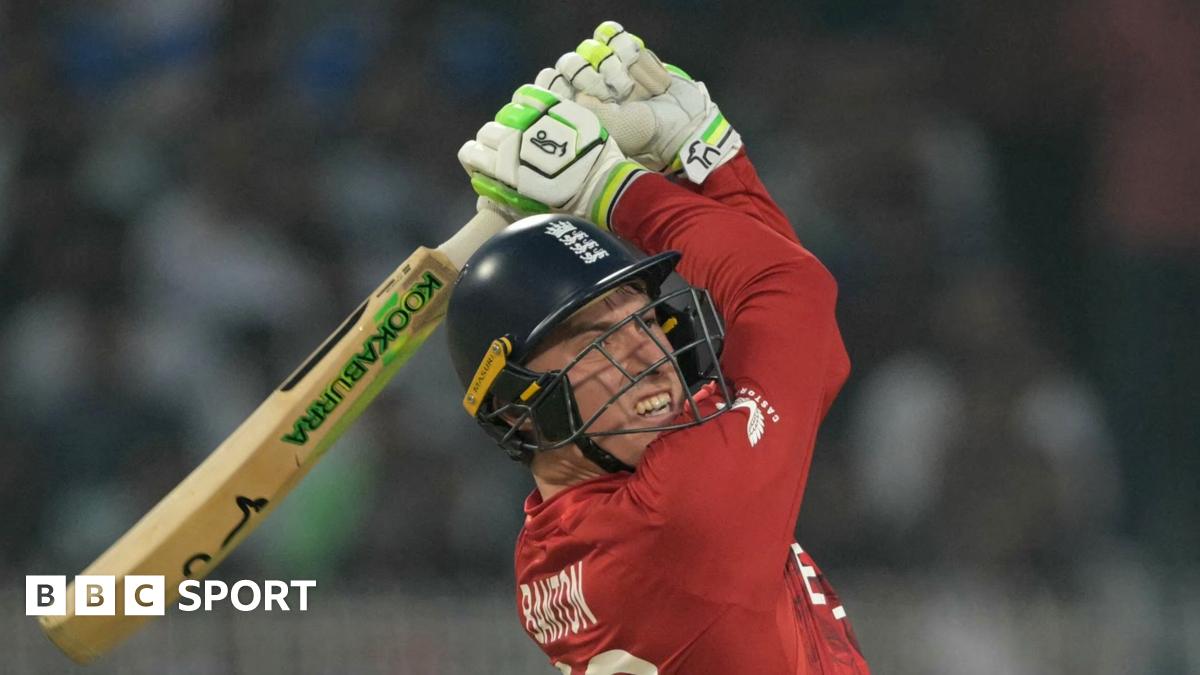
The outcome hinged significantly on Tom Banton’s performance. His innings demonstrated critical middle-order resilience, mitigating top-order failures and demonstrating tactical adaptation. Banton’s ability to navigate early tension and break the shackles against specific bowling threats, notably hitting consecutive sixes off spinner Mark Watt, highlights the importance of strategic flexibility in tournament play. His Player of the Match performance validated his value as a stabilizing force capable of absorbing pressure and accelerating when necessary.
Analysis of Player Roles and Strategic Recalibration
The match provided insight into the strategic value of specific player roles within England’s tactical framework. Jofra Archer’s return to form, evidenced by two wickets in the powerplay, indicates a crucial asset for England’s bowling strategy. His ability to deliver early breakthroughs mitigates the risk of high-scoring starts from opponents. Similarly, Adil Rashid’s three wickets, despite an initially expensive spell, contributed significantly to England’s victory. This highlights the importance of strategic depth in the bowling attack, where different bowlers can compensate for initial setbacks.
Post-match reflections from Harry Brook, who admitted England has not yet played a “perfect game,” underscore the ongoing challenge of translating strategic planning into consistent on-field execution. This gap suggests a need for internal recalibration before facing more formidable opposition, where a reliance on individual performances may prove insufficient.
Scotland’s Structural Constraints and Missed Opportunities
Scotland’s performance, while ultimately resulting in defeat, demonstrated significant competitive potential. However, the team’s failure to convert a strong start into a match-winning total proved decisive. The source notes that Scotland was well-positioned at 113-3 in the 13th over, indicating a strong platform from which to accelerate in the final overs. The subsequent inability to maintain momentum highlights a critical strategic gap in execution under pressure.
This failure to maximize scoring opportunities in the final phase of the innings is a common structural challenge for associate nations competing against full members. While Scotland’s application was admirable, the inability to apply consistent pressure throughout the entire match exposed a structural weakness. The result reinforces the difficulty for developing teams to maintain competitive intensity for the duration required to defeat top-tier opposition, despite moments of individual brilliance from players like Richie Berrington.
.
Broader Context: Tournament Dynamics and Reputational Stakes
The T20 World Cup format places significant emphasis on momentum and net run rate, making every match outcome critical. England’s narrow victory secures two points but fails to fully alleviate concerns about their overall performance trajectory. The inconsistent execution, particularly the top-order fragility, suggests future matches against higher-ranked opposition will present greater challenges where such vulnerabilities are less likely to be forgiven by a middle-order recovery.
For England, the victory provides immediate relief from significant reputational risk; a defeat would have triggered intense scrutiny. Conversely, Scotland’s impending exit highlights the structural challenges faced by developing cricket nations. The result reinforces the performance gap between full members and associate nations, impacting Scotland’s ability to secure future tournament berths and maintain funding for high-performance programs.