The Administration of Succession: Clark G. Gilbert Called to Quorum of the Twelve
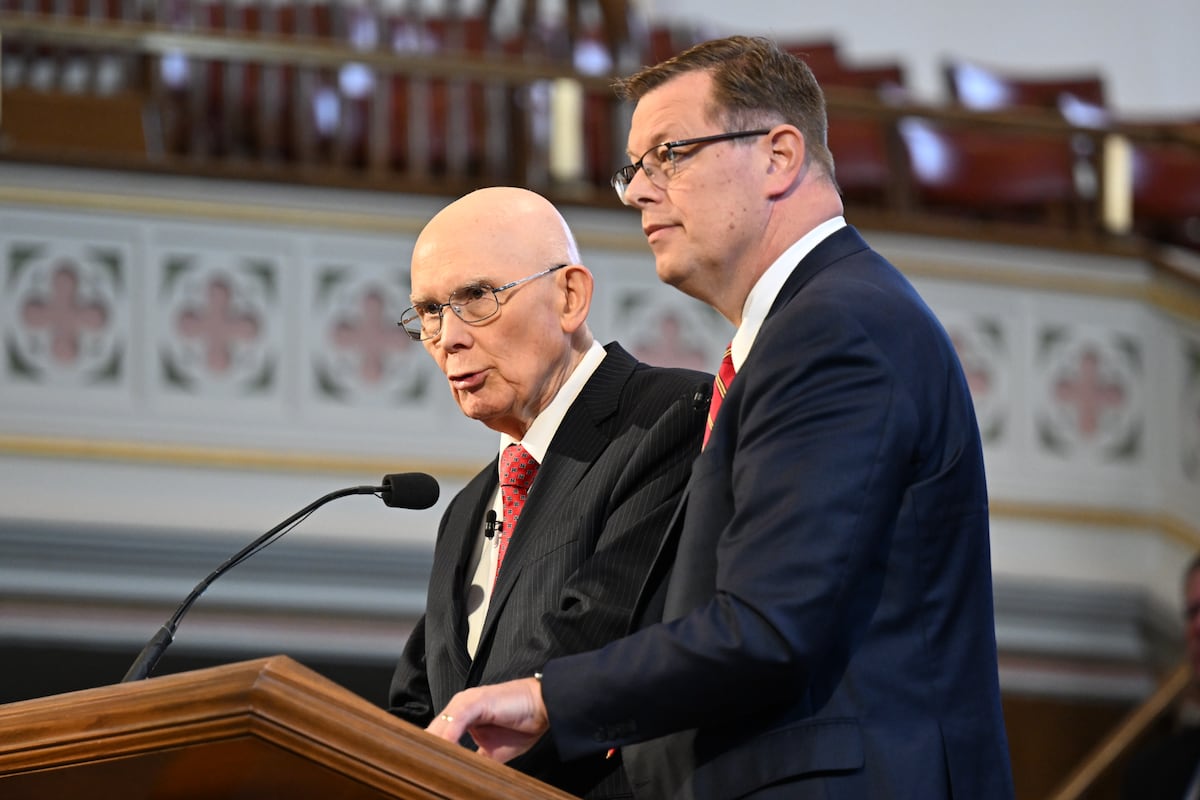
Elder Clark G. Gilbert was called and ordained to the Quorum of the Twelve Apostles of The Church of Jesus Christ of Latter-day Saints (LDS Church) on February 11, 2026. This appointment, made by Church President Dallin H. Oaks, represents a fundamental shift in the composition of the Church’s highest administrative body, setting the trajectory for global governance in the coming years.
Occurring four months into President Oaks’ tenure, this selection is understood within institutional circles as one of his most consequential personnel decisions, establishing the early priorities and leadership style of the new administration. The Quorum of the Twelve Apostles holds supreme ecclesiastical authority globally, but it also functions as the central executive board overseeing the Church’s extensive administrative, educational, and financial enterprises worldwide.
The Role of the Quorum in Global Management
The Quorum of the Twelve Apostles operates as the principal directional body for the global Church, integrating spiritual guidance with the complex logistical management required for an organization of its scale. These fifteen individuals—the President of the Church and the Quorum of Twelve—are responsible for both establishing doctrine and ensuring administrative consistency across diverse international jurisdictions.
Appointments to this body are rare, permanent, and inherently redefine the pool of potential future Church presidents due to the strictly maintained principle of seniority that governs succession. Thus, any new calling alters the institutional timeline, influencing strategic planning and resource allocation for decades.
Administrative Background and Strategic Prioritization
At 55 years old, Elder Gilbert brings a defined background from his previous administrative roles, notably serving as a General Authority Seventy and, crucially, as Church Commissioner since 2021. The role of Church Commissioner involves significant oversight of the Church Educational System (CES), a vast, integrated network of universities, colleges, and institutes spanning multiple continents.
The CES is not merely a theological institution; it is a critical instrument for maintaining cultural cohesion, developing future leadership, and managing educational assets globally, requiring specialized expertise in complex non-profit administration and regulatory compliance. His ascent from this specific operational pipeline suggests an institutional prioritization of education, intellectual alignment, and strategic communication as central pillars of the Church’s future efforts.
Analyzing the ‘Controversial’ Designation
Multiple sources referenced the appointment as being both consequential and, pointedly, controversial, a designation that is atypical for selections to a body generally characterized by institutional consensus and solemn proceduralism. When such characterizations emerge in the public sphere, it often reflects external media scrutiny regarding the individual’s trajectory, speed of ascent, or specific administrative decisions made in prior roles that intersected with external policy debates.
Such external controversy requires the central administrative bodies—specifically the Presidency and the Quorum—to manage public perception carefully, ensuring that the legitimacy of the selection is structurally reinforced across the vast institutional matrix. While the internal mechanism of calling is non-public and based on spiritual discernment as taught by the Church, the external reception shapes the new Apostle’s operational mandate and media exposure.
Implications for the Church Educational System
Elevating a former Church Commissioner to the Quorum directly integrates high-level administrative experience related to global education into the most senior executive council. This move suggests an increased emphasis on aligning the extensive CES resources—including curriculum development, faculty oversight, and capital investment—more closely with the overarching goals of the Quorum.
In a period marked by rapid technological change and evolving cultural landscapes, the Church’s educational output and its interface with media are key strategic assets in reputation management and membership retention. Placing an individual with deep experience in this sector ensures that educational strategy is directly informed and directed by the leadership responsible for global ecclesiastical policy and doctrinal consistency.
The Mechanism of Administrative Integration
The Quorum functions as a governing board where individual Apostles are frequently assigned specific oversight portfolios, ranging from international areas to key internal departments like welfare, missionary work, or finance. Elder Gilbert’s background indicates that he is well-positioned to assume significant operational responsibility within the education, communication, or intellectual asset management sectors.
This utilization of specialized, high-level administrative talent reflects a necessary evolution in modern religious governance, where sheer scale and jurisdictional complexity demand sophisticated management skills alongside spiritual authority. The integration of a leader whose recent experience centered on massive organizational structure signals a commitment to administrative efficiency at the highest levels of the Church.
Succession Planning and Long-Term Institutional Trajectory
President Oaks’ decision, made early in his presidential tenure, acts as a foundational element of his administrative legacy, signaling to both internal stakeholders and external observers the type of profile deemed essential for future leadership. Because Apostles serve for life and succession is based on continuous seniority within the Quorum, this appointment fixes a key component of the Church’s leadership structure for potentially several decades.
The procedural mechanism ensures that the newest members of the Quorum are integrated into the culture of collective decision-making, while their unique administrative or professional insights inform the consensus process. This long-term framing transforms the immediate appointment into a crucial long-range strategic investment in the Church’s ability to govern itself effectively on a global stage.