Orbital Mechanics of the 2026 Strawberry Moon
The Strawberry Moon of late June 2026 provides a distinct case study in orbital mechanics. Occurring shortly after the summer solstice, this full moon coincides with apogee—the orbital point of greatest distance from Earth—classifying it as a micromoon. While the resulting reduction in apparent lunar size is subtle, these variations provide essential data for scientists modeling lunar orbit stability and tidal interactions.
Hemispheric Trajectories and Axial Tilt
The moon’s path is heavily influenced by Earth’s axial tilt. In the Northern Hemisphere, the 2026 Strawberry Moon will follow a characteristically low arc across the sky. Conversely, the Southern Hemisphere will witness its highest trajectory. This low-hanging profile in the North increases susceptibility to atmospheric distortion and terrestrial obstruction, necessitating the use of high-elevation or dark-sky observation sites to capture high-fidelity data.
Nomenclature and Institutional Perspectives
The term ‘Strawberry Moon’ originates from North American agricultural cycles, marking the harvest of wild strawberries. While this nomenclature is cultural, it serves as a bridge for public engagement with astronomical events. Dr. Pamela Gay of the Planetary Science Institute emphasizes that while visual differences between a typical full moon and a micromoon require comparative imagery, these events remain critical opportunities for public science education.
Stellar Alignment and Calibration
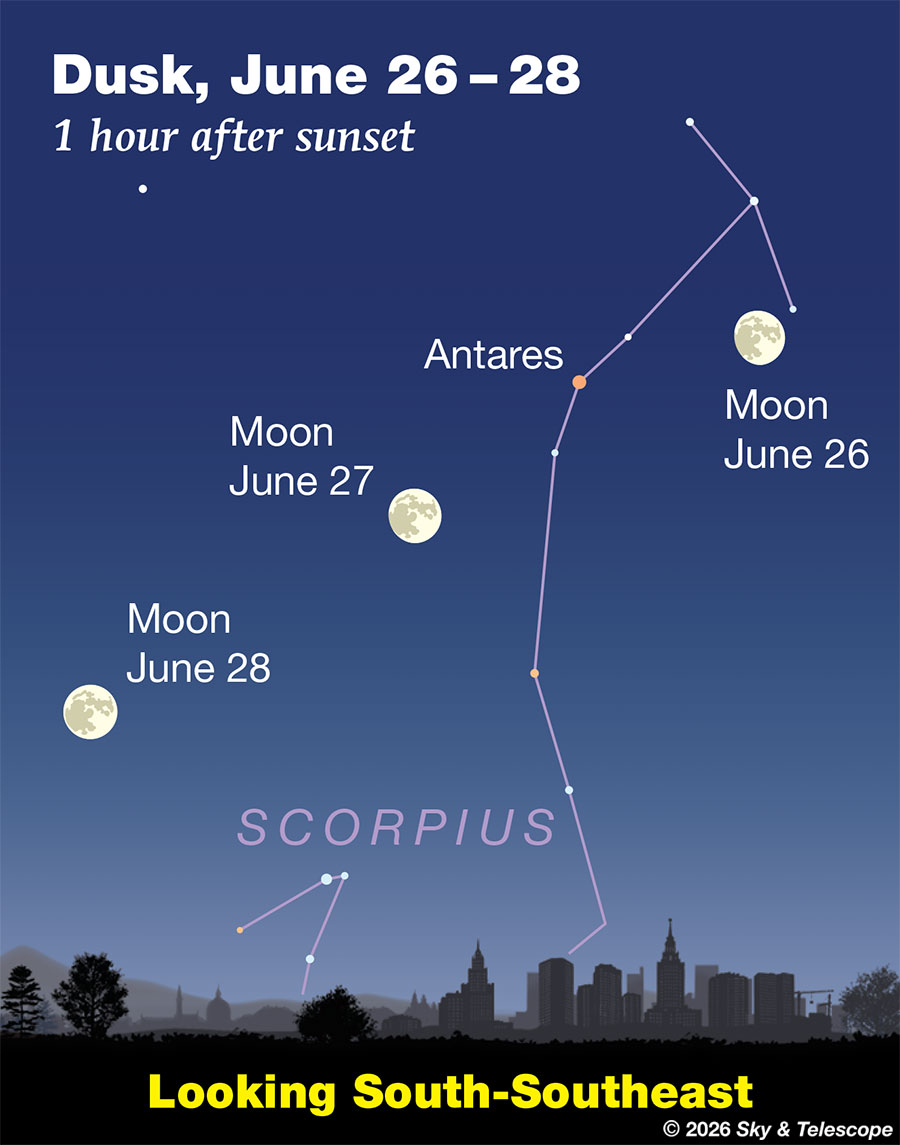
The late June window facilitates stellar observation. The moon’s proximity to Scorpius and Antares provides a calibration reference for amateur astronomers. Additionally, the prominence of Arcturus (a K-giant) and Vega (an A-main-sequence star) allows observers to evaluate celestial luminosity against established magnitudes, highlighting the seasonal rotation of the night sky.
Preservation and Scientific Monitoring
Consistent tracking of apogee and perigee cycles is vital for refining long-term astronomical calendars. However, ground-based observations remain vulnerable to urban light pollution. The increasing demand for clear viewing conditions reinforces the necessity of dark-sky preservation policies, ensuring that both scientific research and amateur astronomy remain viable amidst ongoing urbanization.