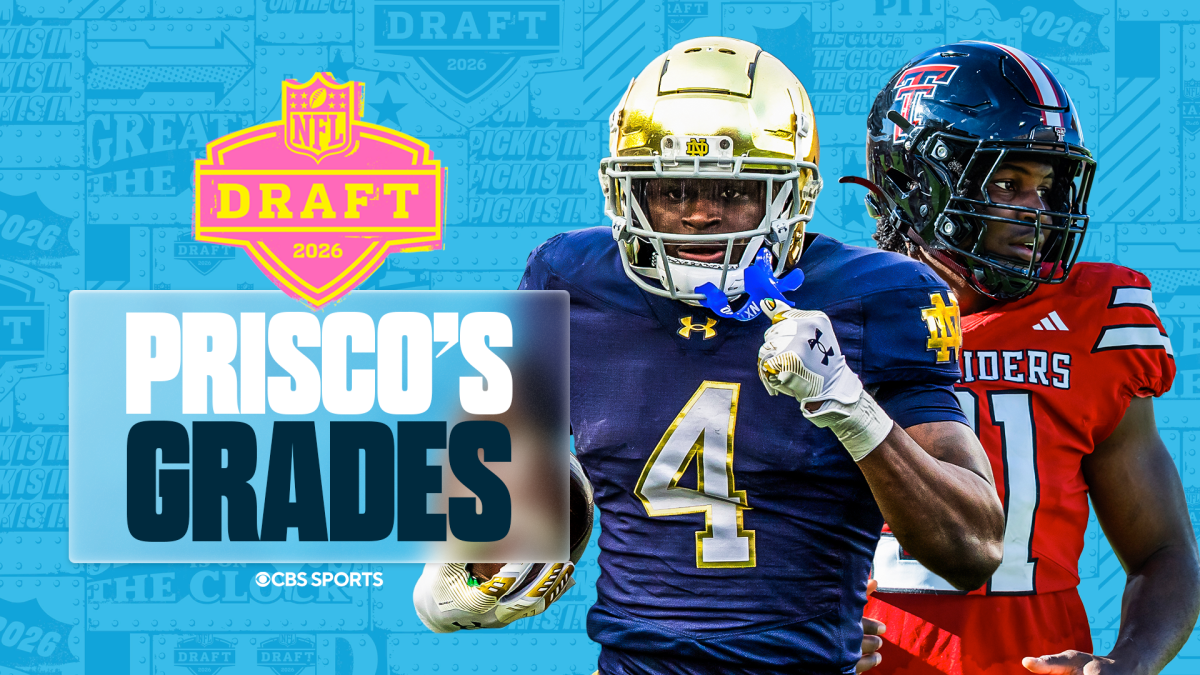
Market Bifurcation in the 2026 NFL Draft Landscape
The 2026 NFL Draft serves as a definitive case study in institutional adaptability. Faced with an atypical scarcity of high-impact offensive assets, front offices were forced into a strategic divergence: overpaying for offensive floor-setters or capitalizing on a dense defensive talent pool. This cycle recalibrates the value of draft capital, placing a premium on Day 3 selections to offset the volatility of collegiate scouting in a ‘down year’ for skill positions.
The Kansas City Chiefs: A Strategic Realignment
The Kansas City Chiefs secured the cycle’s only A+ grade, reflecting a sophisticated institutional pivot. Following Patrick Mahomes’ ACL injury, the organization abandoned its high-volume offensive reliance in favor of a defensive-centric infrastructure. This is not a retreat but a calculated hedge designed to sustain a competitive window during their franchise quarterback’s rehabilitation. By prioritizing defensive efficiency, the front office has effectively insulated the team’s win-loss ceiling against early-season offensive variance.
Defensive Architecture: The Spagnuolo Arsenal
The acquisition of Mansoor Delane provides Steve Spagnuolo with a premier coverage asset capable of neutralizing elite perimeter threats. This pick is the cornerstone of a three-tiered defensive investment that includes Peter Woods—a high-leverage interior disruptor—and R. Mason Thomas, an edge rusher with elite bend and burst metrics. Together, these selections create a force-multiplier effect, reducing the pressure on an offense navigating a transitional period.
Operational Hedges: The Kenneth Walker Acquisition
To stabilize the offensive floor, the Chiefs utilized free-agency capital to acquire Kenneth Walker. This move serves as a critical operational hedge; Walker’s proven workload capacity allows the Chiefs to implement a ball-control philosophy while Mahomes regains mobility. This dual-track approach—pairing veteran reliability in the backfield with elite youth on defense—suggests a front office prioritizing floor-setting over speculative ceiling-chasing.
The Denver Broncos: Efficiency in Mid-Round Capital
Denver’s selection of Jonah Coleman at pick 108 exemplifies the hunt for functional depth in a talent-thin market. In a league struggling to find consistent rushing production, Coleman enters a backfield with an immediate path to volume. For the Broncos, this represents a successful extraction of value from mid-round capital, a necessity when the top-tier of the draft offers diminishing returns for offensive skill positions.
Fantasy Football: Market Volatility and Landing Spot Crisis
The 2026 cycle has triggered a contraction in fantasy football markets. The prevailing narrative of a ‘down year’ is reinforced by poor landing spots for the few high-upside rookies available. When talent is drafted into inefficient systems or crowded depth charts, immediate utility is compressed. This volatility forces fantasy managers to pivot toward analytical frameworks that weigh structural volume over raw collegiate production.
The ‘Better-Than’ Profile: R. Mason Thomas
The identification of R. Mason Thomas as a ‘Better-Than Team’ standout highlights the disconnect between consensus scouting and professional projection. Thomas represents the type of specialized archetype valued by elite coaching staffs for specific situational dominance. In a draft lacking clear-cut superstars, finding value in these specialized traits is the primary mechanism for gaining a competitive edge.
Conclusion: Structural Resilience
As the 2026 NFL Draft concludes, the Chiefs stand as the blueprint for crisis management in the modern era. By diversifying their competitive portfolio and investing in defensive force-multipliers, they have mitigated the risks associated with Mahomes’ injury. The success of this cycle will be measured not just by individual statistics, but by the structural resilience of teams that chose to adapt rather than stagnate in a talent-scarce market.