Operational Entropy and the Experience Gap
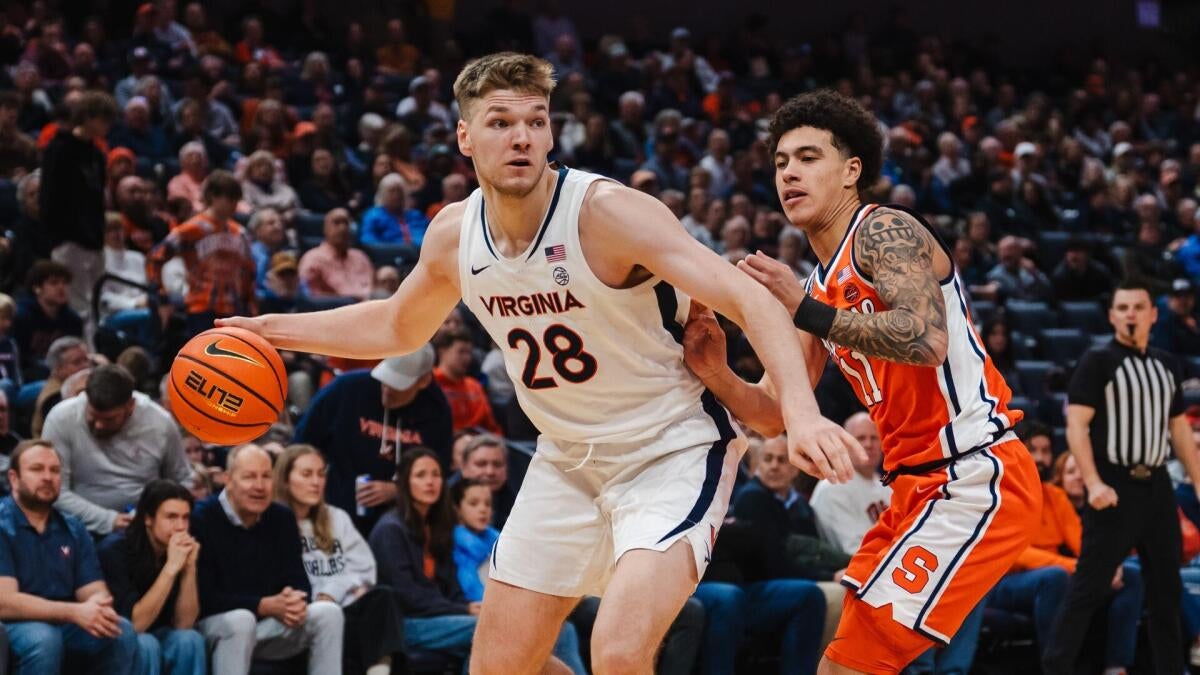
The opening round of the 2026 NCAA Tournament in Philadelphia served as a definitive case study in the friction between elite-tier talent and postseason psychological variance. Virginia’s 82-73 victory over Wright State highlighted how roster composition—specifically a deficit in institutional tournament memory—can disrupt projected outcomes. Despite entering as a 17.5-point favorite, the third-seeded Cavaliers encountered significant resistance from a fourteenth-seeded Raiders squad that capitalized on early-game performance volatility.
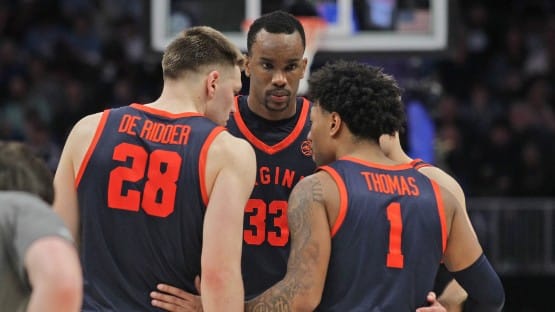
This performance delta is largely attributable to the experience gap: seven of the nine players in Virginia’s primary rotation were making their national tournament debuts. This lack of exposure to the unique high-leverage environment of Xfinity Mobile Arena created a period of tactical misalignment. While regular-season metrics favored Virginia, the transition to single-elimination play introduced physiological variables—such as adrenaline-induced premature fatigue—that skewed the efficiency of their highly touted prospects.
Tactical Resilience Against the Underdog Archetype
Wright State leveraged a psychological profile common among mid-major champions: low-risk execution coupled with high momentum. Following their 66-63 Horizon League title win over Detroit, the Raiders maintained a level of tactical freedom that contrasted sharply with Virginia’s recent 74-70 loss to Duke in the ACC Championship. This discrepancy allowed the underdog to operate without the burden of expectation, keeping the contest within a single-digit margin for the majority of the second half.
Senior Sam Alamatu provided a baseline for the intensity required, though his previous experience with Vermont was an outlier in a matchup otherwise defined by tournament novices. The failure of the 17.5-point spread to hold reinforces the narrative that market models often undervalue the structural resilience of veteran-led mid-major programs that prioritize system cohesion over high-turnover recruitment models. Wright State’s ability to force a high-scoring affair (surpassing the 145.5 over/under) effectively neutralized Virginia’s traditional defensive tempo.
Institutional Trajectory and Strategic Outlook
For Virginia, advancing with a 29-5 record preserves critical program capital and secures the media exposure necessary for high-level recruitment. However, the narrow margin serves as a cautionary data point regarding the reliance on offensive efficiency over defensive grounding. The 82 points scored indicate a successful adaptation to a faster-paced game, but the early inability to stabilize the defense remains a point of concern for subsequent rounds.
As the Cavaliers move forward, the internal data gathered from this high-pressure environment will likely dictate more conservative player rotations. The celebration between freshman guard Chance Mallory and Thijs de Ridder signals a consolidation of team chemistry following the removal of ‘first-round jitters.’ For the 2026 field, the UVA-Wright State matchup underscores a persistent reality: talent provides the ceiling, but experience dictates the floor in March.