Technical Bifurcation and Predictive Modeling Failures at Suzuka
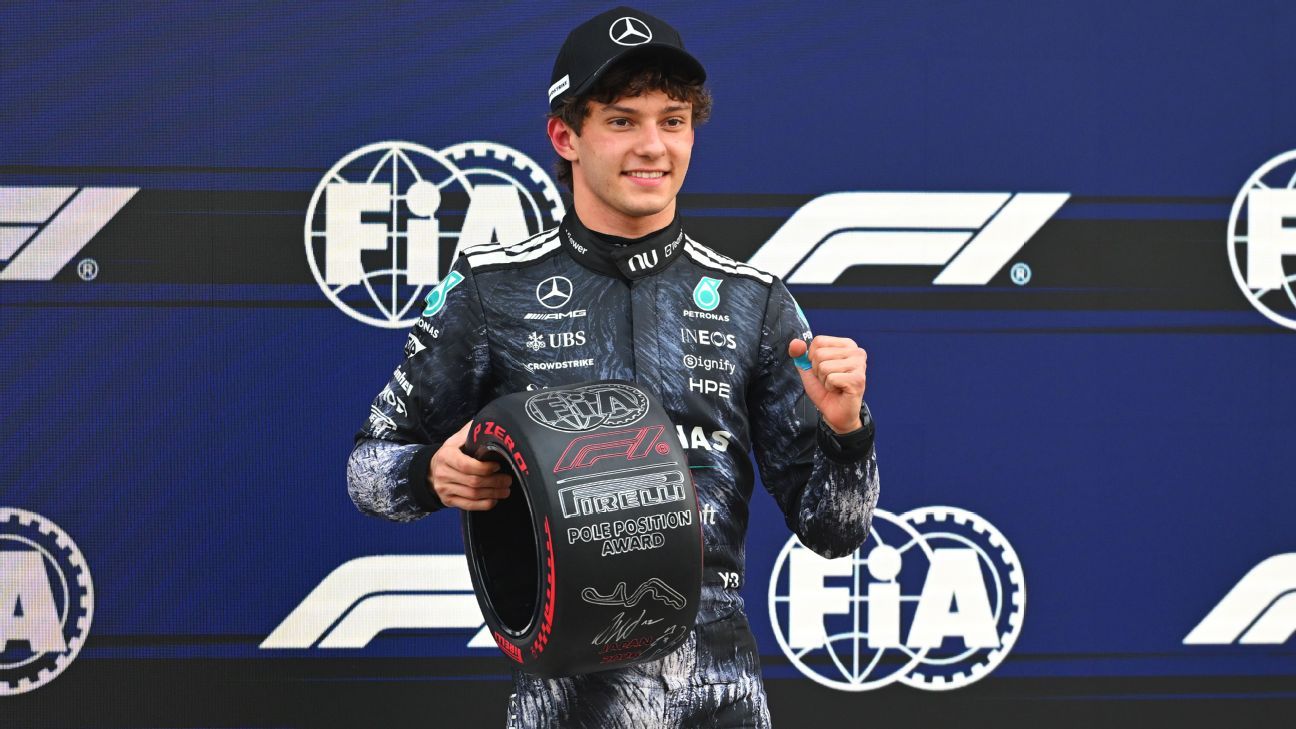
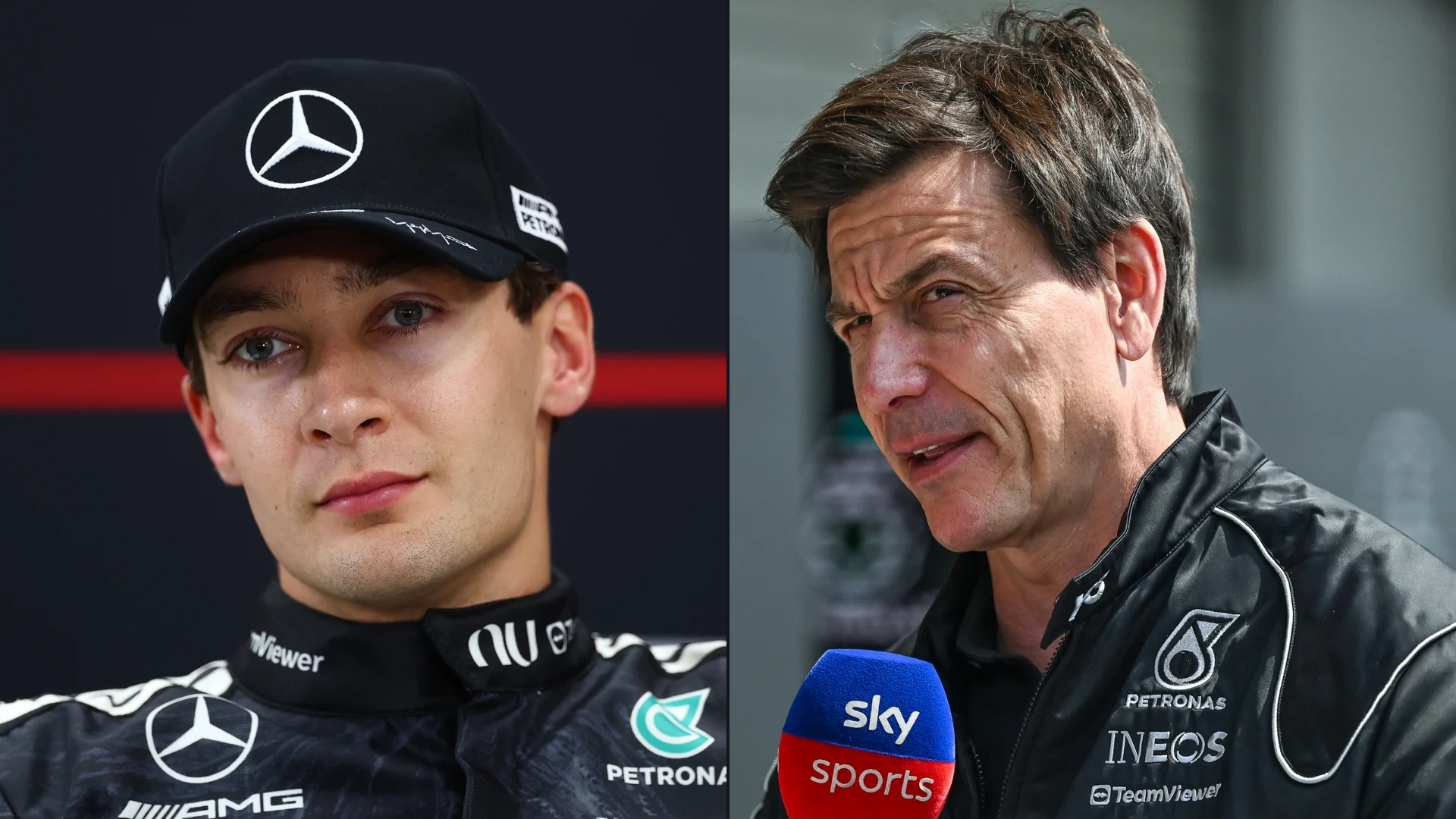
The 2026 Japanese Grand Prix has catalyzed a profound technical and psychological schism within Mercedes-AMG, exposing the fragility of the Brackley-based team’s current dominance. While Kimi Antonelli secured his second consecutive pole position with a commanding 0.298-second margin, the narrative is overshadowed by a catastrophic setup divergence on George Russell’s car. A failed late-stage adjustment to Russell’s rear suspension geometry—confirmed by Toto Wolff—mismatched the predictive simulations, leaving the championship leader with a suboptimal platform for Suzuka’s demanding high-G sectors.
This performance delta highlights the narrow operational windows of 2026 aerodynamic regulations. Because Parc Fermé regulations prohibited a reversion of the suspension settings, Russell was forced into a defensive posture from the outset. This institutional error not only compromised Russell’s qualifying pace but also introduced a variable of instability that McLaren was quick to exploit, signaling a shift in the season’s tactical equilibrium.
The Institutional Shift: Antonelli’s Meritocratic Challenge
Kimi Antonelli’s clinical execution at Suzuka represents a formal destabilization of the established Mercedes hierarchy. By securing consecutive poles following his victory in China, the Italian rookie has effectively neutralized Russell’s veteran status. This creates an immediate management crisis for Mercedes, as the two drivers are separated by a mere four championship points. The psychological pressure manifested in Russell’s Q1 radio telemetry, where he noted the car’s failure to rotate—a direct consequence of the suspension miscalculation—contrasting sharply with Antonelli’s seamless integration with the W17 chassis.
Tactical Opportunism and the McLaren Launch Map Advantage
The race start underscored the vulnerability of the front row, as Oscar Piastri utilized McLaren’s superior low-end torque mapping to snatch the lead from Antonelli at Turn 1. This maneuver suggests that McLaren has successfully optimized its energy deployment strategies for standing starts, exploiting the slight hesitation in Antonelli’s defensive line. The ensuing battle between the Silver Arrows and the MCL38s revealed a significant overlap in race-pace potential, with Lando Norris and Charles Leclerc remaining within the DRS window, further compressing the field.
Suspension Dynamics and the Suzuka Penalty
The specific technical failure on Russell’s car was uniquely punishing at a circuit like Suzuka. The track’s rhythmic S-curves and the critical Degner complex require absolute rear-end compliance to maintain minimum cornering speeds. Russell’s compromised rear stability limited his ability to harvest energy efficiently, as his frequent mid-corner corrections induced thermal spikes in the rear tires. While Russell’s resilience allowed him to reclaim P1 by Lap 8 through a high-risk chicane maneuver, the underlying mechanical disadvantage remained a persistent threat to his stint longevity.
The Geopolitical Shift: Red Bull’s Structural Decline
Beyond the Mercedes-McLaren duel, the 2026 Japanese Grand Prix confirmed the precipitous decline of Red Bull Racing. Max Verstappen’s 11th-place qualifying result suggests that the RB22 platform has reached a developmental ceiling, unable to reconcile high-downforce requirements with the current power unit packaging. This vacuum at the top of the grid has transformed the championship into a two-team tactical war, where operational precision—specifically in suspension tuning and battery management—has replaced raw aerodynamic advantage as the primary performance lever.
Championship Outlook and Operational Risk
As the 2026 season progresses, the intra-team friction at Mercedes will likely dictate the constructors’ outcome. The team’s appetite for high-risk setup experimentation, while searching for a higher performance ceiling, has introduced a level of volatility that nearly handed victory to McLaren at Suzuka. For Russell, maintaining the championship lead requires more than just defensive driving; it requires the Mercedes engineering suite to synchronize their predictive modeling with the feedback of a driver who currently feels technically marginalized by his own garage.