The Structural Mechanics of Elimination
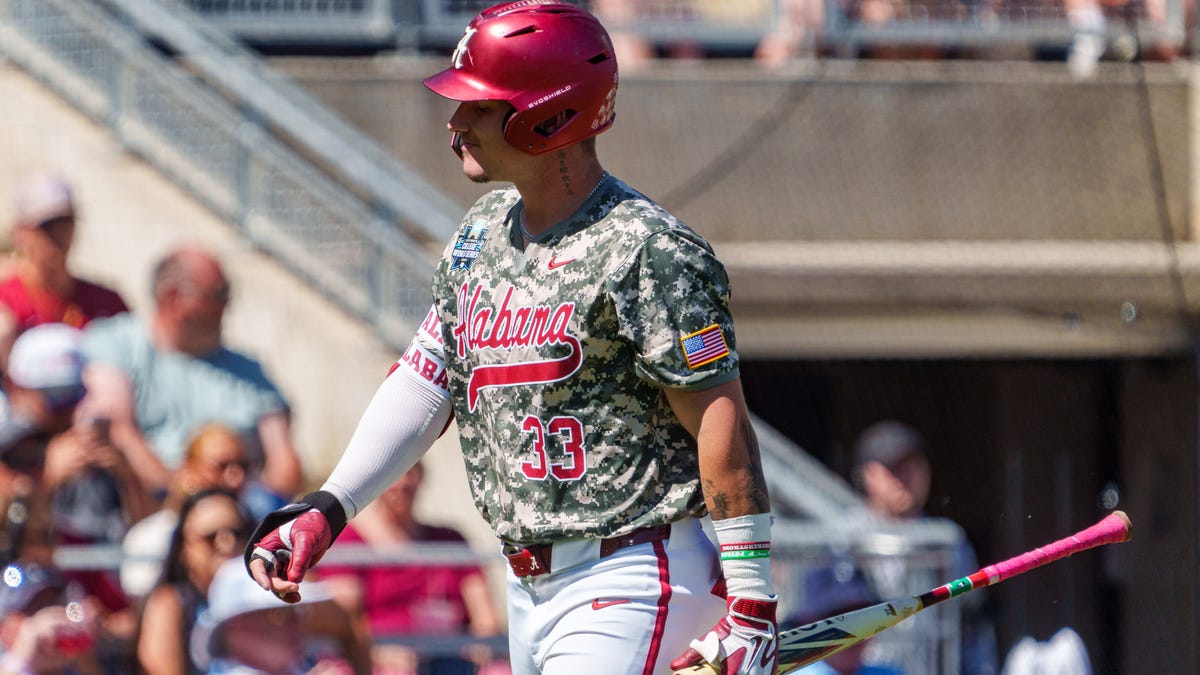
The 2026 College World Series has entered a high-volatility phase where the double-elimination format mandates rapid shifts in resource allocation. Texas’s 14-2 defeat of Alabama exemplifies how individual variance—specifically Adrian Rodriguez’s seven-RBI performance—fundamentally destabilizes opponent game plans. By eliminating Alabama, Texas has not only preserved its tournament standing but has forced a recalibration of the SEC’s competitive hierarchy.
The Erosion of Pitching Depth
The early removal of Alabama starter Zane Adams (1.2 innings) highlights the inherent fragility of collegiate pitching depth. A high-leverage starter collapse forces immediate, often suboptimal, reliance on the bullpen, creating a compounded structural disadvantage for subsequent rounds. As teams like Texas and Georgia progress through the loser’s bracket, the scarcity of high-leverage arms emerges as the primary predictor of success, often eclipsing raw offensive metrics.
MLB Scouting and Performance Valuation
The 2026 CWS acts as a controlled testing environment for professional scouting. Prospects such as Jimmy Janicki are assessed not merely on raw tools, but on psychological resilience under elimination-bracket pressure. Quantifiable milestones, such as Jabe Boroff’s 21st postseason RBI, are treated by MLB front offices as critical data points that mitigate the risk associated with long-term capital investment in collegiate talent.
Disruption and Tournament Parity
The continued survival of unseeded programs like Troy demonstrates a shifting paradigm in collegiate baseball. By leveraging explosive offensive performances to offset institutional disparities, these programs challenge the established hegemony of traditional SEC powerhouses. The emergence of impact players like Sean Darnell suggests that the gap in recruitment efficiency is narrowing, forcing major programs to re-examine their development pipelines to maintain competitive equilibrium.
Institutional Resilience in the Loser’s Bracket
Transitioning into the loser’s bracket requires a distinct shift in tactical discipline. Teams like Georgia must navigate the physical and mental attrition of playing consecutive elimination games, which tests the limits of roster depth. This environment rewards teams that minimize defensive error and maintain tactical continuity, proving that the ultimate national champion will be defined more by systemic stability than by individual brilliance alone.