
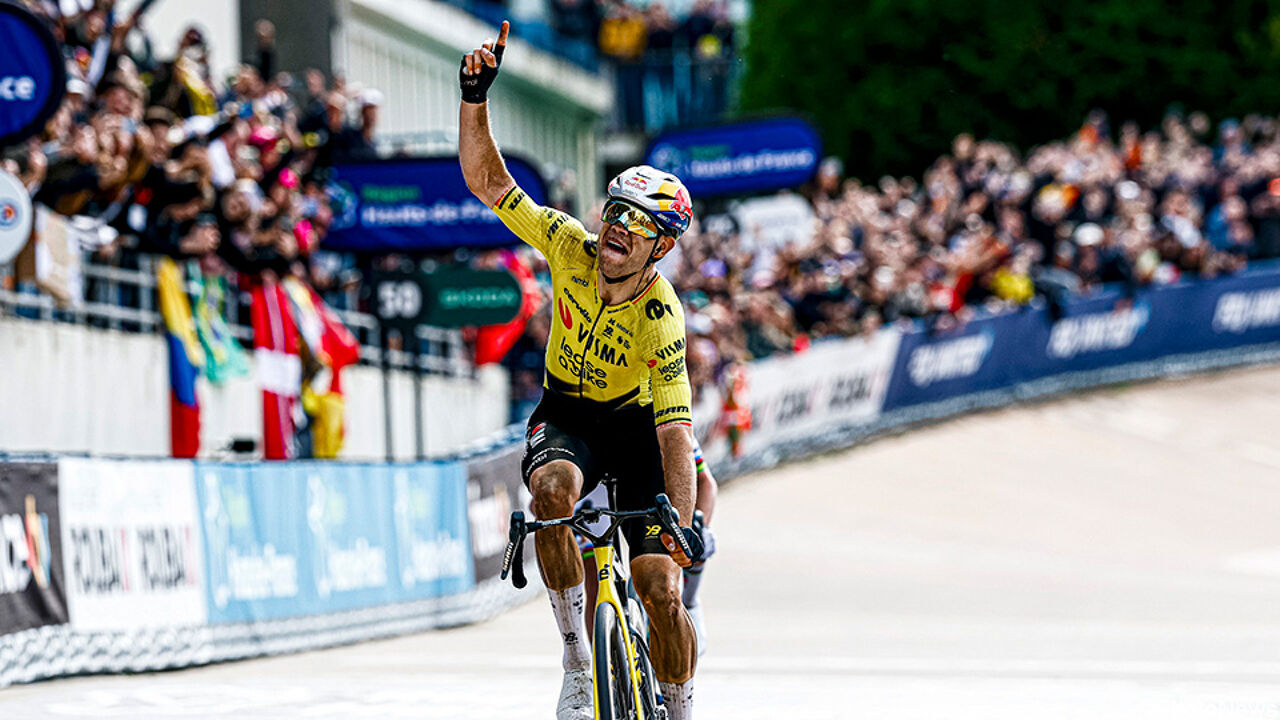
The Tactical Resolution of a Monumental Drought
The 2026 Paris-Roubaix marked a defining moment for Wout van Aert, whose victory signals a fundamental recalibration of the spring classics hierarchy. At 31, Van Aert’s performance transcends past near-misses, establishing a standard for tactical dominance in the sport’s most unforgiving environment.
The race evolved into a high-attrition contest against Tadej Pogačar, underscoring a rivalry currently driving the WorldTour’s operational tempo. Despite contending with two mechanical incidents—a frequent failure point on the cobbles—Van Aert’s resilience highlighted the modern necessity of maintaining composure under extreme pressure.
Mechanical Risk and Tactical Composure
Equipment reliability emerged as the race’s pivot point. Both Van Aert and Pogačar faced critical double-puncture scenarios, forcing rapid, high-stakes logistical decisions. Mathieu van der Poel’s early exit, triggered by mechanical failure in the Bos van Wallers, demonstrated the fragility of individual performance against the unpredictable nature of the Roubaix pavé, prompting a necessary re-evaluation of support protocols for teams like Alpecin-Premier Tech.
Institutional Dynamics: Visma vs. UAE
Team Visma-Lease a Bike utilized a superior collective strategy, placing both Van Aert and Christophe Laporte in the top five. This multi-pronged attack neutralized rivals and allowed for controlled race management. Conversely, UAE Team Emirates’ reliance on Pogačar’s individual brilliance yielded a podium finish but highlighted the inherent vulnerability of a single-leader focus in chaotic monument racing. The performance gap between these squads suggests a widening divide in resource optimization and tactical execution.
Market and Institutional Trajectory
This monument victory significantly shifts the valuation of sponsor portfolios and mid-season recruitment leverage. As the season matures, the integration of real-time mechanical, physical, and environmental data will continue to dictate success. Podium performances by veterans like Jasper Stuyven and Mads Pedersen further validate the efficacy of established classics specialists in an era increasingly dominated by GC-leaning all-rounders. Ultimately, the 2026 Paris-Roubaix remains a testament to the pursuit of marginal gains, confirming that institutional stability and data-driven team management are now the primary determinants of victory in professional cycling.

Photo by Pix-Off on Pixabay.