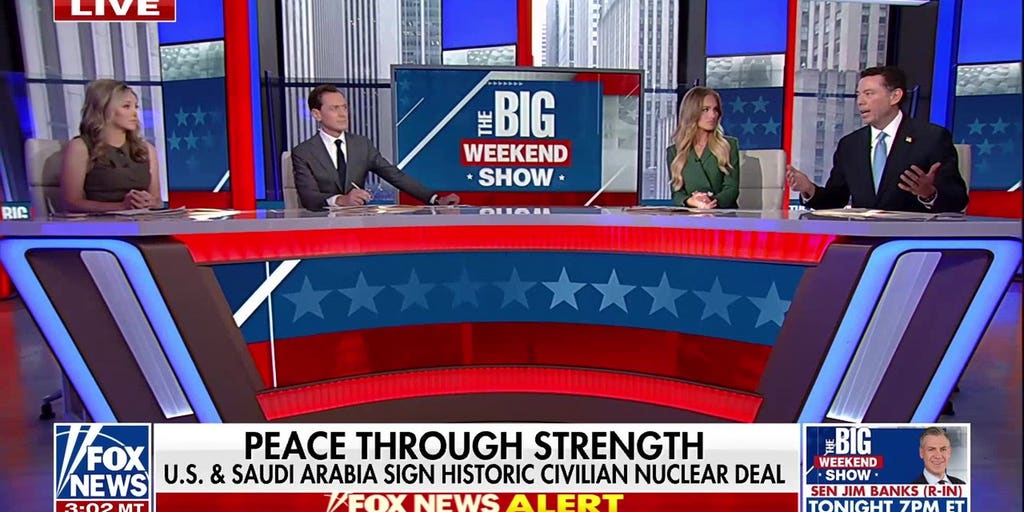
Strategic Realities of the U.S.-Saudi Civilian Nuclear Agreement
The proposed civilian nuclear agreement between the United States and Saudi Arabia has triggered debate regarding geopolitical alignment, regional power balances, and legislative oversight. As commercial entities position themselves for reactor construction contracts, the broader implications of technology transfer require careful administrative scrutiny.
Proponents, including commentators such as Jason Chaffetz, argue that the agreement solidifies bilateral ties and acts as a strategic counterweight to Iran by anchoring Saudi infrastructure within Western technological frameworks.
Legislative Scrutiny and Congressional Oversight
The formal pathway for the agreement requires legislative review and approval by the United States Congress. Lawmakers must evaluate long-term proliferation risks alongside economic opportunities.
During a media appearance, Republican Senator John Kennedy expressed skepticism regarding the pact, highlighting a tension between non-proliferation enforcement and the establishment of commercial nuclear cooperation agreements.
Global Perceptions and Regional Security
Civilian nuclear agreements introduce diplomatic sensitivities, as advanced technology risks being interpreted as a potential pathway toward future military capabilities. Decision-makers must weigh commercial export incentives against the security equilibrium in the Middle East.
The convergence of international crises subjects long-term technological commitments to heightened scrutiny.
Capital Movement and Stakeholder Implications
The deployment of American nuclear technology involves capital deployment and industrial participation from domestic manufacturing and engineering firms anticipating revenue from reactor construction and maintenance.
Simultaneously, intersections between public policy, commercial benefit, and political influence have drawn attention from watchdogs and legislative skeptics regarding governance considerations.
Institutional Pathways
The realization of the accord depends on congressional resolve and the execution of non-proliferation safeguards. Lawmakers retain constitutional authority to shape, delay, or block implementation based on strategic calculations.
The institutional friction between executive branch initiatives and legislative oversight remains central to American foreign policy formulation.