Operational Challenges of Decelerated Forward Velocity
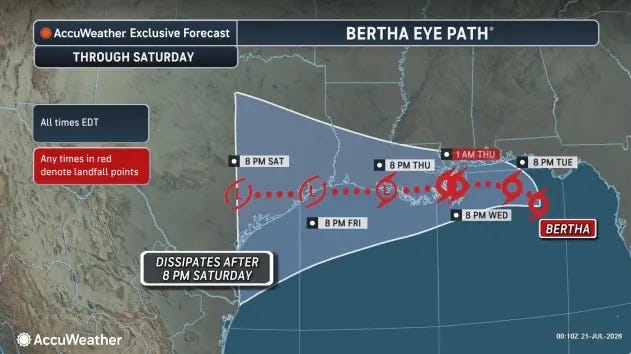
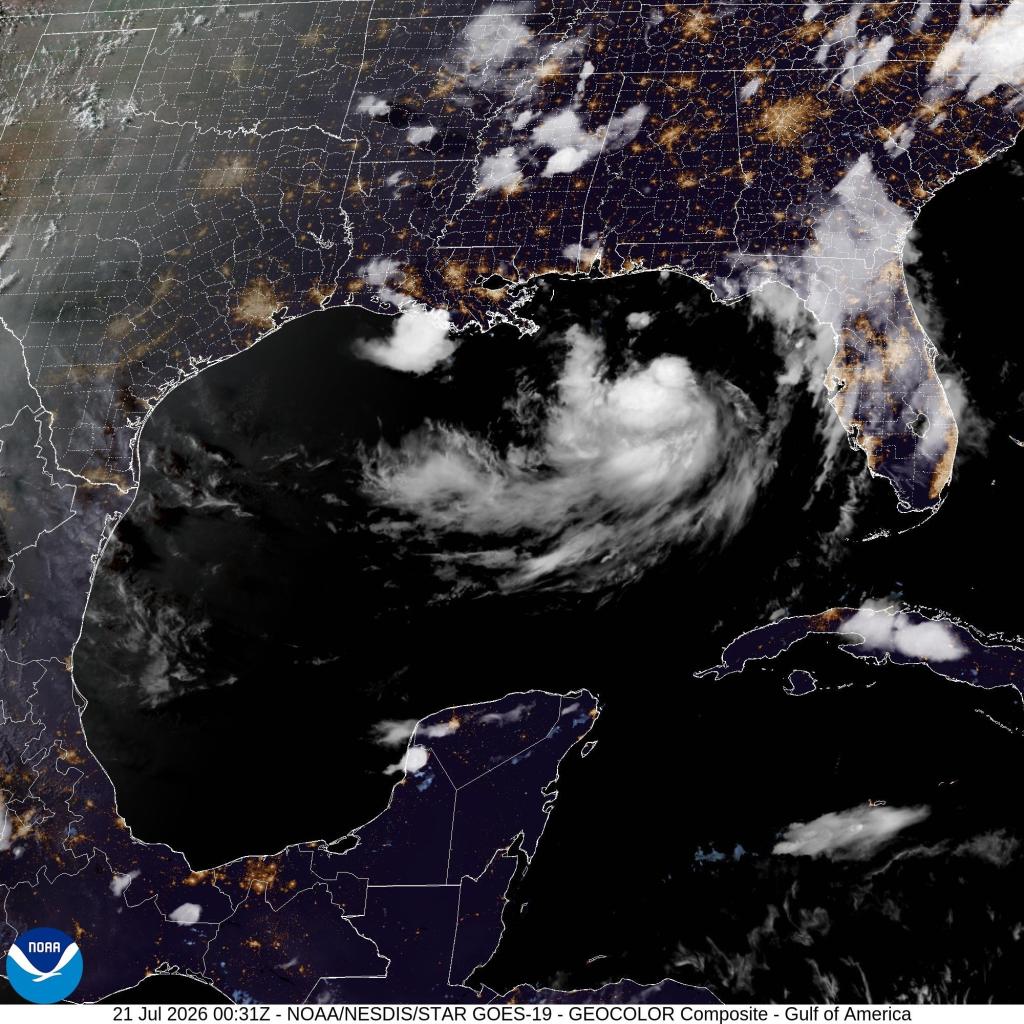
The intensification of Tropical Storm Bertha within the Gulf of Mexico presents a multifaceted risk environment for the northern Gulf Coast. The primary catalyst for concern is the system’s decelerated forward speed, currently oscillating between six and nine miles per hour. This low-velocity trajectory extends the duration of hydraulic stress on coastal defenses, pivoting the threat profile from immediate kinetic wind destruction to prolonged soil saturation and systemic drainage failure. For municipal planners and emergency management agencies from Florida to Louisiana, this necessitates a transition from short-term tactical sheltering to sustained resource deployment.
National Hurricane Center (NHC) telemetry indicates maximum sustained winds of 60 miles per hour. While these metrics remain below the hurricane threshold, the storm’s high moisture content and localized atmospheric pressure gradients are sufficient to trigger widespread flash flood protocols. The strategic concern for regional stakeholders lies in the cumulative precipitation load on urban drainage networks, many of which are operating near capacity due to seasonal baseline conditions. The storm’s progression toward the west-northwest places vital logistics nodes, specifically Panama City and Mobile, under immediate operational duress.
Infrastructure Resilience and Actuarial Exposure
New Orleans remains a focal point for infrastructure resilience analysis due to its unique topographical vulnerabilities. The city’s reliance on automated pumping stations and levee integrity means that Bertha’s projected rainfall totals will test the operational limits of the Sewerage and Water Board. Financial exposure in this context is bifurcated: direct physical damage to assets and indirect costs associated with emergency labor surges and business interruption within the hospitality and maritime sectors. The NHC’s landfall projection in southeast Louisiana offers some mitigation for high-density residential areas, yet the broader regional impact of storm surges remains a volatile variable for the insurance sector.
Actuarial models are traditionally challenged by slow-moving systems that induce repetitive flooding over multiple tidal cycles. Preemptive municipal measures, including beach closures and the distribution of flood-mitigation materials, represent a direct hit to local government liquidity. These non-recoverable operational costs are typically absorbed from annual emergency contingency funds, potentially cannibalizing future infrastructure investment. Such strategic deployment is a calculated effort to minimize the significantly higher fiscal liabilities associated with post-event civil recovery and infrastructure rehabilitation.
Maritime Logistics and Energy Sector Volatility
The Gulf of Mexico serves as a critical theater for global energy and shipping; Bertha’s presence requires an immediate recalibration of maritime traffic. Shipping lanes serving the ports of Mobile and New Orleans are experiencing significant latency as vessels reroute to avoid the storm’s convective core. These logistical pivots elevate fuel consumption and labor costs, generating a ripple effect across the domestic supply chain. Offshore energy assets, despite high engineering tolerances, have initiated precautionary shutdowns to ensure personnel safety—an institutional risk aversion protocol solidified in the post-Katrina regulatory era.
The uncertainty regarding the timing of port reopenings creates a bottleneck for both bulk commodities and manufactured goods. Authorities must reconcile the need for commercial continuity with the necessity of post-storm underwater surveys to ensure navigational safety. In this environment, real-time NHC data serves as a critical tool for corporate decision-makers managing inventory levels and transportation logistics across the southeastern United States.
Regulatory Response and Long-Term Adaptation
The NHC’s role as the central arbiter of meteorological risk provides the framework for decentralized regulatory responses. By issuing early watches and warnings, the NHC incentivizes localized state and municipal action, potentially reducing the necessity for federal disaster declarations. This places the burden of execution on local authorities who must balance public safety mandates with the economic necessity of maintaining tourism and retail activity in Florida and Alabama.
Long-term strategic planning for the Gulf Coast must now account for the increasing frequency of these high-moisture, low-velocity systems. This involves prioritizing ‘green’ infrastructure—such as restored wetlands and expanded drainage basins—over traditional grey infrastructure to absorb excessive hydraulic loads. The economic viability of these coastal corridors depends on their ability to adapt to evolving meteorological patterns, ensuring the region remains a stable environment for capital investment and habitation.