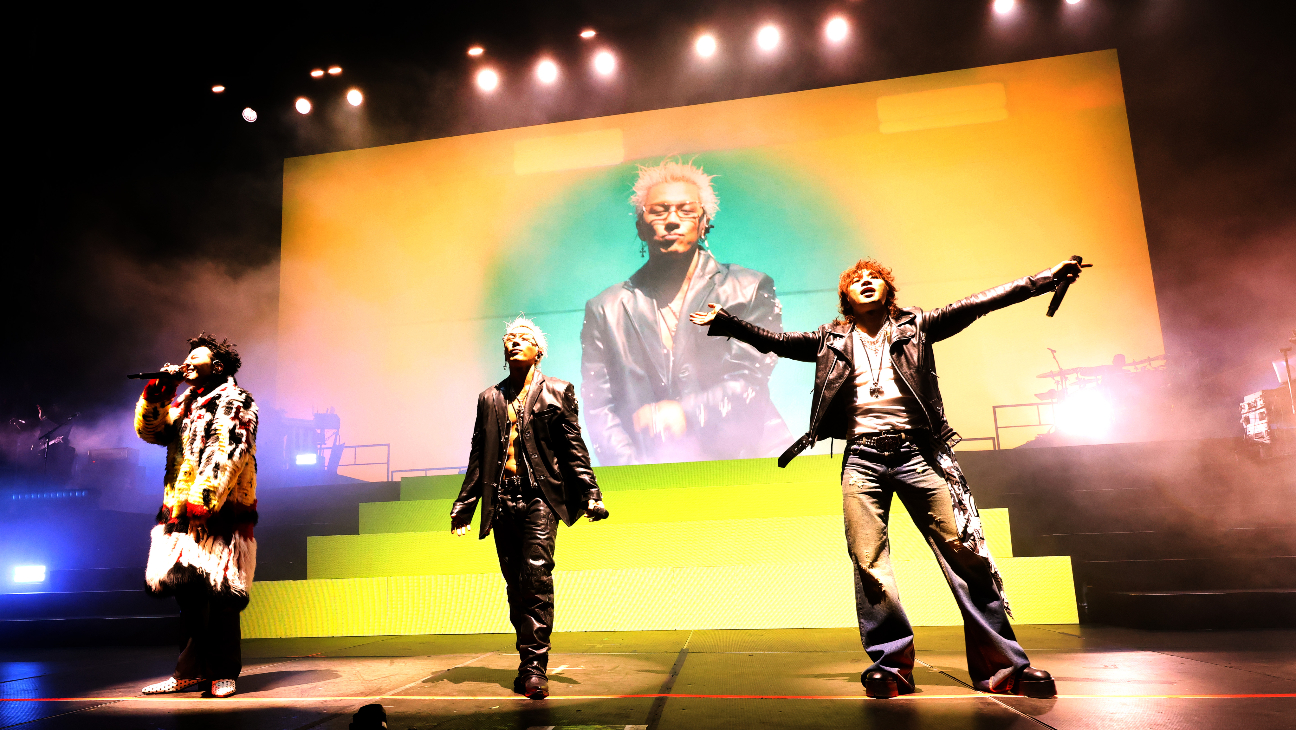
The 2026 Coachella Valley Music and Arts Festival served as the definitive launchpad for BIGBANG’s institutional pivot. By securing the 10:30 pm slot at the Outdoor Theatre on April 12 and 19, the group—now a streamlined trio of G-Dragon, Taeyang, and Daesung—effectively concluded a nine-year hiatus from collective performance. This appearance was not merely a nostalgic reunion but a calculated market re-entry designed to transition the group from high-frequency idols to a premium legacy brand.
The ‘Reset’ Mandate: Brand Recalibration
During their second-weekend set, Daesung framed their return as a ‘reset’ rather than a conventional ‘comeback.’ This semantic distinction is strategically significant; while a comeback seeks to reclaim past momentum, a reset facilitates a fundamental recalibration of internal dynamics and external market positioning. This strategy allows the trio to bypass the traditional K-pop promotional cycle, favoring a top-down global approach that leverages Coachella’s international media density to signal structural permanence.
By distancing themselves from the ‘Last Dance’ era of 2017, the group is mitigating the risks associated with long-term inactivity. This reset appeals to a dual demographic: the established legacy fanbase and a new generation of global listeners who entered the market during the group’s absence. The transition to a trio also allows for a more focused distribution of creative agency and performance responsibilities, ensuring brand viability within a hyper-competitive ecosystem.
Monetizing the 20th Anniversary Milestone
The announcement of a world tour commemorating BIGBANG’s 20th anniversary serves as a powerful instrument for capital mobilization. In a market saturated with transient talent, a two-decade milestone creates immense scarcity value. This anniversary provides the necessary narrative gravity to drive ticket demand and high-margin merchandising, positioning the tour as a ‘must-see’ historical event rather than a standard concert series.
Financial projections suggest a high-yield operation, with the tour’s August launch strategically aligned with the third and fourth fiscal quarters. This timing maximizes revenue during peak touring cycles and provides a sufficient lead time to optimize dynamic ticket pricing and sponsorship acquisitions. By emphasizing their status as foundational pillars of the genre, BIGBANG maintains significant leverage in negotiations with international promoters and streaming platforms.
Operational Logistics and Market Positioning
G-Dragon’s confirmation of an August commencement indicates that the logistical framework was established well in advance of the Coachella reveal. Industry benchmarks suggest a Seoul-based launch to refine technical production before scaling to international venues. The Coachella set—concluding with the reflective ‘Still Life’—functioned as a creative proof of concept, bridging their historical catalog with the more mature, sophisticated aesthetic of the ‘reset’ era.
This re-entry occurs during a period of unprecedented K-pop saturation. BIGBANG’s competitive advantage lies in their ‘legacy premium’ status, offering a level of brand authority that younger acts cannot replicate. Their high-visibility festival placement serves as empirical proof of their enduring drawing power in Western markets, providing the necessary data to anchor a large-scale global expansion. As the industry watches this high-stakes experiment in legacy management, the success of the 2026 tour will serve as a bellwether for the longevity of K-pop’s original icons.