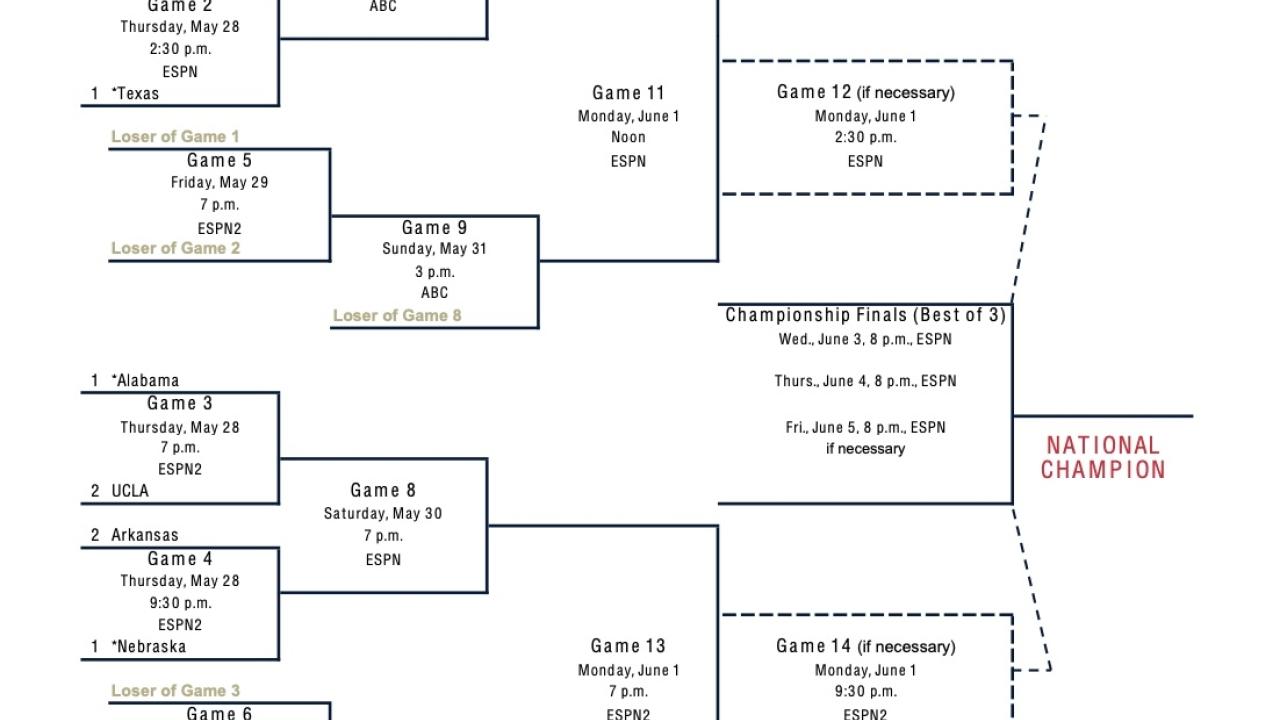
The 2026 NCAA Division I softball season concludes with a high-stakes structural rematch at Devon Park, as Texas and Texas Tech consolidate their regional hegemony in the Women’s College World Series (WCWS) Final. This championship series marks a critical pivot in collegiate softball, representing the second consecutive year these Big 12 rivals have monopolized the national stage in Oklahoma City.
Asymmetric Paths: Rest vs. Momentum
The competitive architecture of this final is defined by contrasting workloads. Texas, the defending champion, enters the series with a distinct probabilistic advantage following a clinical semifinal sweep of Tennessee. This marks the Longhorns’ third consecutive title appearance, a feat underpinned by roster continuity and a pitching staff that has avoided the attrition of the losers’ bracket.
Conversely, Texas Tech’s advancement required a high-leverage operational effort. Forced into a semifinal double-header against Alabama, the Red Raiders relied on Mia Williams’ walk-off home run to force a decisive nightcap. The subsequent 2-0 shutout, anchored by NiJaree Canady, secured their return to the final but at a significant physiological cost. The primary tactical variable for the series is whether Canady can maintain peak velocity and precision after a high-pitch-count elimination cycle.
Tactical Variables and Pitching Depth
The Red Raiders’ defensive strategy hinges on Canady’s ability to suppress a Texas lineup that leads the nation in efficiency. Despite leaving the bases loaded in their final elimination frame against Alabama, Texas Tech’s defensive resilience remained intact. However, the Longhorns’ ability to cycle through fresh arms while Texas Tech manages Canady’s recovery creates a disparity in rotational management that often dictates the momentum of Game 1.
The Geographic and Economic Shift
The 2026 final underscores a macro-level shift in recruiting and institutional investment. With the University of Oklahoma absent from the championship, the traditional atmospheric advantage of the local powerhouse has been replaced by a neutral-site model dominated by Texas-based donor bases. This transition reflects the ‘Lone Star Shift,’ where Texas and Lubbock have challenged the historical dominance of the West Coast and SEC through aggressive NIL strategies and facility upgrades.
Broadcast Schedule and Media Valuation
The best-of-three series is structured to maximize advertising inventory and viewership metrics, with Game 1 and Game 2 (scheduled for June 3 and 4 at 8 p.m. ET on ESPN) occupying prime-time windows. A potential Game 3 on June 5 serves as a contingency for maximum competitive drama. For Texas, a victory solidifies a modern dynasty; for Texas Tech, the series represents a quest for institutional redemption following their 2025 loss.