Seismic Re-evaluation of the Texas Panhandle
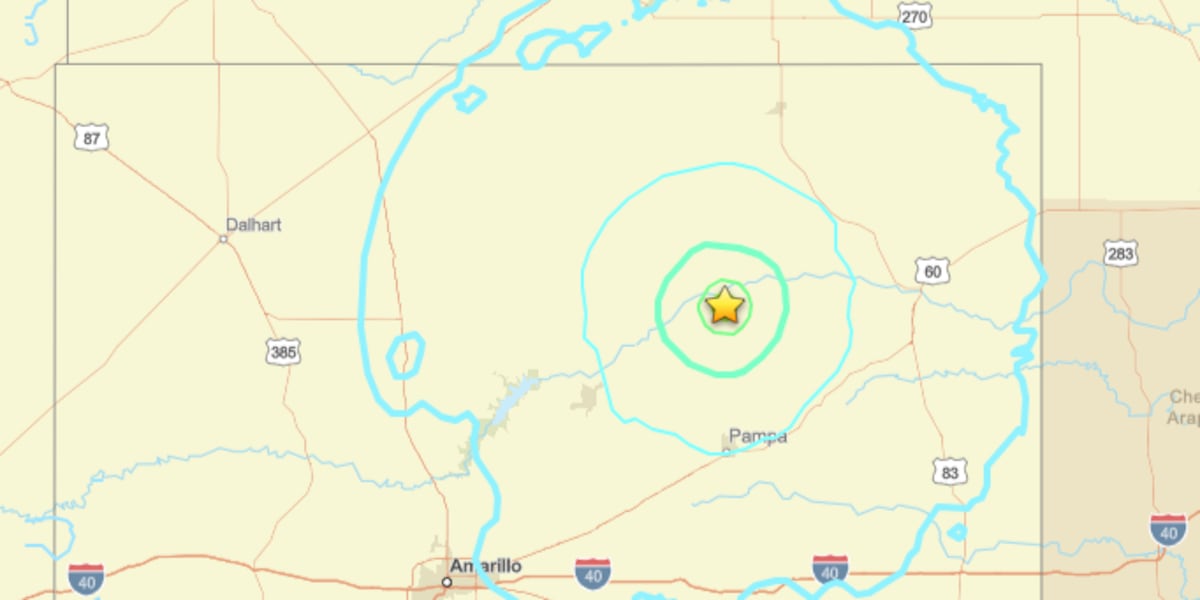
The 5.0 magnitude earthquake recorded northwest of Miami, Texas, on July 23, 2026, represents a significant outlier in the region’s historical seismic record. Data from the United States Geological Survey (USGS) confirms this as the most powerful event in the Panhandle since 1900. Statistically, the region is categorized by low-frequency seismic activity, having recorded only four events exceeding magnitude 4.0 in over a century. This breach of the 5.0 threshold necessitates a shift in the geological assessment of the Southern Plains’ crustal stability.
Geological Mechanics and Energy Propagation
The event originated at a hypocentral depth of approximately 3.5 miles. This shallow depth, characteristic of intraplate earthquakes, contributed to high-intensity surface shaking and efficient energy transmission. The resulting seismic waves were felt as far as Oklahoma City and Tulsa, indicating low attenuation rates within the stable continental lithosphere. At the epicenter—situated 23 miles south-southeast of Spearman—the rupture likely occurred within the crystalline basement, providing a critical data point for identifying blind faults in an area traditionally considered tectonically quiescent.
Infrastructure Resilience and Strategic Risk Assessment
Initial assessments by the Texas Department of Transportation (TxDOT) and the Department of Public Safety (DPS) indicate no structural failures across the regional logistics network. The integrity of bridges and energy pipelines in the Spearman-Miami corridor remains intact, suggesting that current engineering tolerances provided a sufficient safety margin for this unprecedented event. However, the magnitude 5.0 benchmark serves as a catalyst for industrial stakeholders—particularly in energy and agriculture—to update risk models for high-value assets and subterranean storage facilities.
Institutional Monitoring and Long-term Implications
While the USGS reports no immediate aftershocks, the potential for crustal stress adjustment remains a subject of ongoing observation. This event will be integrated into the National Seismic Hazard Model, potentially influencing future building codes and earthquake insurance premiums in Northwest Texas. As the focus shifts from emergency response to data synthesis, the July 23 quake stands as a landmark case study in intraplate seismic behavior, challenging the perception of the Texas Panhandle as a purely stable geological province.