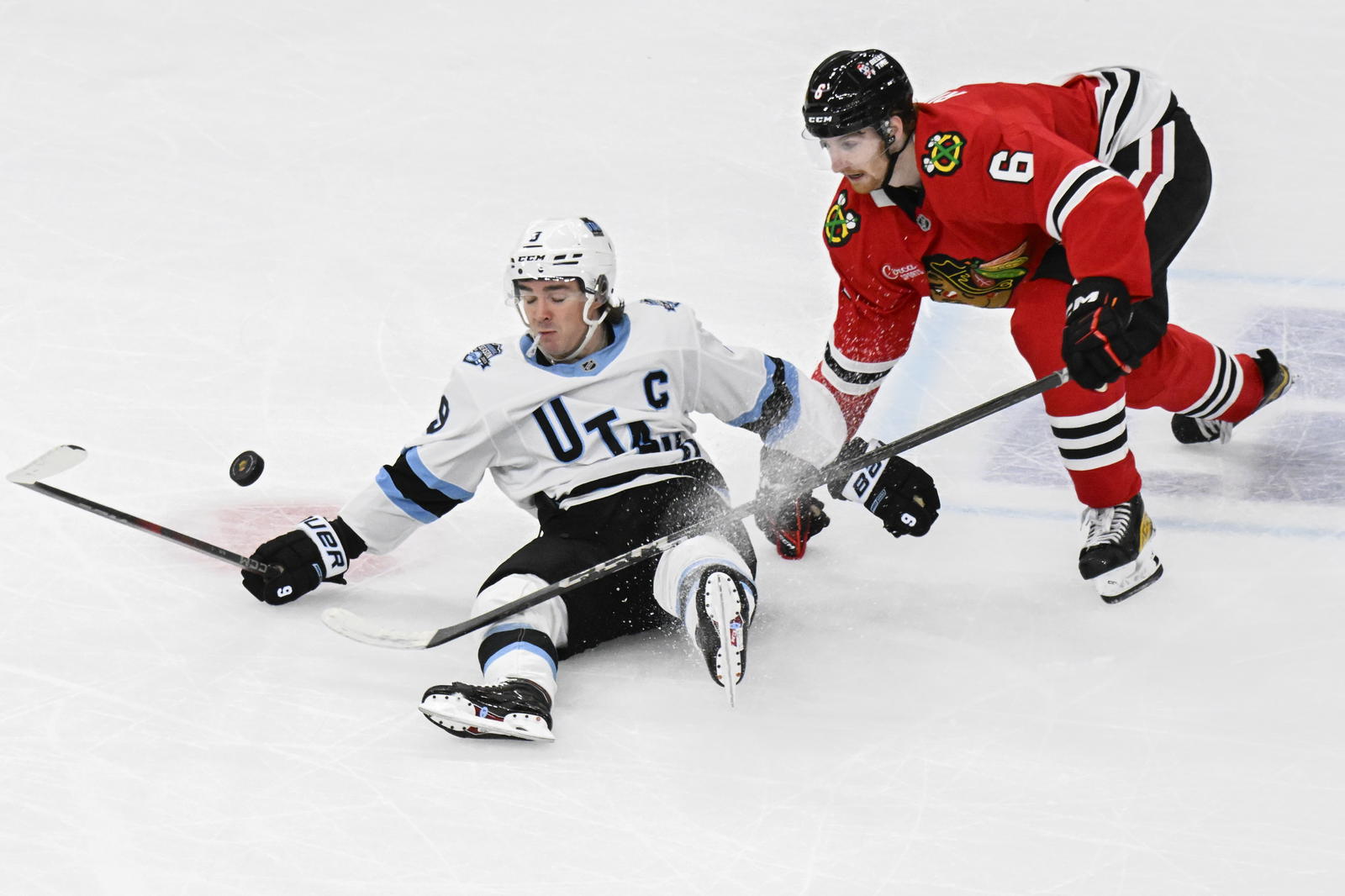
Strategic Asymmetry in the Western Conference
The March 1 engagement between the Chicago Blackhawks and the Utah Mammoth at the Delta Center serves as a case study in divergent organizational life cycles. Utah, occupying the primary Wild Card seed with 66 points, enters this contest in a phase of competitive escalation. Conversely, the Blackhawks, positioned 14th in the conference with 53 points, remain focused on asset maturation and the empirical evaluation of their high-ceiling core. This matchup highlights the friction between a roster optimized for immediate postseason contention and one engineered for long-term dominance.
Institutional Stability and the Utah Market Paradigm
The Mammoth’s ascent to the sixth rank in the West validates the organizational stabilization following the franchise’s relocation. By transitioning from perpetual rebuilding to operational maturity, Utah has established a defensive identity that neutralizes elite transition offenses. The Delta Center has evolved into a fortress for this structural shift, supported by a localized broadcast ecosystem via Utah16 and ESPN+. For the Mammoth, maintaining this momentum is a commercial necessity, as on-ice success directly correlates with the long-term viability of the NHL in the Salt Lake City corridor.
Blackhawks’ Asset Maturation: The Bedard Factor
Chicago’s strategic trajectory is anchored by Connor Bedard, whose 1.1 points-per-game average through 46 contests remains the primary indicator of the franchise’s successful rebuild. Despite a 22-28-9 record, the organization has prioritized the integration of Artyom Levshunov and Frank Nazar into high-leverage roles. This aggressive deployment provides the front office with critical data on defensive coverage and puck-retention metrics, essential for upcoming salary cap optimization and roster construction phases.
Goaltending Metrics and Crease Dynamics
The goaltending duel features a significant variance in statistical profiles. Utah’s Karel Vejmelka (.901 SV%, 2.6 GAA) has provided the consistent high-danger save capacity required for a playoff push. He faces a Chicago offensive unit led by Bedard and Ryan Greene that excels in creative zone entries. For Chicago, Spencer Knight continues to serve as a developmental pillar; his ability to mitigate high shot volumes—evident in his recent performance against Colorado—is vital as the Blackhawks seek a long-term solution to complement their emerging offensive depth.
Defensive Architecture and Transition Play
Utah’s defensive corps, anchored by Mikhail Sergachev and Sean Durzi, is engineered for elite puck movement and neutral zone transition. This mobile unit allows the Mammoth to dictate tempo, supported by the veteran presence of Ian Cole. Chicago, meanwhile, is navigating defensive volatility exacerbated by the absence of Wyatt Kaiser. Young assets like Alex Vlasic and Louis Crevier are being forced into expanded roles, testing the Blackhawks’ structural integrity against a Mammoth offense that features multi-line scoring threats.
Offensive Depth and Scoring Variance
The scoring disparity is defined by Utah’s distribution versus Chicago’s concentration. Clayton Keller (58 points in 59 games) spearheads a versatile attack alongside Nick Schmaltz and Logan Cooley. This depth forces opponents to defend the full width of the ice. Chicago remains reliant on its top-six production, specifically the Bedard-Greene-Burakovsky tandem. If Utah’s defensive pairings successfully neutralize this line, the Blackhawks struggle to find supplementary scoring from their physical, lower-six checking units.
Circadian Disadvantage and Operational Constraints
Chicago enters the Delta Center facing a significant rest deficit, playing the second leg of a back-to-back after a grueling matchup in Denver. This operational constraint typically results in diminished puck pursuit and degraded defensive positioning during the third period. Utah, coming off a victory against Minnesota with full rest, is positioned to exploit this fatigue through aggressive forechecking and high-tempo special teams execution.
Roster Engineering and Injury Impact
Injury management further separates these two squads. Chicago’s placement of Shea Weber on LTIR and the day-to-day status of Sam Rinzel limit defensive rotation flexibility. Utah enjoys rare roster health, allowing for tactical continuity in line combinations. This stability fosters the chemistry necessary for a sustained postseason run, providing the Mammoth with a distinct competitive advantage in late-season execution.
Market Valuation and Betting Implications
Market sentiment heavily favors the home side, with Utah opening as a -325 moneyline favorite. This valuation accounts for the rest disparity, home-ice advantage, and Utah’s superior standings position. The -1.5 puck line reflects an expectation of a decisive victory, placing the onus on Chicago’s coaching staff to implement a low-event, conservative system to counter Utah’s freshness and offensive depth.
Analytical Outlook
While the outcome is critical for Utah’s playoff seeding, the game serves as a benchmark for Chicago’s developmental curve. The tactical battle will be won in the neutral zone; if Chicago can disrupt Utah’s transition game and capitalize on limited power-play windows, they may overcome the rest disadvantage. However, Utah’s structural maturity and physical freshness position them as the definitive favorites to secure two points and solidify their postseason trajectory.