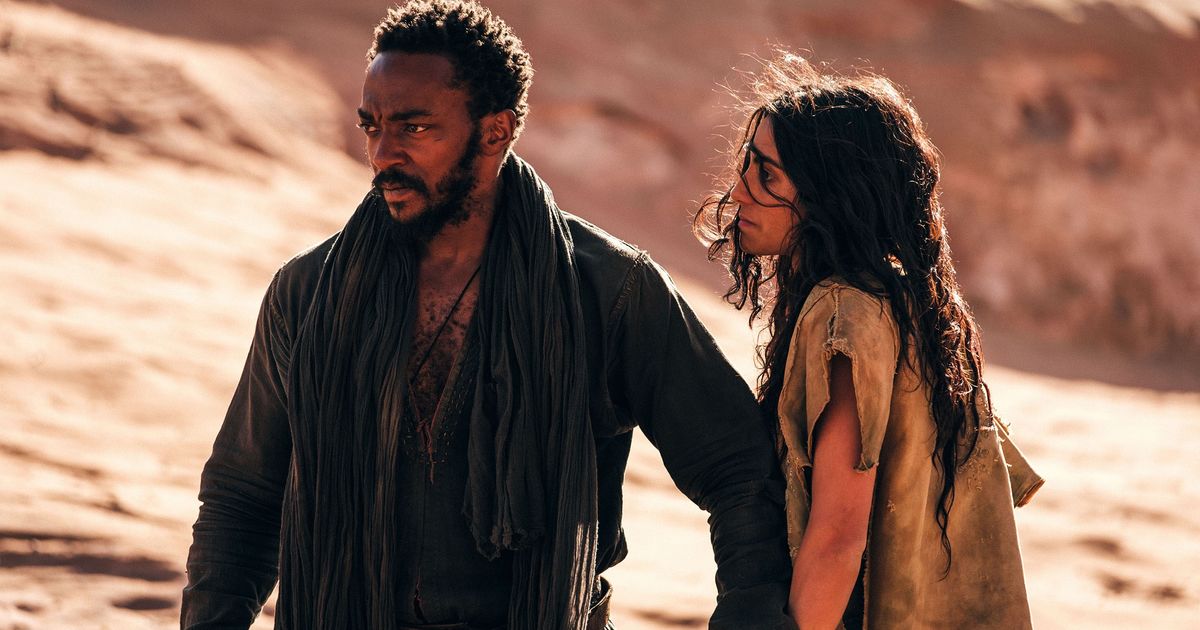
The commercial and logistical stagnation of the historical action epic Desert Warrior transcends mere box-office disappointment; it serves as a critical diagnostic of the friction between state-funded soft power and the volatile mechanics of global entertainment. Produced by the Saudi-owned MBC Group with a $150 million budget, the film was intended as the cultural vanguard for the Vision 2030 initiative—a strategic maneuver to pivot the Saudi economy from hydrocarbon dependency toward a robust, globally competitive media ecosystem.
The project’s failure to achieve market penetration signals a fundamental misalignment between the Kingdom’s institutional haste and the operational readiness of its nascent production infrastructure. Despite leveraging high-profile Hollywood assets—including director Rupert Wyatt and lead Anthony Mackie—the project was compromised by a reliance on an immature supply chain. This disconnect between marketing-led promises and physical capacity forced the production into expensive improvisations that diluted the film’s narrative cohesion and competitive edge.
Operational Volatility and the Infrastructure Gap at Neom
Central to the Desert Warrior strategy was Neom Media, a multi-billion-dollar studio complex envisioned as a regional production cornerstone. However, the decision to commence principal photography in September 2021—while 130,000 square feet of production space remained under construction—exemplifies a prioritization of political timelines over industrial logic. Without functional soundstages, the production was forced to erect massive sets in ad-hoc environments, stripping the project of the technical controls standard for Hollywood-scale tentpoles.
This logistical deficit created a cascading effect of operational risks, leading to budget inflation and technical compromises. The necessity for the production team to build essential infrastructure on the fly highlights a lack of integrated local support systems. For international studios, the Desert Warrior experience serves as a cautionary signal regarding the viability of Saudi Arabia as a tier-one filming hub compared to established competitors like Jordan or Morocco.
The Financial Atrophy of ‘Development Hell’
The film’s trajectory from its 2022 wrap to a projected 2026 release illustrates the compounding costs of ‘development hell’ within a state-backed framework. For four years, a $150 million capital investment sat as a non-performing asset on MBC Group’s balance sheet, accruing implicit carry costs while the cultural relevance of its lead talent and historical narrative eroded. Such a prolonged delay typically indicates severe internal dissatisfaction or a lack of distribution leverage—both fatal to a film’s commercial viability.
Concentrating massive resources into a single high-risk epic, rather than a diversified slate of agile productions, created a binary outcome where failure invites systemic scrutiny. The eventual 2026 release suggests a mandatory inventory clearance rather than a strategic entry into a favorable market window. This financial stagnation transformed a ‘soft power’ asset into a liability, forcing a quiet exit from the competitive theatrical landscape.
Geopolitical Headwinds and the Limits of State-Sponsored Narrative
The film’s attempt to leverage the seventh-century Battle of Ze Qar for regional prestige encountered severe geopolitical headwinds. The shifting regional climate post-2023 created an inhospitable environment for a project designed to project Saudi influence through ancient conflict. This highlights the unique vulnerability of Middle Eastern cultural exports to external political pressures that traditional Hollywood studios rarely navigate with the same degree of institutional risk.
Furthermore, the ‘culture-washing’ label—often applied to state-sponsored entertainment—created a threshold of skepticism that the film could not overcome. When a production is perceived as a government mandate rather than an organic creative endeavor, it faces heightened critical resistance. Desert Warrior demonstrates that while capital can procure Hollywood talent, it cannot manufacture the creative autonomy or market authenticity required for global resonance.
Distribution Deficits and Strategic Misalignment
The reported distribution strategy, which placed Desert Warrior against high-profile projects like the Michael Jackson biopic, suggests a deficiency in competitive intelligence. Effective global distribution requires deep-seated industry relationships and precise timing; without these, the film lacked the ‘marketing muscle’ to secure prime theatrical real estate. The resulting lack of buzz suggests the MBC Group was treated as an outsider by legacy distributors, leaving the project marginalized.
In conclusion, Desert Warrior stands as a monument to the challenges of rapid industrialization in the arts. The $150 million loss is a pedagogical expense for a nation learning that cinematic influence is not merely purchased, but built through operational maturity and market integration. The future of Vision 2030’s media pillar now depends on whether stakeholders pivot toward co-productions and sustainable infrastructure or continue to chase high-stakes, state-mandated blockbusters.