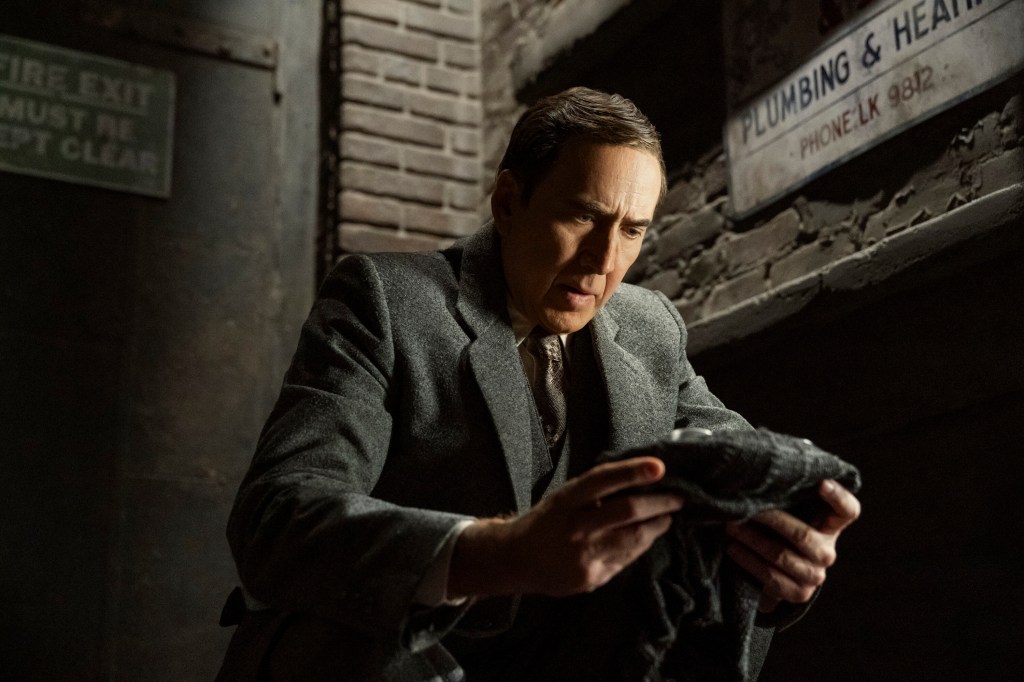
Prime Video has abruptly cancelled ‘Spider-Noir’ after its acclaimed eight-episode run, signaling a significant recalibration of its content strategy. Despite the series garnering 11 Emmy Award nominations—the most for any Prime Video program in 2026—and securing five wins, the decision underscores a growing tension between producing prestige television and achieving sustainable viewership metrics necessary for platform growth.
The Economic Realities of High-Prestige Television
The termination of ‘Spider-Noir’ highlights the precarious economics of high-budget genre programming in the current streaming landscape. While the series achieved a 92% critical rating on Rotten Tomatoes, its substantial production costs were evidently not offset by its respectable, yet non-blockbuster, viewership numbers, according to industry analysis.
This financial divergence suggests Prime Video is increasingly prioritizing broad audience penetration over niche critical success. The talent overhead, including Nicolas Cage’s significant draw, and the meticulous period-accurate production design for 1930s New York likely elevated the series’ break-even threshold beyond its commercial reach.
The operational demands of a period-piece superhero drama necessitate substantial capital investment in specialized departments. The series’ five Creative Arts Emmy wins—including stunt coordination, sound editing, and special visual effects—are a testament to the resource-intensive execution required for its singular creative vision.
Strategic Implications for the Amazon-Sony Pact
‘Spider-Noir’ marked the debut of a broader strategic partnership between Amazon and Sony Pictures Television, designed to leverage Sony’s extensive library of over 900 Marvel characters tied to the Spider-Man franchise. This collaboration aimed to bolster Amazon’s original content against competitors with deep Marvel IP integration.
The cancellation of the inaugural project under this pact does not necessarily indicate a failure of the partnership itself, but rather a strategic refinement of its output. Sony has confirmed a second series within this shared universe is in active development, signaling a pivot towards narratives with potentially broader commercial appeal.
By moving past ‘Spider-Noir,’ Amazon and Sony are likely seeking a property that can achieve more substantial, “blockbuster” status. This transition suggests a move away from experimental, “pop-art” interpretations towards more traditional franchise-building narratives capable of sustaining multiple seasons and wider audience engagement.
The Nicolas Cage Factor and Talent Investment
Nicolas Cage’s first regular television role was a significant branding coup for Prime Video, offering cultural cachet and considerable awards-season visibility. Cage’s public sentiment that the single season was “perfect” implies a potential alignment with the creative finality of the project, framing it as a complete artistic statement.
Cage’s characterization of the show as a “dangerous, innovative, pop-art Spider-Man” illustrates Prime Video’s willingness to undertake creative risks to differentiate its superhero offerings. However, the decision not to greenlight a second season indicates that even high-profile star power may not insulate a project from the rigorous performance benchmarks of the 2026 streaming market.
The actor’s comments about the story’s completeness suggest the production may have been conceived as a limited series, allowing both the streamer and talent to frame its conclusion as a creative endpoint rather than a commercial setback, thereby preserving brand value.
Technical Excellence vs. Commercial Viability
The five Emmy wins in technical categories, particularly stunt coordination and special visual effects, highlight the series’ high production costs. These awards validate the immense craftsmanship involved but also underscore the significant infrastructure investment required to maintain such standards.
The disconnect between technical success and corporate decision-making is evident. While the crew’s technical achievements are undeniable, they did not translate into institutional longevity for the series, reflecting the primacy of viewership and ROI in streaming platform strategies.
Wins for title design and cinematography further emphasize the series’ commitment to a distinct aesthetic rigor. However, in an era of stringent capital discipline, these elements are often the first to be scrutinized when a series fails to achieve top-tier viewership growth, irrespective of critical acclaim.
Market Context and Future Trajectory
The cancellation of a series with a 90% audience score and multiple Emmy wins points to a structural shift in how streamers define success. Prime Video appears to be prioritizing long-term franchise scalability and broad audience engagement over critical consensus and awards recognition.
The Great Depression setting and private investigator archetype of Ben Reilly offered a unique interpretation of the Spider-Man mythos, but may have limited its synergy with broader, contemporary franchise elements. This potential lack of wider integration could have influenced the decision to accelerate development of the next project in the Sony-Amazon pipeline.
As the industry anticipates the next series in this partnership, ‘Spider-Noir’ is likely to be remembered as a high-water mark for creative experimentation that ultimately succumbed to the economic realities of the 2026 media landscape. The focus now shifts to how Sony will leverage its remaining character IP to find a more commercially resilient successor.
Institutional Resilience of the Sony Universe
Sony’s stewardship of the Spider-Man franchise represents a highly valuable intellectual property portfolio. The capacity to produce a high-quality, award-winning series like ‘Spider-Noir’ demonstrates the depth of creative talent available to the Sony-Amazon partnership.
The institutional knowledge gained from ‘Spider-Noir’s’ production, particularly in managing high costs for specialized visual effects and stunt work, will undoubtedly inform future projects. This suggests that while the series itself has concluded, the technical and operational framework established remains a valuable asset for Amazon and Sony.
The rapid transition to the next project indicates strong institutional confidence in the partnership’s ability to develop a significant commercial hit. For stakeholders, ‘Spider-Noir’s’ cancellation is less a definitive end and more a tactical repositioning to favor more sustainable, long-term capital deployment.
Conclusion: A Bold Experiment’s End
Ultimately, ‘Spider-Noir’ achieved its objective as a standalone creative statement, echoing sentiments from Nicolas Cage and critical reviews. The series’ success in technical Emmy categories, even post-cancellation, serves as a final validation of its artistic merit and production quality.
For Prime Video, the series stands as a high-profile example of its ability to attract top-tier talent and produce award-winning content. However, the decision to cancel underscores a clear message to the industry: in 2026, prestige and technical excellence alone are insufficient to guarantee survival without substantial, blockbuster-level audience engagement.
The “onwards, upwards, inwards” sentiment evoked by Cage encapsulates the current industry drive: a relentless pursuit of innovation grounded in the pragmatic realities of financial performance. The ‘Spider-Noir’ experiment, though brief, has set a high standard for technical quality within the Sony Pictures Universe of Marvel Characters.