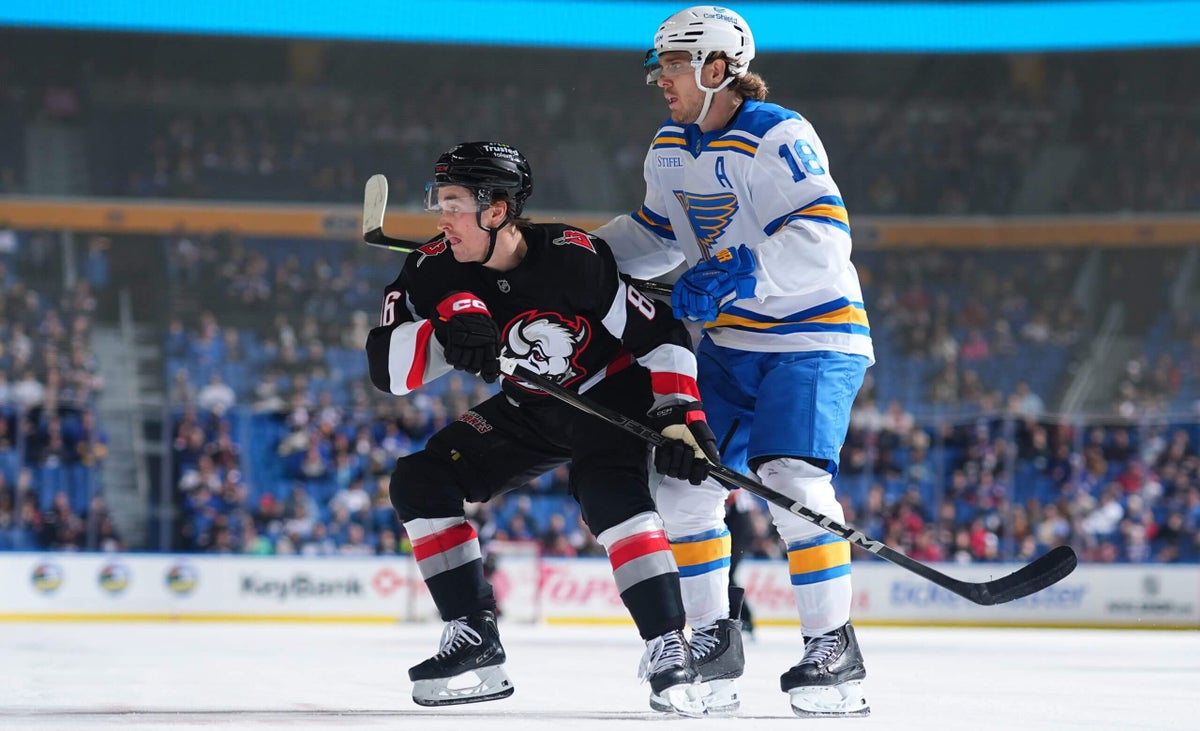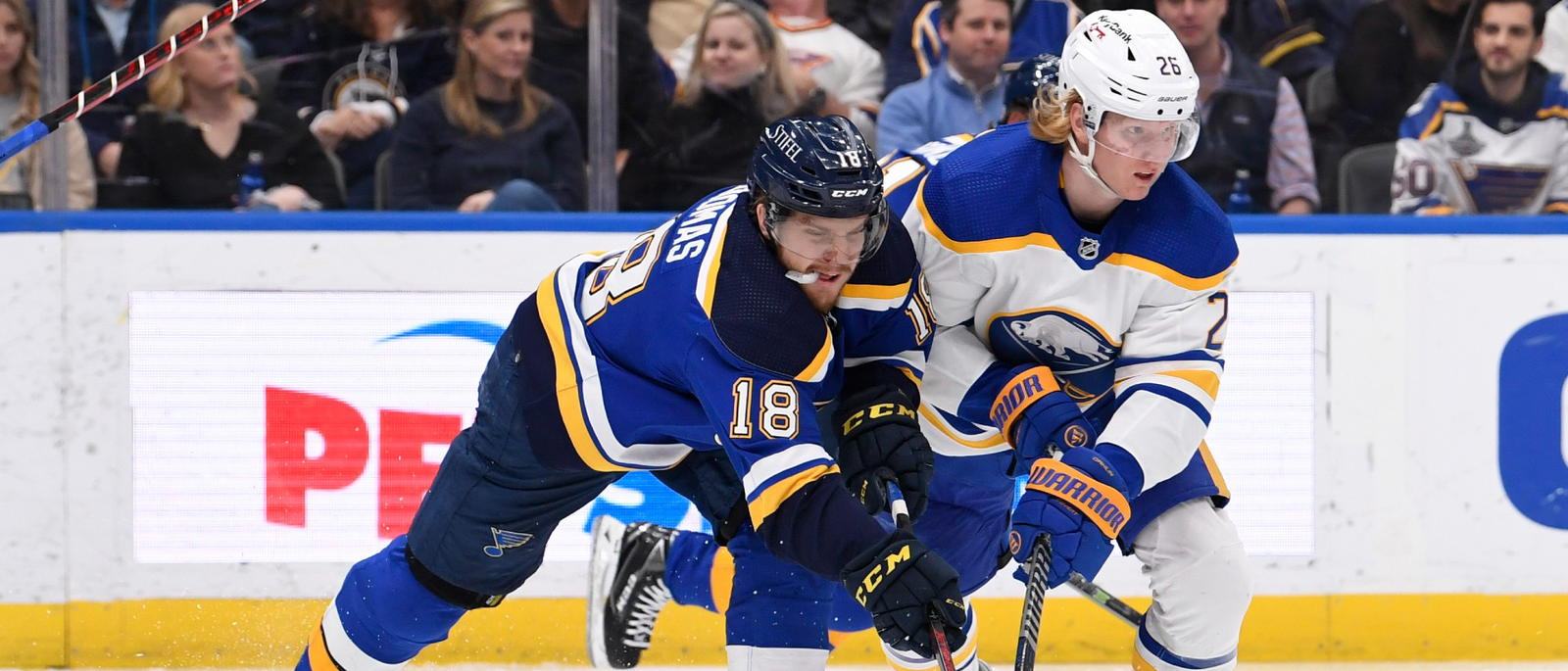
The conclusion of the NHL’s Olympic roster freeze has triggered heightened trade market volatility as the March 6 deadline approaches. At the heart of this activity, the Buffalo Sabres, positioning as aggressive buyers under General Manager Jarmo Kekäläinen, engaged in – and subsequently stalled – extensive negotiations with the St. Louis Blues for elite center Robert Thomas. These discussions highlight a critical juncture for both franchises: Buffalo’s urgent drive to solidify a playoff return versus St. Louis’s disciplined, high-value retooling strategy.
Thomas Valuation: A Premium Asset Impasse
Reports confirm negotiations reached a critical impasse, with the Sabres reportedly unwilling to meet the Blues’ firm asking price: three to four premium assets, defined as a combination of high-tier prospects, established roster players, and first-round draft capital. This ambitious valuation underscores Thomas’s scarcity as an age-prime, long-term contracted center, a premium commodity in a league grappling with salary cap constraints.
The Sabres’ reported offer, equivalent to four first-round picks, illustrates the high-stakes nature of the 2026 trade cycle. Their decision to withdraw signifies a strategic limit on asset depletion, balancing immediate competitive advantage with the long-term structural integrity of a roster built through years of high-lottery drafting and focused on sustainable contention.
St. Louis’s unwavering stance signals a clear mandate to maximize return on their most valuable trade chip. By setting such a high floor, the Blues are establishing a market benchmark, forcing other potential suitors, including teams like the Utah Mammoth, to either meet or exceed this demanding package or pivot to lesser targets, thus constricting the trade landscape for top-tier talent.
Contractual Gravity and Salary Cap Architecture
Robert Thomas’s contract – an $8.125 million AAV through the 2030-31 season – presents both significant value and complex financial planning for any acquiring team. For Buffalo, integrating such a foundational contract requires a multi-year salary cap projection to align with future cap escalations and critical extensions for existing stars like Rasmus Dahlin. While the Sabres’ current cap flexibility, supported by a young, cost-controlled core, theoretically accommodates the deal, the combined outlay of trade assets and long-term financial commitment evidently surpassed their calculated risk tolerance.
From St. Louis’s perspective, this long-term, cost-certainty contract provides substantial leverage, albeit limiting the pool of potential trade partners to cap-rich teams. It ensures the acquiring team gains nearly a decade of a top-six center, justifying their demand for assets that can accelerate their retooling timeline and contribute immediately.
Sabres’ Atlantic Division Urgency and Strategic Crossroads
Buffalo’s aggressive pursuit of Thomas is intrinsically linked to their position in the Atlantic Division, where they trail the Tampa Bay Lightning by a narrow margin in a tight playoff race. General Manager Kekäläinen’s known penchant for bold, high-impact moves reflects the team’s shift from passive development to active contention, aiming to capitalize on their core’s prime years.
The failure to secure Thomas leaves the Sabres at a precarious operational crossroads as the deadline nears. They must swiftly determine if their current roster possesses the depth to maintain their standing or if alternative, potentially less impactful, reinforcements are necessary. This creates immense pressure to find value without overpaying in a seller-dominated market, lest they risk stagnation while rivals in the Eastern Conference bolster their own playoff aspirations.
The Blues’ Retooling Blueprint: Maximizing Asset Value
The Blues’ willingness to entertain offers for Thomas and winger Jordan Kyrou signifies a decisive pivot towards a ‘retool’ – a strategy distinct from a full rebuild. This approach leverages current high-value assets to acquire a concentrated influx of young talent and draft capital, aiming to shorten competitive downtime by bringing in assets closer to NHL readiness than typical mid-round draft picks.
Potentially moving both Thomas and Kyrou allows St. Louis to fundamentally reset their roster composition and financial commitments in a single trade cycle. This strategy is contingent on a high degree of confidence in their scouting and player development departments to identify the right ‘premium assets’ in return. The institutional risk for St. Louis lies in overvaluing their players to the point of market alienation; if other suitors cannot meet their price, the Blues face retaining players who are aware of being on the trade block, potentially impacting locker room dynamics.
Market Disruption and the Utah Factor in NHL Trades
The reported interest of the Utah Mammoth introduces a disruptive variable into the NHL’s trade ecosystem. As a new market entrant with a mandate for immediate relevance, Utah possesses the cap space and aggressive motivation to pursue high-profile acquisitions. Their involvement likely contributed to the valuation inflation that ultimately stalled the Sabres-Blues talks, exemplifying how new franchises can reshape trade dynamics.
Utah’s presence underscores a shift in league power, where well-capitalized non-traditional markets are increasingly competing fiercely for elite talent. If Utah or another team eventually meets the Blues’ demanding price, it will establish a new benchmark for center trades in the post-flat-cap era, impacting future negotiations for similar players and potentially pricing out mid-market teams that rely on incremental growth.
Post-Olympic Freeze Dynamics and Deadline Pressure
The timing of these negotiations, immediately following the Olympic roster freeze, created a condensed, high-pressure decision window. This environment often leads to either impulsive overpayment or, as with Buffalo, a sudden withdrawal when the true cost materializes. The freeze also allowed teams to assess player performance and durability, potentially solidifying Thomas’s high valuation for the Blues and forcing Sabres to re-evaluate which internal prospects were genuinely untouchable.
As the clock ticks towards the Friday deadline, the ‘dead’ status of these Sabres-Blues talks will be tested by on-ice realities. A dip in Buffalo’s standings could reignite pressure to re-engage—even at a higher cost—while a lack of alternative suitors might compel St. Louis to reconsider their demands, though current indications suggest they project unwavering resolve.
Strategic Balance: Stability vs. Aggressive Expansion
Ultimately, Buffalo’s hesitation to part with a high volume of prospects and first-round picks reflects a commitment to institutional stability. While Jarmo Kekäläinen has a history of aggression, the modern NHL penalizes teams that deplete their farm systems for singular upgrades that do not consistently yield championship contention. Prioritizing the preservation of ‘necessary pieces’ signals a more measured approach to building a sustainable contender.
For the Blues, the challenge is ensuring the assets they receive in a potential Thomas trade are genuinely ‘premium’ enough to justify moving a franchise pillar. A failed return would not only derail the retool but could erode front office credibility with a fan base expecting a quick return to relevance. This standoff is a microcosm of the NHL’s evolving economic and strategic landscape, where rising cap hits, talent scarcity, and new market competitors continually escalate the cost of doing business. The outcome of the Thomas saga, whether resolved or not, will resonate through the league long after the March 6 deadline passes.