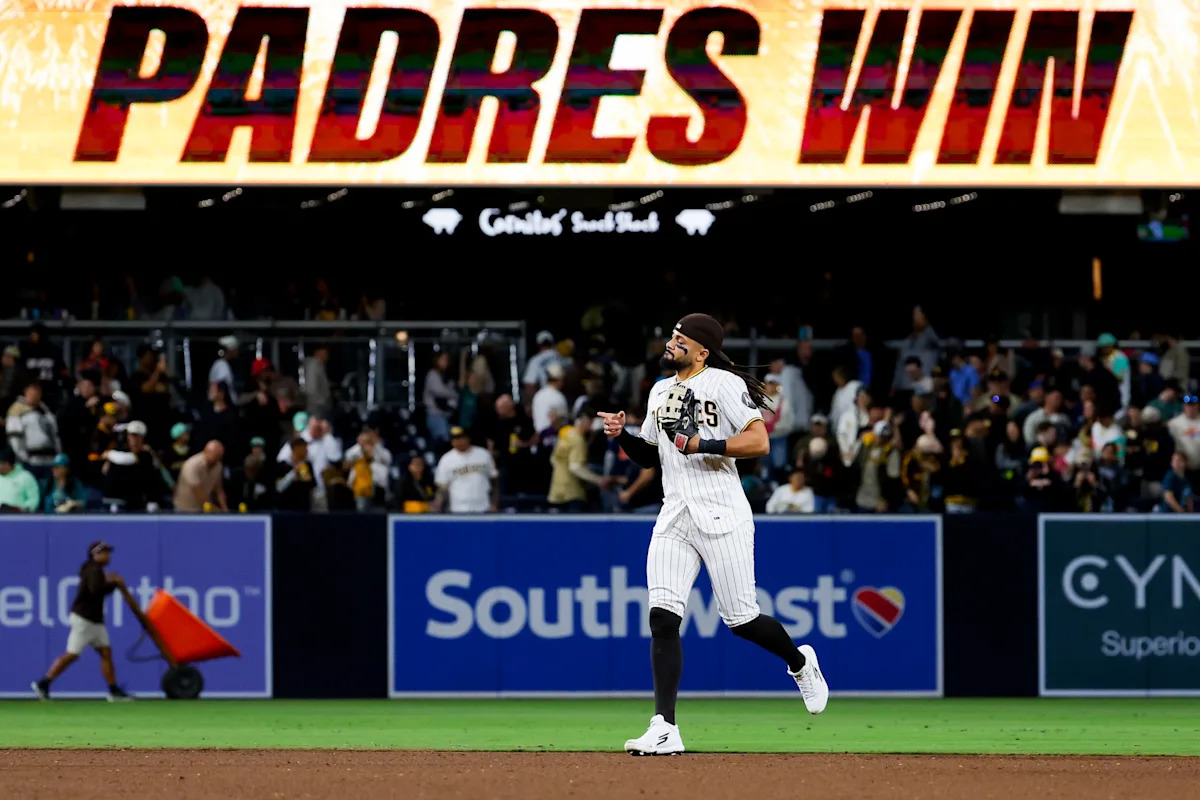
The $3.9 billion acquisition of the San Diego Padres by José E. Feliciano and Kwanza Jones represents a watershed moment in professional sports finance. By eclipsing the previous $2.42 billion record set by Steve Cohen’s 2020 purchase of the New York Mets, this transaction signals a decoupling of franchise valuations from traditional revenue-to-ebitda metrics, moving instead toward a scarcity-driven model favored by institutional investors.
This 59% year-over-year surge from the team’s 2026 pre-season valuation ($3.1 billion) highlights the aggressive entry of private equity frameworks into Major League Baseball. Feliciano, co-founder of Clearlake Capital, brings a multi-club ownership pedigree—evidenced by his stake in Chelsea FC—that suggests a move toward cross-sport operational efficiencies and the aggressive exploitation of ancillary revenue streams, such as stadium-adjacent real estate and global digital rights.
Institutional Vetting and Valuation Floors
The sale’s finalization requires approval from 75% of MLB owners during the June meetings. This vetting process is no longer a mere formality; it is a strategic mechanism for existing owners to institutionalize the $3.9 billion benchmark. By validating this price point, the league effectively raises the floor for future transactions, providing a massive lift to the balance sheets of all 30 franchises.
The involvement of Kwanza Jones adds a layer of governance sophistication that aligns with modern institutional mandates. Their successful bid against industry veterans like Joe Lacob (Golden State Warriors) and Tom Gores (Detroit Pistons) underscores the competitive intensity for ‘trophy assets’ that offer long-term capital appreciation over immediate operational cash flow.
Labor Dynamics and the Collective Bargaining Agreement
The timing of this sale introduces significant friction into upcoming Collective Bargaining Agreement (CBA) negotiations. The $3.9 billion figure undermines the owners’ traditional narrative of financial hardship and the necessity of salary caps. The Major League Baseball Players Association (MLBPA) will likely cite this transaction as definitive proof of the league’s robust health, using it as leverage to resist spending limits and revenue-sharing modifications.
For a mid-market team to command nearly $4 billion suggests that geographic market size is becoming secondary to brand equity and competitive performance. This shift complicates the ‘small-market’ plea often used to justify revenue redistribution, potentially leading to a more contentious labor environment as the current CBA nears expiration.
Strategic Shift from Family Trust to Global Capital
The transition from the Seidler family’s emotional, legacy-driven ownership to Feliciano’s data-centric, private equity approach marks the end of an era. While Peter Seidler’s tenure was defined by aggressive roster spending that defied conventional market logic, the Feliciano-Jones era will likely focus on maximizing the franchise’s global footprint. Leveraging the Padres’ proximity to the Mexican market and Feliciano’s international soccer ties, the new ownership is positioned to scale the brand into a global entertainment entity, further professionalizing the management of MLB assets.