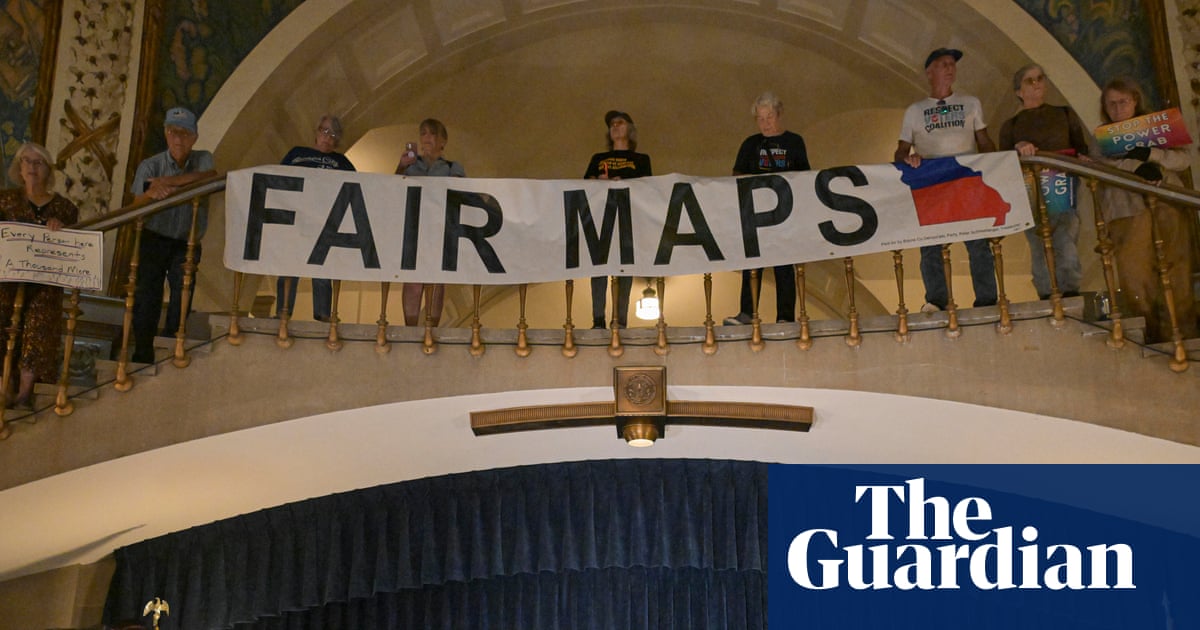
Missouri’s upcoming congressional elections face structural destabilization following conflicting judicial mandates over House Bill 1 (HB 1). Designed with the endorsement of Donald Trump to convert the state’s 6–2 Republican delegation into a 7–1 supermajority, the redistricting measure has triggered a jurisdictional impasse between state constitutional authorities and the federal judiciary.
The Kavanaugh Shadow Docket Order
The immediate catalyst for the controversy was a summary disposition by U.S. Supreme Court Justice Brett Kavanaugh. Acting in his capacity as Circuit Justice for the Eighth Circuit, Kavanaugh issued an individual order denying the state’s emergency stay application (26A304): “Application (26A304) denied by Justice Kavanaugh.”
By declining to refer the emergency request to the full bench, the order preserved a Missouri Supreme Court injunction that enjoined HB 1, effectively reverting the state to its 2022 congressional boundaries. For election administrators and civil litigants, this procedural denial initially restored the status quo, insulating state court authority over redistricting referendums from premature federal interference.
Federal District Court Counter-Mandate
The administrative finality of Kavanaugh’s order collapsed within hours. Chief U.S. District Judge Stephen Clark, a Trump appointee in the Eastern District of Missouri, issued a contradictory injunction compelling state officials to implement the contested HB 1 map for the approaching midterm cycle. Judge Clark’s order effectively neutralized the state supreme court’s stay, establishing a direct conflict between state constitutional procedure and federal equitable intervention.
Counsel for the map’s opponents, Abha Khanna, noted that the concurrent, contradictory directives inflict direct disruption on local election boards. Missouri Secretary of State Denny Hoskins faces two mutually exclusive judicial commands: execute the legislatively enacted HB 1 under federal mandate, or conduct elections under the 2022 lines mandated by the state judiciary.
Statutory Mechanics, Referendum Rights, and Administrative Risk
Beyond delegation math, the legal challenge hinges on Missouri’s constitutional provisions for citizen referendums. Grassroots coalition People Not Politicians, organized by Richard von Glahn, collected over 300,000 signatures to suspend HB 1 and place the map before voters on the November 2026 ballot. The state supreme court’s stay recognized that enforcing the map prior to ballot qualification would vitiate the state constitution’s direct democracy protections.
In response to Judge Clark’s intervention, Khanna and von Glahn submitted a 25-page emergency application to the U.S. Supreme Court. The petition argues that the district court’s order violates federalism norms by preempting state judicial review and directly breaches the Purcell principle, which restricts federal courts from altering voting rules on the eve of an election.
With less than two months before the midterms, the operational consequences of dual maps are acute: voter reassignments, system reprogramming, and ballot printing face severe administrative compression. The Supreme Court’s impending disposition will determine whether federal district courts can override state supreme court jurisdiction over state election mechanics, establishing a critical precedent for emergency redistricting jurisprudence.