The Unconventional Launch: Kimmel’s Early Vision for Carolla’s Comedy
Comedian Adam Carolla credits Jimmy Kimmel as the singular force who first recognized and championed his comedic potential, steering him towards an entertainment career. This pivotal encouragement, Carolla recounts, originated from an unexpected boxing trainer-client relationship. Their connection began when Carolla, then a boxing instructor, found himself locked out of the KROQ radio station at 6 a.m. His persistence led him to intercept a staff member, requesting they relay a message to a waiting trainer. Roughly twenty minutes later, Kimmel, known then as “Jimmy the Sports Guy” on KROQ, granted Carolla entry. What started as physical training quickly evolved into extended, formative discussions about the nature and craft of comedy, laying the groundwork for Carolla’s future in the industry.
Unfiltered Humor: A Societal Imperative and Bulwark Against Decline
Carolla articulates a compelling argument for the critical role of comedians as truth-tellers, asserting that a society’s health is directly proportional to its capacity for unfiltered humor. He posits that societal decline is intrinsically linked to the stifling of comedic voices, viewing humor not merely as entertainment but as a vital mechanism for accountability and critical discourse. When comedians, often operating outside traditional institutional frameworks, are constrained from delivering candid observations, a crucial feedback loop for societal self-correction is lost. This suppression, whether through external pressure or self-censorship, fosters an environment where critical issues remain unaddressed, potentially accelerating systemic decay. Carolla’s perspective underscores the strategic imperative for platforms and audiences to actively protect spaces for unvarnished comedic expression, seeing it as essential for societal resilience and a potent disruptor of emergent pathologies.
Industry Evolution: Informal Mentorship, Talent Migration, and Economic Shifts
Carolla’s narrative highlights a less conventional yet powerful aspect of entertainment industry talent development: informal mentorship and serendipitous discovery. Kimmel’s early recognition of Carolla’s raw talent, predating formalized scouting or structured capital investment, demonstrates how personal relationships and organic networks can be instrumental in launching significant careers. This contrasts sharply with rigid industry pipelines, suggesting a need to re-evaluate resource allocation towards more agile talent cultivation models. Furthermore, Carolla’s commentary on the evolving landscape for creative expression, particularly his stated intent to leave Los Angeles, signals a broader trend of talent migration. This movement, driven by perceived changes in cultural climate and economic viability, can significantly redistribute creative capital. Jurisdictions fostering an environment conducive to creative freedom may attract talent, leading to new cultural production hubs, while established centers risk diminishing their status and experiencing economic contraction. This dynamic positions regulatory environments and cultural receptiveness as strategic assets in attracting and retaining creative professionals.
Strategic Media Engagement: Brand Positioning in a Fragmented Landscape
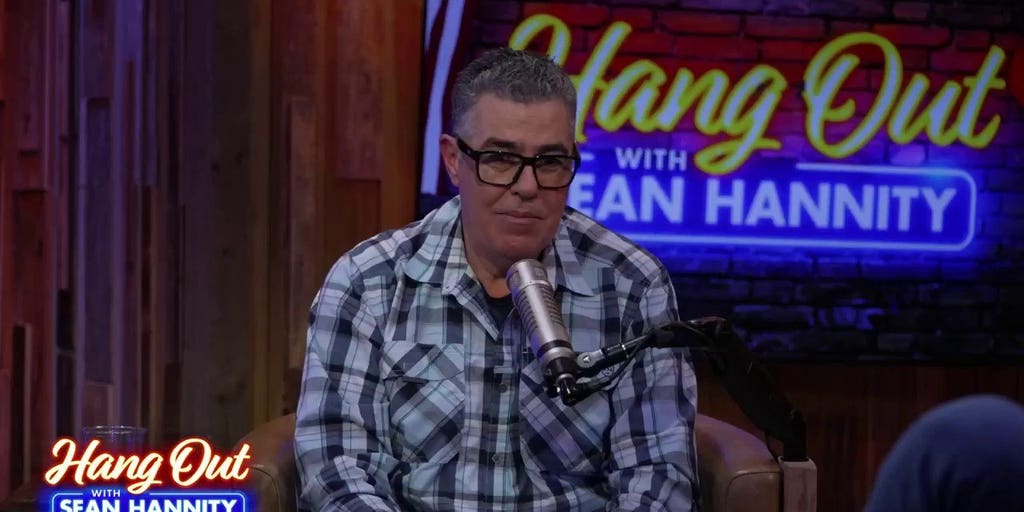
Carolla’s appearances on platforms like Sean Hannity’s program exemplify a strategic approach to media engagement, transcending traditional genre and ideological boundaries. This tactic allows him to disseminate his brand of unfiltered commentary to diverse, often ideologically segmented, audiences. By engaging with specific media ecosystems, Carolla broadens his reach, reinforces his brand identity as a candid truth-teller, and influences public opinion across different demographics. His willingness to engage with platforms that may not align with mainstream comedic outlets strengthens his unique competitive position in a crowded media landscape. This strategic flexibility, prioritizing authenticity and direct engagement with challenging subjects, deepens audience loyalty and marketability, leveraging performance beyond superficial entertainment to foster critical awareness and build a dedicated following that values his distinct perspective.
The Future of Candid Commentary: Polarization and Cultural Impact
Carolla’s insights suggest a growing bifurcation within the media landscape: comedians committed to unfiltered truth-telling may increasingly operate in distinct spheres from those adhering to more commercially safe or conventional approaches. This trend could lead to a more fragmented audience base and a polarization of comedic content, potentially diminishing shared cultural experiences that humor often facilitates. If audiences increasingly retreat into echo chambers, comedy’s potential to bridge divides or challenge assumptions may erode. The long-term sustainability of candid commentary hinges on the collective willingness of audiences and platforms to support it, as economic incentives and societal acceptance will ultimately shape the trajectory of this vital form of public discourse.