Kvapil’s Kansas Rollover: A Nexus of Modern Motorsports Challenges
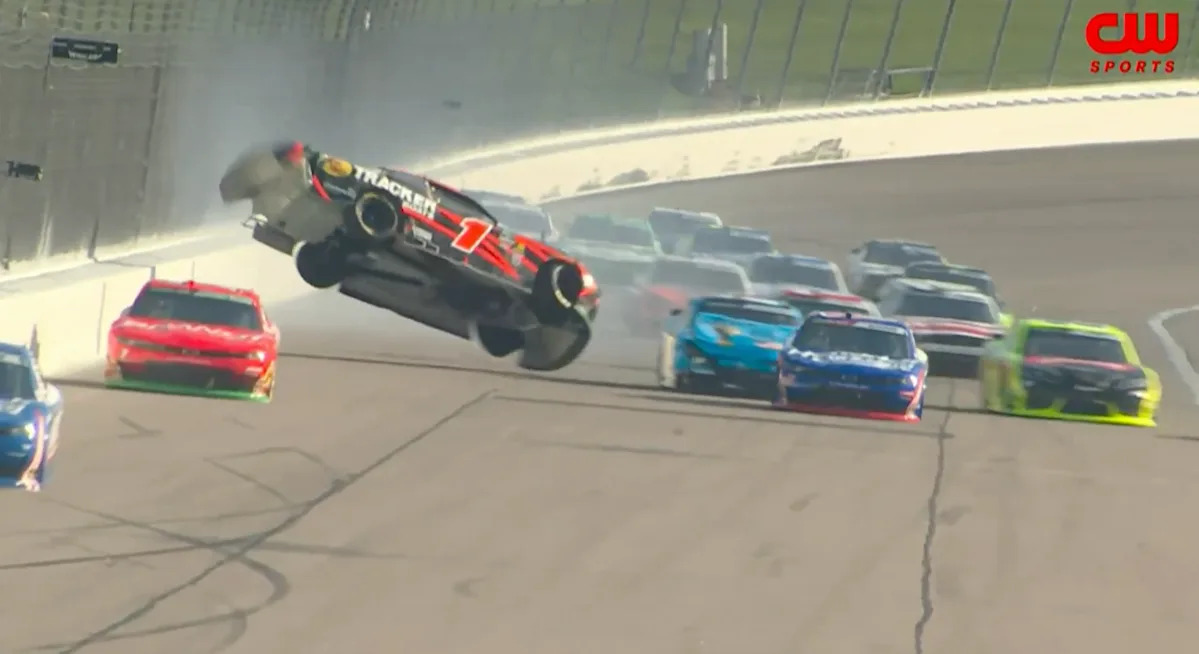
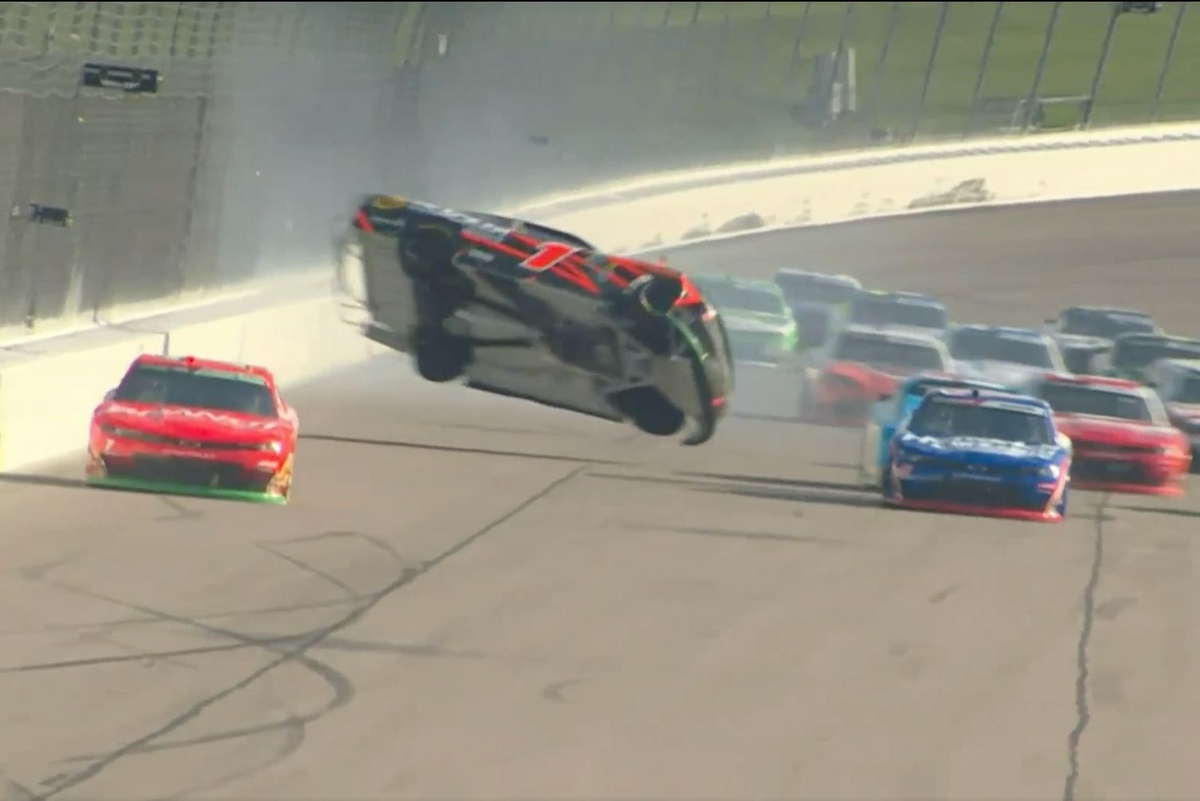
The violent rollover crash involving Carson Kvapil, starting from pole position in the O’Reilly Auto Parts Series race at Kansas, served as an immediate and dramatic focal point for the multifaceted complexities inherent in professional motorsports. Occurring on just the second lap, the incident involved contact with JR Motorsports teammates William Byron and Justin Allgaier, leading to Kvapil’s car striking the outside wall and subsequently being launched into multiple tumbles by a trailing vehicle. While prompting an immediate red flag and a ‘scary scene’ for observers, Kvapil’s ability to self-extricate quickly and walk away under his own power immediately shifted the narrative from potential tragedy to a testament to systemic safety. This incident, therefore, offers a critical lens through which to examine NASCAR’s evolving safety architecture, the intricate dynamics of intra-team competition, and the extensive operational, financial, and regulatory frameworks underpinning the sport.
I. Efficacy of NASCAR’s Layered Safety Architecture
Carson Kvapil’s fortunate outcome, emerging uninjured from a high-energy rollover, is a direct validation of the decades-long, iterative advancements in NASCAR’s integrated safety systems. This robust architecture comprises three primary pillars: vehicle structural integrity, track infrastructure, and rapid emergency response. The contemporary race car chassis, engineered with advanced materials and precise deformation zones, is designed to dissipate immense kinetic energy and maintain a survival cell around the driver. Complementary to this, mandatory personal safety equipment like the HANS device and multi-point restraint systems critically reduce impact forces on the driver’s body. On the track, the strategic deployment of SAFER barriers—such as those encountered by Kvapil—are engineered to absorb and distribute impact loads, mitigating the peak G-forces transmitted to the vehicle and driver. Finally, the swift deployment of highly trained safety crews, exemplified by their prompt arrival and efficient righting of Kvapil’s inverted car, completes this comprehensive safety ecosystem. Each component, from engineering design to procedural readiness, functions as a critical layer, collectively designed for maximum occupant protection, reinforcing NASCAR’s commitment to continuous safety evolution.
II. Unpacking Intra-Team Dynamics and Competitive Imperatives
The involvement of three JR Motorsports teammates—Kvapil, Byron, and Allgaier—in the initial contact brings to the forefront the inherent paradoxes of multi-car team operations in a high-stakes competitive environment. While teamwork is essential for data sharing and collective development, individual drivers are fundamentally incentivized by championship points, race wins, and sponsor visibility, creating a delicate tension. This incident underscores the potential for conflicting incentives when teammates, despite sharing an organizational banner, are simultaneously competing for finite track position and on-track advantage. For team management, such events necessitate rigorous reviews of strategic protocols including acceptable levels of on-track aggression, real-time communication effectiveness, and pre-race driver briefings. The psychological impact on team cohesion, and the potential for a perception of internal discord, can ripple through the organization, influencing future race strategies and potentially impacting driver morale and trust. Managing this complex interplay between individual ambition and collective objectives is a perennial challenge for top-tier motorsports teams.
III. Comprehensive Operational and Financial Repercussions
Beyond the immediate on-track drama, a high-severity incident like Kvapil’s rollover triggers substantial operational and financial burdens for JR Motorsports. Directly, the damaged vehicle necessitates extensive and costly repairs or replacement, involving specialized parts, engineering expertise, and labor. Indirectly, this diverts critical resources and personnel—including engineers and mechanics—from ongoing performance development projects for other team entries or future race preparations. Such unforeseen expenditures strain tightly managed budgets, potentially impacting competitive R&D or operational efficiency. For multi-car teams, the logistical challenge of recovering, transporting, and managing multiple damaged vehicles further compounds complexity. Moreover, sponsor relationships, a bedrock of motorsports funding, can be impacted. While high visibility is sought, incidents involving teammates can create optics challenges, potentially affecting sponsor confidence in team management and cohesion, making effective public relations and brand safeguarding paramount.
IV. Regulatory Oversight and the Analytics of Incident Management
NASCAR’s immediate issuance of a red flag following Kvapil’s crash exemplifies its robust regulatory framework for managing severe on-track incidents, prioritizing driver safety and facilitating emergency response. However, the sanctioning body’s role extends beyond immediate intervention. Such high-profile incidents invariably trigger a comprehensive post-event analytical review. This involves meticulous examination of telemetry data, on-board camera footage, track conditions, and driver testimonies. The findings from this data-driven analysis are not solely for potential disciplinary action but fundamentally contribute to a continuous improvement cycle for the sport. This empirical feedback informs future rule adjustments, vehicle design modifications, and enhancements to track safety features, thereby reinforcing NASCAR’s systemic commitment to refining safety standards and maintaining competitive integrity across all its series. This transparent and analytical approach is vital for stakeholder confidence and the sport’s long-term evolution.
V. Shaping Public and Media Perception
The instant dissemination of Kvapil’s violent crash across digital and broadcast platforms, such as The CW Sports, underscores the powerful and often instantaneous influence of modern sports media. Initially, the visual drama of an inverted race car elicits an emotional response, framing the event as a ‘scary scene.’ However, the subsequent reporting of Kvapil’s uninjured emergence immediately pivots the public narrative towards the effectiveness of safety measures. This dual dynamic—initial shock followed by reassurance—is strategically crucial for NASCAR. Effectively managing this narrative ensures that while the inherent excitement and risks of racing are highlighted, the sport’s progressive commitment to athlete welfare is equally emphasized. This balance is vital for maintaining fan engagement, mitigating public concerns, and reassuring corporate sponsors who seek brand alignment with high-octane sport while safeguarding against negative associations from severe incidents.
VI. The O’Reilly Series in the Broader NASCAR Ecosystem
The O’Reilly Auto Parts Series, where this incident occurred, serves as a crucial tier within NASCAR’s developmental ladder. For emerging talents like Carson Kvapil, who had secured pole position, strong performances here are pivotal for career advancement to higher-tier series. A high-profile crash, regardless of fault, can disrupt this trajectory, highlighting the immense pressure and stakes at every level of professional racing. Beyond driver development, the series is a significant marketing platform for its title sponsor, O’Reilly Auto Parts, and other corporate partners. The visibility of such an intense incident, while challenging, also reinforces the demanding nature of the sport, aligning with the performance-oriented branding often sought by automotive aftermarket companies. Crucially, the consistent application of NASCAR’s rigorous safety standards and regulatory oversight across all its series, from grassroots to Cup, ensures a unified approach to risk management, upholding the integrity and appeal of the entire racing ecosystem.
Conclusion: Beyond the Wreck – Continuous Evolution in Motorsports
Carson Kvapil’s Kansas rollover, while a harrowing moment, transcends a mere incident report to become a comprehensive case study in the relentless pursuit of excellence and safety within NASCAR. It unequivocally validates the efficacy of advanced safety engineering and rapid emergency protocols. Simultaneously, it exposes the intricate strategic tensions within multi-car teams and illuminates the substantial operational and financial demands placed upon them. Every such event generates invaluable data for engineering teams, informs future rule refinements, and refines team management strategies for balancing aggression with cohesion. Ultimately, this incident reinforces that professional motorsports is a dynamic ecosystem of constant learning and adaptation. The sport’s ability to not only withstand but to strategically evolve from such high-impact events is the true measure of its resilience and its unwavering commitment to both competitive spectacle and driver welfare.